What to Look for in Top-Notch Basement Insulation Contractors
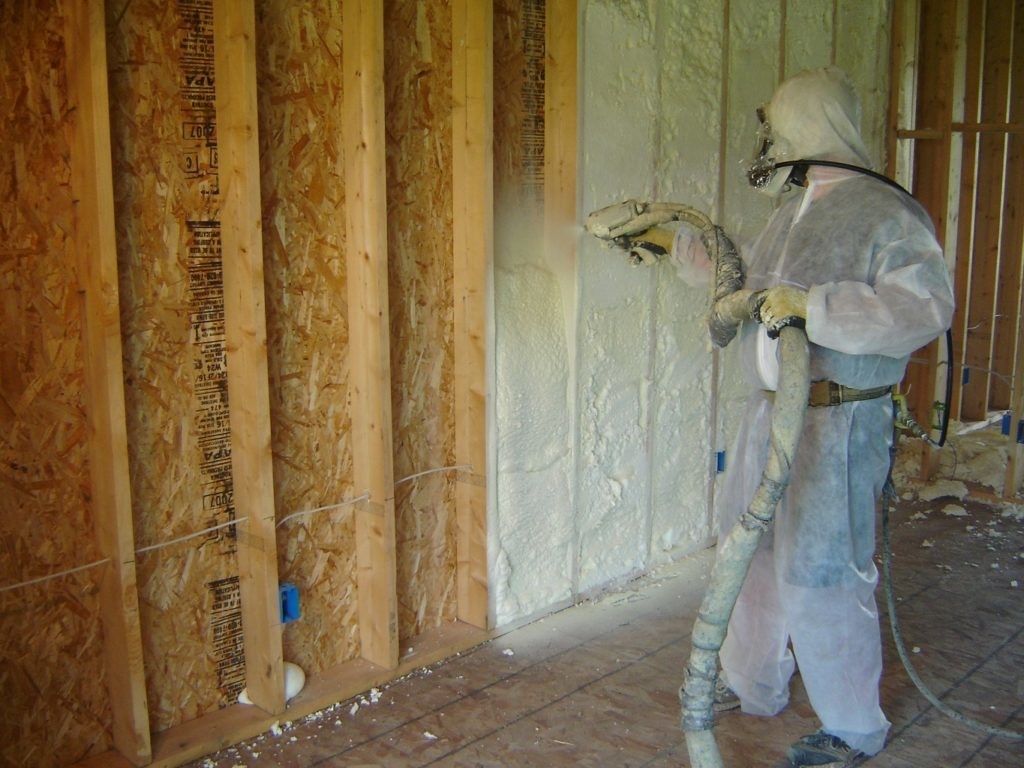
What to Look for in Top-Notch Basement Insulation Contractors in Toronto (2026 Guide)
Hiring a basement insulation contractor is one of the most significant home improvement decisions you’ll make as a Toronto homeowner. Done right, basement insulation delivers decades of energy savings, improved comfort, reduced moisture problems, and added livable square footage. Done wrong — by an under-qualified, underinsured, or inexperienced contractor — it can create moisture problems, mould growth, building code violations, and costly remediation. In 2026, with the GTA’s insulation market busier than ever, knowing how to evaluate and select the right contractor is essential.
This guide covers exactly what to look for, what questions to ask, and what red flags to avoid when hiring a basement insulation contractor in Toronto, Scarborough, North York, Etobicoke, Mississauga, Brampton, Vaughan, or Markham.
Why Basement Insulation Requires Specialist Knowledge
Basement insulation isn’t the same as attic or wall insulation. Below-grade environments in Toronto introduce specific challenges that require genuine expertise:
Moisture management: Concrete and block foundation walls are not waterproof — they allow moisture vapour transmission at varying rates. The wrong insulation product, or the right product installed incorrectly, can trap moisture between the insulation and the foundation wall, leading to mould growth and structural damage that may not be visible for years.
Vapour control: Ontario Building Code requires a vapour barrier on the warm side of insulation in basement wall assemblies. The specification of that vapour barrier, and its relationship to the insulation’s perm rating, must be designed correctly for Toronto’s climate zone. Closed-cell spray foam (perm rating below 1.0) can serve as its own vapour barrier; open-cell foam and fibreglass batts require a separate poly vapour retarder.
Thermal bridging: Wood stud walls built against concrete foundations are common in Toronto basements, but they create thermal bridges at every stud — allowing cold to conduct into the space. Continuous insulation on the concrete side of the studs, or spray foam applied directly to the concrete, eliminates thermal bridging that batt-only approaches can’t address.
Air sealing: Basement rim joists — the perimeter framing at the top of your foundation — are one of the most air-leaky zones in any Toronto home. A qualified basement insulation contractor will prioritize sealing these areas as part of any comprehensive basement project.
What to Look for in a Basement Insulation Contractor
1. Relevant Certification
For spray foam work specifically, look for SPFA (Spray Polyurethane Foam Alliance) certification. This verifies that the applying technician has completed formal training in spray foam chemistry, equipment operation, and health and safety protocols. For general insulation work, look for membership in CIMA (Canadian Insulation Manufacturers Association) or evidence of manufacturer training certification from brands like Icynene, NCFI, or Lapolla.
2. Liability Insurance — Minimum $2M, Preferably $5M
Any contractor working in your home should carry commercial general liability insurance. Ask for a Certificate of Insurance (COI) naming your home address specifically. For basement projects that involve vapour barriers and potential moisture-related damage, $5M coverage is strongly recommended. Spray Foam Kings carries $5M in liability coverage on every project.
3. WSIB Clearance Certificate
Workers’ Safety and Insurance Board (WSIB) coverage protects you from financial liability if a worker is injured on your property. Request a current WSIB clearance certificate before any work begins. Many homeowners don’t realize they can be held liable for injuries sustained by uninsured workers on their property.
4. Written Scope and Quote
A professional contractor provides a written quote specifying: the product name and manufacturer, the application thickness and resulting R-value, the coverage area, the total cost including labour and materials, and the project timeline. Verbal quotes with no documentation are a significant red flag — especially for basement work where product selection and application thickness are critical to performance and code compliance.
5. Building Science Knowledge
Ask your contractor about their approach to vapour control in Toronto’s climate zone. A qualified contractor will be able to explain why they’re recommending a specific product and thickness — not just what they’re installing. If the response is vague or the contractor can’t explain the moisture dynamics of a below-grade wall assembly, look elsewhere.
6. References and Reviews Specific to Basement Work
Ask for references from completed basement insulation projects — ideally in neighbourhoods similar to yours. Check Google, HomeStars, and the Better Business Bureau for recent reviews. Spray Foam Kings has hundreds of verified reviews from GTA homeowners spanning basement, attic, crawl space, and commercial insulation projects.
Red Flags to Avoid
The following are warning signs that a basement insulation contractor may not be the right choice for your home:
No written quote or scope of work. Pricing that seems dramatically below market (closed-cell spray foam below $1.50/board foot installed is almost certainly substandard product or equipment). Refusal to provide an insurance certificate or WSIB clearance. Inability to explain vapour control strategy for below-grade applications. No references or reviews from completed basement projects in the GTA. Pressure to decide immediately without time to compare quotes.
Spray Foam vs. Other Basement Insulation Options: Contractor Perspective
| Product | R-Value per Inch | Vapour Barrier | Air Sealing | CAD Cost/sq ft |
|---|---|---|---|---|
| Closed-cell spray foam | R-6 to R-7 | Yes (built-in) | Excellent | $3.50 – $5.50 |
| Open-cell spray foam | R-3.5 to R-4 | No (separate required) | Good | $1.50 – $2.50 |
| Rigid foam board (XPS/EPS) | R-3.8 to R-5 | Partial | Poor (gaps at edges) | $1.00 – $2.50 |
| Fibreglass batts | R-3.2 to R-3.8 | No (separate required) | Poor | $0.50 – $1.50 |
Why Spray Foam Kings Is Toronto’s Top-Rated Basement Insulation Contractor
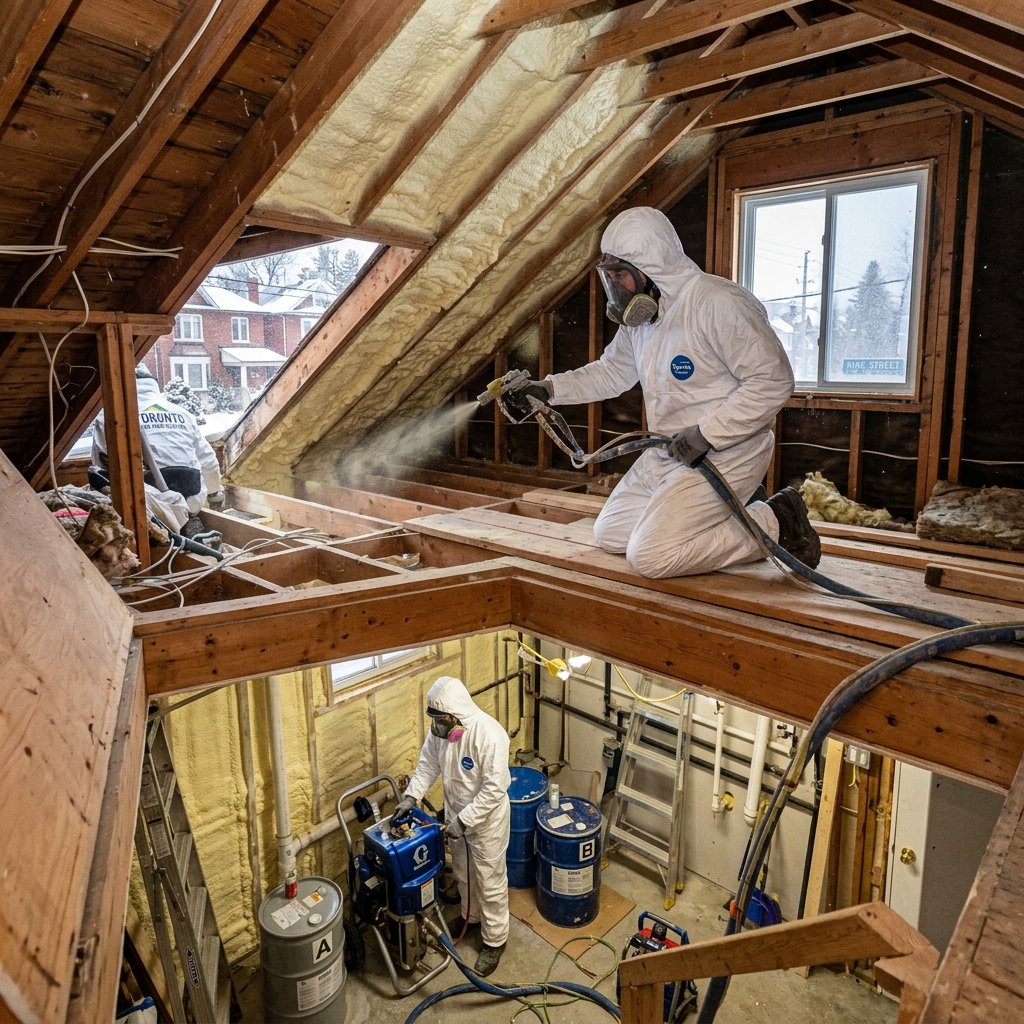
Spray Foam Kings checks every box on the list above. We’ve been completing basement insulation projects across the GTA for 15+ years — from small rim joist upgrades in Etobicoke bungalows to full basement encapsulation projects in Brampton new builds. Our SPFA-certified technicians, $5M liability insurance, WSIB coverage, and written scope-of-work process have made us one of the most trusted names in GTA insulation.
We serve homeowners throughout Toronto, Scarborough, North York, Etobicoke, Mississauga, Brampton, Vaughan, and Markham — and we provide free, no-obligation assessments with written quotes within 24 hours of our site visit.
Frequently Asked Questions
How much does basement insulation cost in Toronto in 2026?
Rim joist only: $800–$1,800 CAD. Closed-cell spray foam on basement walls (full height, 2″): $3,500–$7,000 CAD for a typical Toronto semi-detached or detached home. Full basement encapsulation with vapour barrier and spray foam: $5,000–$10,000 CAD. Open-cell foam or hybrid approaches are available at lower price points — we’ll recommend the right product for your specific basement configuration.
Do I need a permit for basement insulation in Toronto?
Adding insulation to an existing basement typically doesn’t require a building permit in most Toronto and GTA municipalities. However, if you’re creating a new secondary suite (legal basement apartment), converting the basement to living space, or adding new electrical or HVAC, a permit is required. Spray Foam Kings will advise you on permit requirements during your assessment.
How long does basement spray foam insulation last?
Closed-cell spray foam in basement applications is essentially permanent — 30+ years with no maintenance required. Unlike fibreglass batts, which absorb moisture and compress over time in basement environments, spray foam maintains its insulating and vapour-control properties indefinitely.
Will basement spray foam insulation prevent mould?
Closed-cell spray foam does not support mould growth and, when applied correctly, eliminates the moisture infiltration and condensation that cause mould. However, if active mould exists before insulation is applied, remediation must occur first. Applying insulation over active mould does not solve the problem — it seals it in.
Can I insulate my basement in stages?
Yes — many Toronto homeowners start with the rim joists (quick win, high ROI) and return for the walls later. Each stage is a complete, standalone improvement. We’ll design your project so that future additions integrate seamlessly with existing work.
Book Your Free Basement Assessment
If you’re ready to find out what your basement insulation options look like and what they’ll cost for your specific home in 2026, call Spray Foam Kings at 647-641-6881. We’ll schedule a free assessment at your convenience, evaluate your basement’s current condition, and provide a detailed written quote. No obligation, no pressure — just expert guidance from the GTA’s most experienced basement insulation team.
Related posts
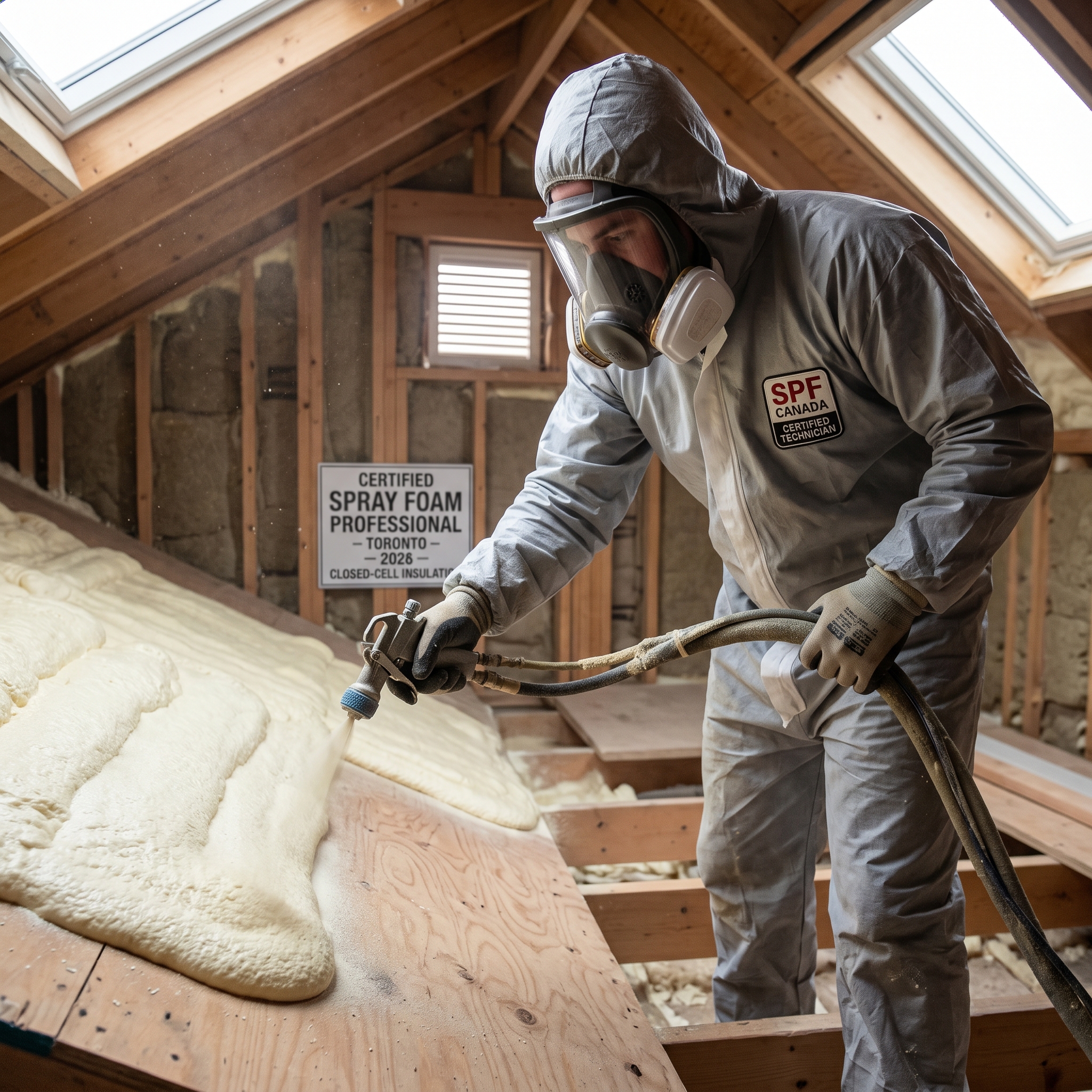
Closed Cell Spray Foam Canada Toronto 2026: Complete Guide
Closed cell spray foam insulation in Canada costs between $2.50 and $5.00 per square foot CAD installed, making it one of the most cost-effective and
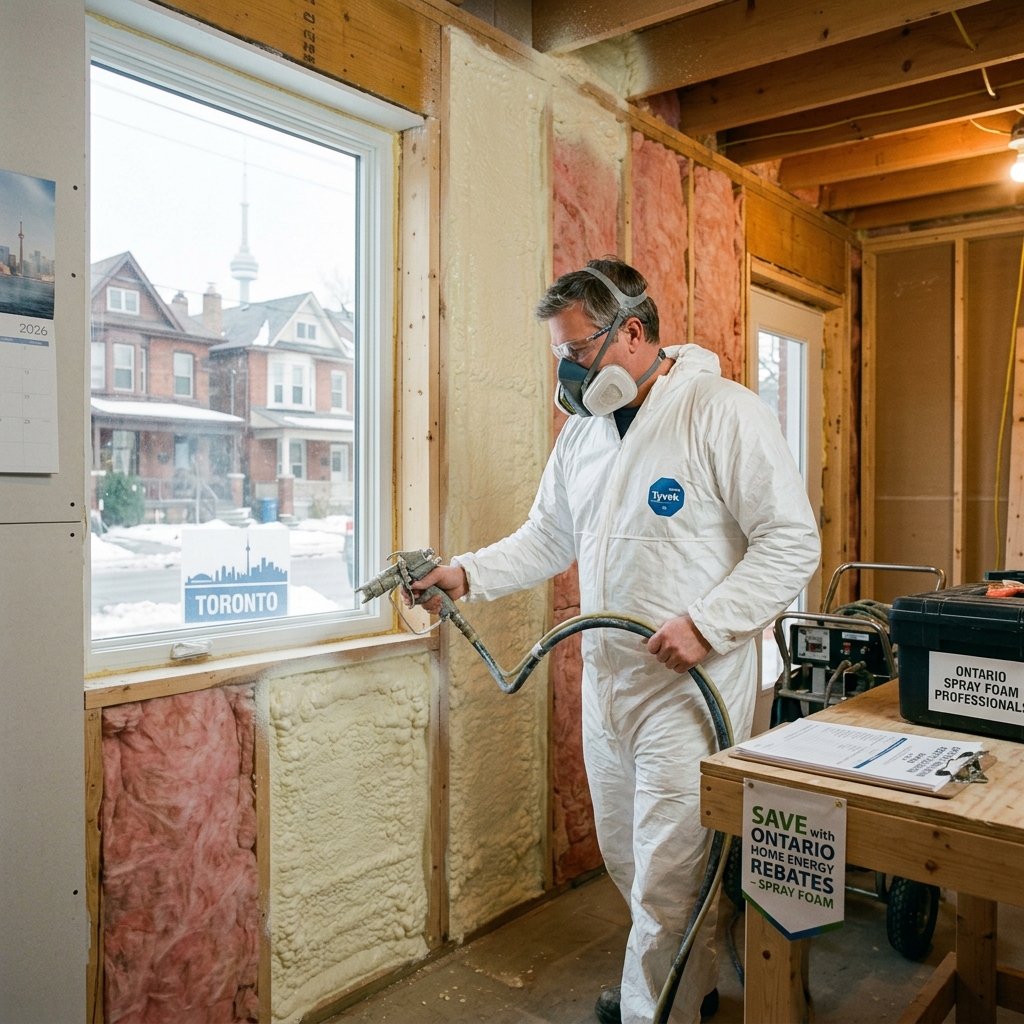
Insulation Rebate Ontario Toronto 2026: Complete Guide
Ontario homeowners who install spray foam insulation can qualify for rebates ranging from $1,600 to $10,600 CAD through federal and provincial programs — and
Spray Foam Insulation Cost Toronto 2026: Exact Pricing for Your Home
Spray foam insulation in Toronto costs $1.50–$3.50 per square foot CAD for open-cell foam and $2.50–$5.00 per square foot CAD for closed-cell foam, fully
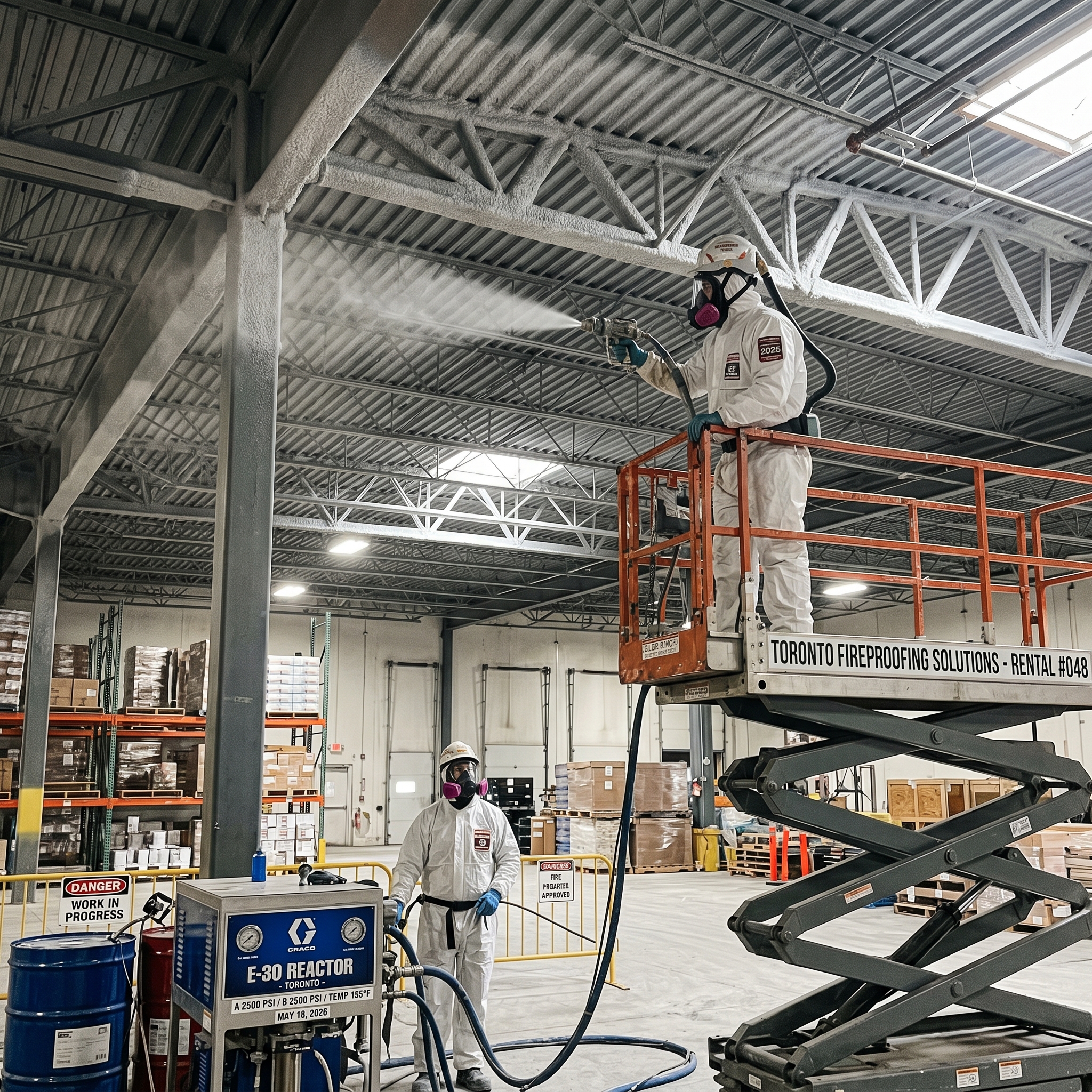
Commercial Spray Foam Fireproofing Services — Toronto & GTA 2026
Commercial spray foam fireproofing in Toronto costs $3.50–$8.00 per square foot installed in 2026, depending on required fire-resistance rating,
Spray Foam Insulation Rebate Ontario 2026: How to Get Up to $10,000 Back on Your Upgrade
Spray foam insulation rebates in Ontario for 2026 can put up to $10,000 CAD back in your pocket when you upgrade from fiberglass or cellulose to