THE BENEFITS OF GARAGE INSULATION: WHY IT’S WORTH THE INVESTMNET 
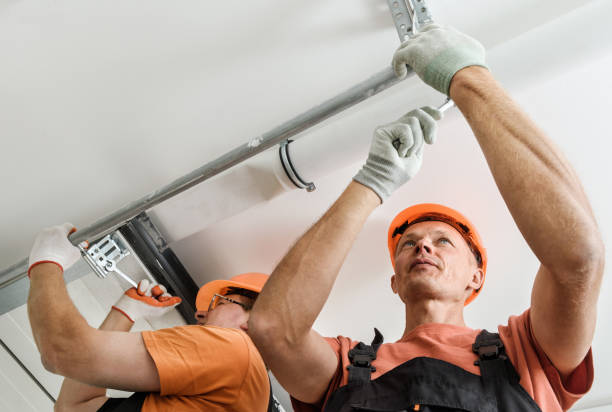
The Benefits of Garage Insulation in Toronto: Why It’s Worth the Investment in 2026
Ask most Toronto homeowners what they’d change about their home, and a cold, damp, unusable garage is near the top of the list. In neighbourhoods from Scarborough to Brampton, garages are routinely treated as afterthoughts — uninsulated storage zones that are freezing in January, sweltering in July, and plagued by condensation year-round. The reality is that a properly insulated garage is one of the most versatile and value-adding improvements you can make to your home in 2026, with benefits that extend far beyond simple comfort.
This guide makes the full case for garage insulation — covering energy savings, vehicle protection, usable space, home value, and the specific benefits of spray foam as the premium insulation choice — with real CAD cost and savings figures for the Greater Toronto Area.
Benefit 1: Dramatically Improved Comfort Year-Round
An uninsulated garage in Toronto swings between extremes: -20°C on the coldest January nights and 45°C+ on summer afternoons when the metal door and ceiling absorb sun all day. These extremes make the garage an inhospitable, nearly unusable space for most of the year.
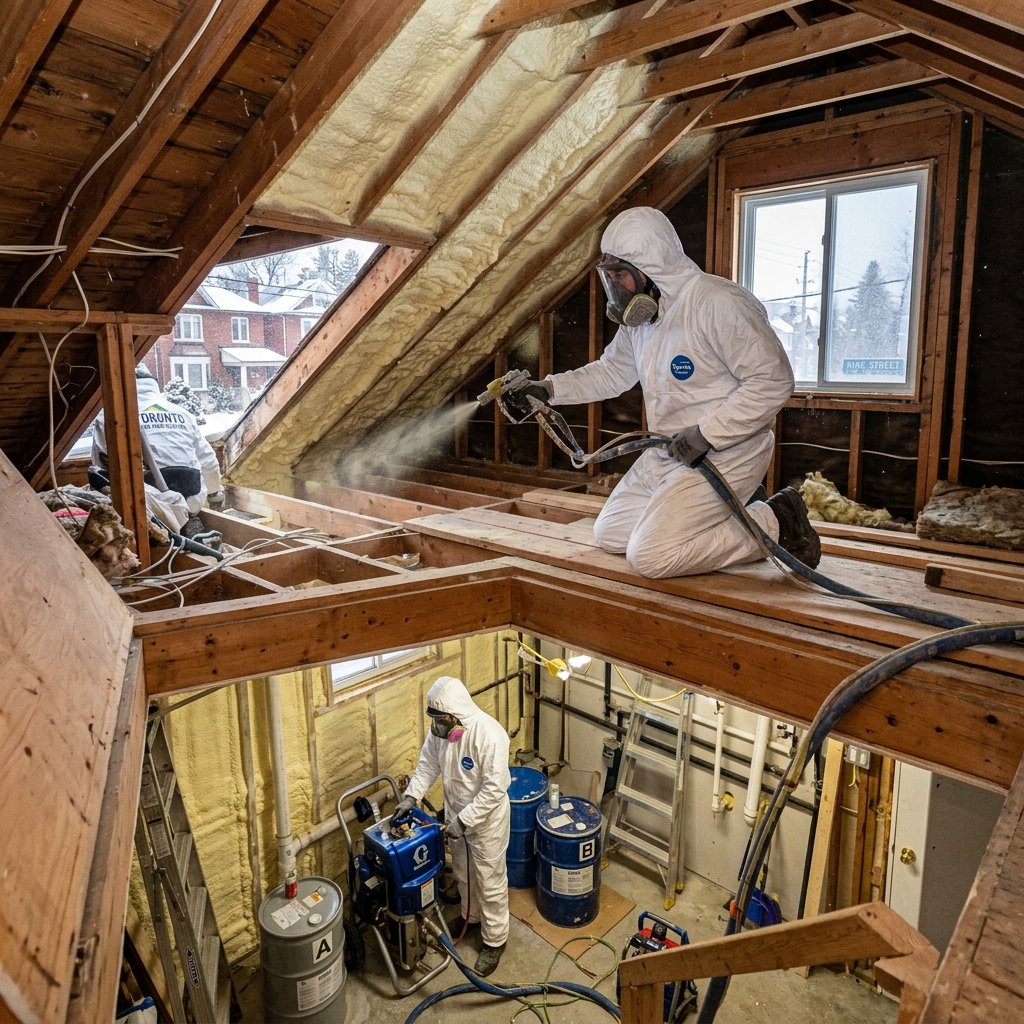
A properly insulated garage — spray foam on the ceiling, walls, and rim joists, combined with an insulated or weatherstripped door — maintains temperatures that are dramatically more moderate. Even without active heating or cooling, an insulated Toronto garage typically stays 10–15°C above outdoor winter temperatures and 10–15°C below outdoor summer peaks. That transforms the space from an extreme environment to a genuinely comfortable one.
For homeowners who want to use their garage as a workshop, home gym, photography studio, or practice space — a reality for a growing number of GTA homeowners in 2026 — proper insulation is the non-negotiable foundation. Add a small heater or mini-split heat pump and you have a climate-controlled space that’s usable 365 days a year.
Benefit 2: Vehicle Protection
Vehicles stored in extremely cold garages suffer in ways that most owners don’t fully appreciate. Engine oil thickens, making cold starts harder on engines and reducing longevity. Battery capacity drops significantly in cold temperatures — an issue magnified for the growing number of EV owners in Toronto, Mississauga, and Vaughan. Rubber seals and gaskets become brittle and crack more quickly with repeated extreme cold exposure.
An insulated garage keeps temperatures above -5°C even on the coldest Toronto nights — protecting your vehicle’s mechanical systems and battery life. For EV owners, this alone can meaningfully extend range (EVs lose 20–40% range in extreme cold) and reduce battery degradation. With EVs growing in prevalence throughout the GTA in 2026, insulated garages are increasingly standard in vehicle-forward households.
Benefit 3: Energy Savings for Your Home
An attached garage that shares walls and a ceiling with your living space is a direct thermal bridge into your home. Cold air from an uninsulated garage penetrates the shared wall and the floor above, driving up heating costs and making the adjacent room uncomfortable. Many homeowners in Etobicoke and North York who complain about a cold first floor room directly above the garage are experiencing exactly this problem.
Insulating the garage walls and ceiling — particularly the shared wall between the garage and the home, and the ceiling if there is a room above — reduces this thermal bridge significantly. Typical annual energy savings for this zone alone are $300–$700 CAD for a standard Toronto attached garage, based on 2026 Enbridge rates.
Benefit 4: Protection for Stored Items
The extreme temperature and humidity swings in an uninsulated garage are destructive to virtually everything stored inside: seasonal clothing and sporting equipment, tools, paint, electronics, appliances, bicycles, and seasonal vehicle tires. Rubber degrades faster with temperature extremes. Metal tools rust faster with humidity cycling. Electronics stored in the garage in summer heat can suffer irreversible component damage.
An insulated garage with stable temperature and reduced condensation protects stored items far more effectively — and eliminates the frustrating discovery of mould on cardboard boxes, rust on tools, or cracked rubber on seasonal tires that are common in poorly insulated Toronto garages.
Benefit 5: Reduced Condensation and Moisture Damage
Condensation in garages is a pervasive problem across the GTA. In spring and fall, temperature differentials between the garage interior (which warms slowly) and warm, humid exterior air create severe condensation on floors, walls, and the undersides of vehicles. Over time, this moisture accelerates rust on vehicles and tools, promotes mould growth on drywall and wood framing, and can seep under garage doors to damage the floor slab.
Insulating the walls and ceiling raises the interior surface temperatures, dramatically reducing or eliminating condensation. Closed-cell spray foam — which is itself impermeable to moisture — provides the most effective condensation control of any insulation product, and is what Spray Foam Kings recommends and installs for GTA garage projects.
Benefit 6: Noise Reduction
Spray foam insulation provides meaningful soundproofing — a benefit that’s particularly valuable in attached garages. Power tools, workshop equipment, vehicles, and garage door operation all generate noise that penetrates uninsulated walls and ceilings into adjacent living spaces. Spray foam’s density and air-sealing properties attenuate sound transmission significantly — a quality of life improvement that’s easy to overlook but immediately noticeable after installation.
Benefit 7: Home Value Increase
An insulated, comfortable garage is a genuine selling feature in the GTA real estate market. Home buyers in 2026 increasingly value usable, flexible spaces — and a garage that functions as a workshop, gym, or hobby room is markedly more attractive than a cold, damp storage box. Real estate professionals across Toronto, Vaughan, and Markham consistently note that finished and insulated garages command premium valuations relative to comparable homes with unimproved garages.
2026 CAD Pricing: Garage Insulation Investment vs. Return
| Project Scope | CAD Investment | Annual Energy Savings | Payback |
|---|---|---|---|
| Ceiling insulation only | $1,500 – $3,000 | $200 – $500 | 5–8 years |
| Ceiling + shared wall | $3,000 – $5,500 | $400 – $800 | 5–9 years |
| Full envelope (all walls + ceiling) | $5,000 – $10,000 | $600 – $1,200 | 6–10 years |
Energy savings aside, the non-financial benefits — vehicle protection, usable space, moisture reduction, home value — often far exceed the energy ROI in terms of real-life quality of life impact.
Why Choose Spray Foam Kings for Your Garage Insulation
Spray Foam Kings has insulated thousands of garages across the GTA — from single-car attached garages in Scarborough to large triple-car detached garages in Vaughan and Markham. Our SPFA-certified technicians, $5M liability coverage, and 15+ years of GTA experience ensure that your garage insulation is installed correctly the first time.
We use only closed-cell spray foam for garage applications — the highest-performing product available for the temperature range, moisture exposure, and performance demands of a Toronto garage. Every project includes a written quote, product documentation, and a post-installation inspection report.
Frequently Asked Questions
Does insulating my garage increase my home’s resale value?
Yes — a properly insulated, usable garage consistently commands a premium in the GTA real estate market. The exact premium depends on location and market conditions, but realtors in Toronto, Mississauga, and Vaughan routinely note that insulated garages with workshop potential are a meaningful differentiator. Documentation of the insulation (product data sheets, contractor invoice) supports the value claim during negotiations.
What’s the best type of insulation for a garage ceiling in Toronto?
Closed-cell spray foam is the best-performing option — offering R-6 to R-7 per inch with built-in vapour barrier and air sealing. For ceiling-only projects, 2–3 inches of closed-cell foam on the ceiling framing provides R-12 to R-21 of continuous, thermal-bridge-free insulation. This is dramatically superior to unfaced fibreglass batts typically used in garage ceiling applications.
Can I insulate my garage ceiling without removing the existing drywall?
In many cases, yes — spray foam can be applied to the ceiling from above (through the attic space above the garage) without disturbing interior drywall. In other configurations, the foam is applied to the underside of the roof deck from below, also without requiring drywall removal. Our assessment will determine the best approach for your specific garage.
Will spray foam on my garage walls need a thermal or ignition barrier?
Ontario Building Code requires that spray foam in occupied or accessible spaces be covered with a thermal barrier (typically 12.7mm drywall) or an ignition barrier if accessible. In a garage, the walls accessible to occupants should be covered with drywall after spray foam application. Spray Foam Kings will advise on code requirements for your specific project and ensure your installation is compliant.
How long will garage spray foam insulation last?
Indefinitely under normal conditions. Closed-cell spray foam does not degrade, settle, or absorb moisture in a garage environment. The only maintenance consideration is protecting the foam from physical damage — covering it with drywall or rigid board is recommended in areas where it could be impacted.
Make Your Garage Work For You in 2026
The cold, damp, barely-usable garage is not a permanent condition — it’s a fixable one. In 2026, with spray foam insulation delivering faster payback than ever before and the GTA’s real estate market rewarding livable, well-maintained homes, investing in garage insulation is one of the smartest decisions you can make as a Toronto homeowner.
Call Spray Foam Kings at 647-641-6881 to book your free garage assessment. We’re available throughout Toronto, Scarborough, North York, Etobicoke, Mississauga, Brampton, Vaughan, and Markham — and we’ll have your written quote ready within 24 hours. Let’s transform your garage into the space it was meant to be.
Related posts
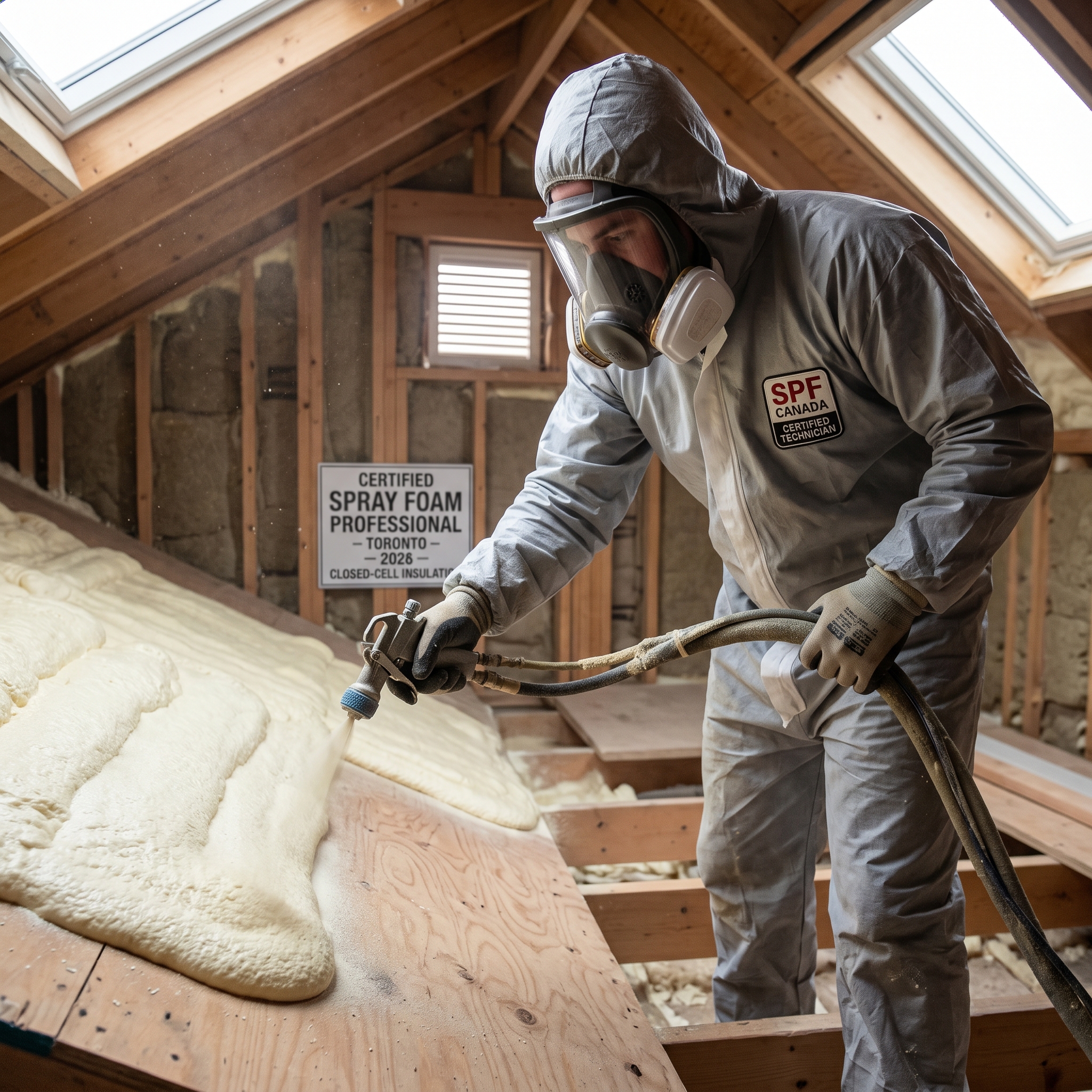
Closed Cell Spray Foam Canada Toronto 2026: Complete Guide
Closed cell spray foam insulation in Canada costs between $2.50 and $5.00 per square foot CAD installed, making it one of the most cost-effective and
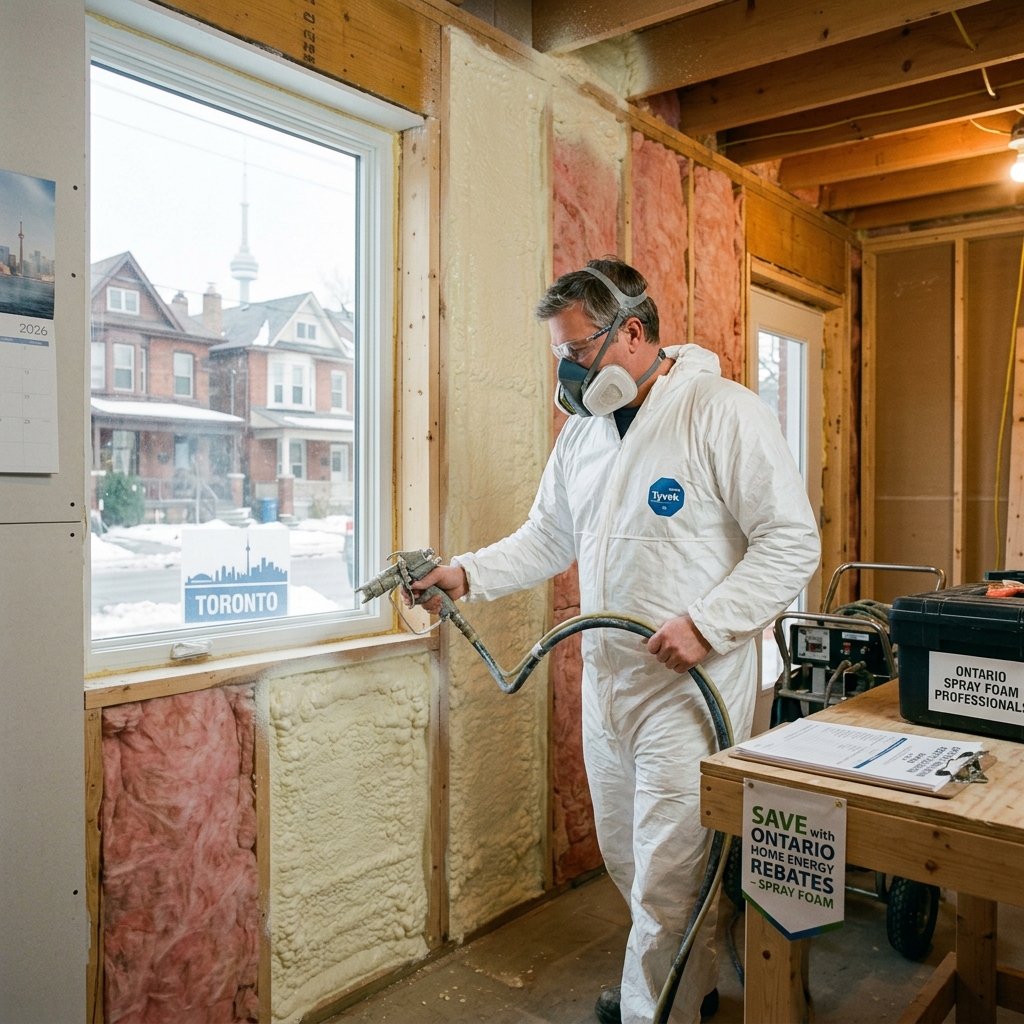
Insulation Rebate Ontario Toronto 2026: Complete Guide
Ontario homeowners who install spray foam insulation can qualify for rebates ranging from $1,600 to $10,600 CAD through federal and provincial programs — and
Spray Foam Insulation Cost Toronto 2026: Exact Pricing for Your Home
Spray foam insulation in Toronto costs $1.50–$3.50 per square foot CAD for open-cell foam and $2.50–$5.00 per square foot CAD for closed-cell foam, fully
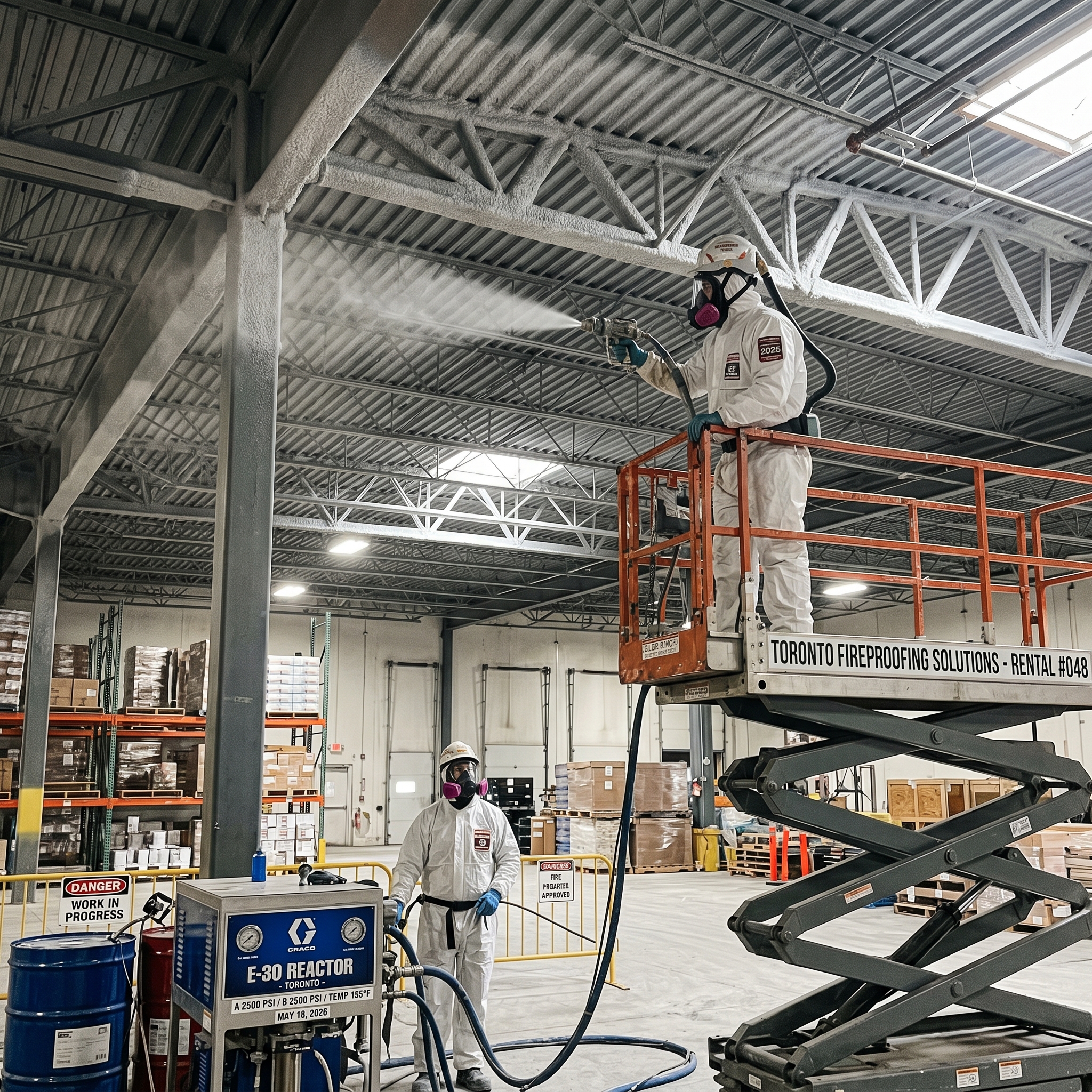
Commercial Spray Foam Fireproofing Services — Toronto & GTA 2026
Commercial spray foam fireproofing in Toronto costs $3.50–$8.00 per square foot installed in 2026, depending on required fire-resistance rating,
Spray Foam Insulation Rebate Ontario 2026: How to Get Up to $10,000 Back on Your Upgrade
Spray foam insulation rebates in Ontario for 2026 can put up to $10,000 CAD back in your pocket when you upgrade from fiberglass or cellulose to