Spray Fireproofing Insulation
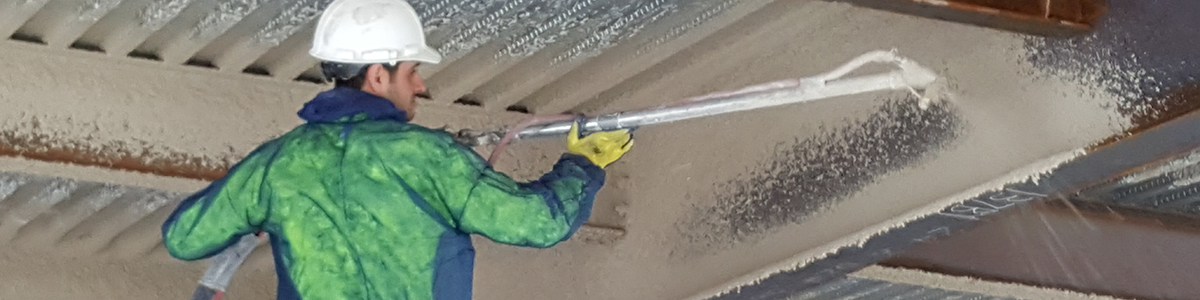
Spray Fireproofing Insulation for Toronto Buildings: A Complete 2026 Guide
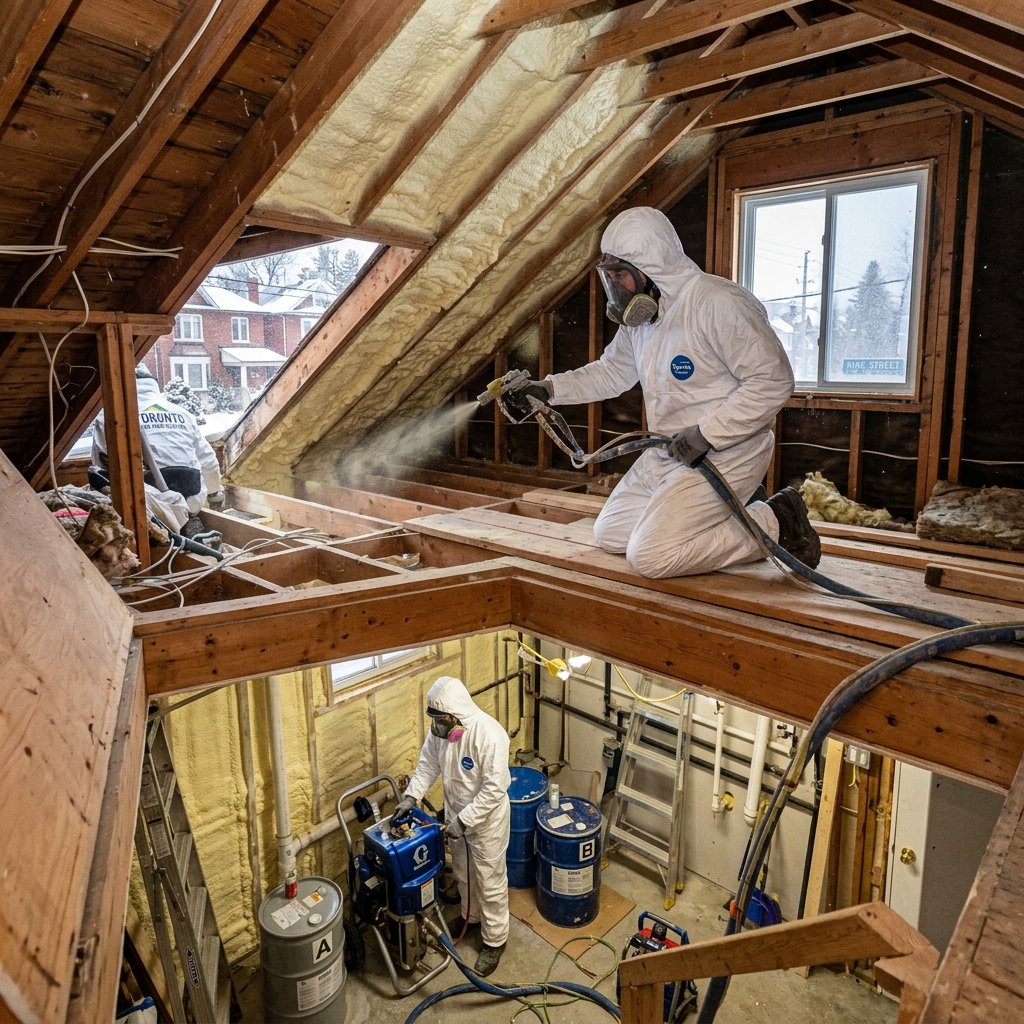
Spray fireproofing and spray insulation are two distinct but complementary building technologies — and Spray Foam Kings specializes in both. While spray polyurethane foam (SPF) provides thermal insulation and air sealing, spray-applied fireproofing materials (SFRM) or intumescent coatings are specifically engineered to resist fire, protect structural elements, and provide the fire-resistance ratings required by Ontario Building Code for a wide range of buildings across the GTA.
This guide covers spray fireproofing insulation in depth — what it is, where it’s required, how it differs from thermal insulation, and what it costs in CAD for residential and commercial projects in Toronto, Scarborough, North York, Etobicoke, Mississauga, Brampton, Vaughan, and Markham in 2026.
What Is Spray Fireproofing?
Spray fireproofing refers to a family of products applied to structural elements — steel beams, concrete columns, wood framing, and deck assemblies — to delay or prevent structural failure during a fire. The goal is not to prevent fire itself, but to maintain structural integrity long enough to allow safe evacuation and firefighter access. Fire-resistance ratings (FRR) are expressed in hours: a 1-hour FRR means the assembly must maintain structural integrity under standard fire test conditions for 60 minutes.
There are three main categories of spray-applied fireproofing:
Intumescent Coatings: Thin, paint-like coatings that expand up to 50x their original thickness when exposed to heat above approximately 200°C, forming an insulating char layer that protects the underlying steel or wood. Available in water-based formulations with low VOC. Ideal for exposed structural steel in open-concept spaces — can be top-coated with paint for aesthetic applications. Provides FRRs from 30 minutes to 2+ hours depending on product and film thickness.
Cementitious Spray Fireproofing: A wet-spray plaster-like material containing Portland cement and mineral aggregates. Applied in thicker layers than intumescent coatings. Used primarily on steel structural elements in commercial and industrial buildings — parking garages, warehouses, high-rise structures. Provides FRRs of 1–4 hours. The most common SFRM product used in large commercial construction across the GTA.
Mineral Fibre Spray Fireproofing: A spray-applied fibrous material containing mineral wool or cellulose fibres. Similar application and use to cementitious SFRM. Provides FRRs of 1–3 hours. Common on large flat-plate concrete and steel deck assemblies in commercial construction.
Where Spray Fireproofing Is Required in Ontario
Ontario Building Code (OBC) Part 3 specifies fire resistance rating requirements for structural elements and assemblies in all buildings except small, low-risk residential structures. Key applications relevant to GTA property owners in 2026 include:
Attached garages: OBC requires a minimum 30-minute fire separation between an attached garage and the dwelling unit. The garage ceiling and shared wall assembly must achieve this rating — typically through a combination of Type X drywall and, in some configurations, intumescent spray fireproofing on the structural elements.
Basement mechanical rooms: Furnace and water heater rooms in multi-unit residential buildings may require fire-rated separations from adjacent occupied spaces. Spray fireproofing on the ceiling framing and exposed structural elements is an efficient way to achieve required ratings.
Exposed steel beams in open-concept homes: When open-concept renovations expose steel I-beams or W-sections, these elements must be fire protected if they support floor assemblies in a building requiring fire resistance ratings. Unprotected steel fails rapidly in fire conditions — losing structural capacity within minutes at temperatures above 550°C. Intumescent coating restores the required FRR to bare steel.
Commercial and light industrial buildings: Steel-framed warehouses, retail units, and light industrial buildings throughout Brampton, Vaughan, Markham, and Scarborough routinely require cementitious or mineral fibre SFRM on structural steel. This is a standard element of new commercial construction and is also required when building uses change (for example, converting a warehouse to a multi-tenant retail unit).
Secondary suites (basement apartments): The ceiling of a basement secondary suite must achieve a minimum FRR separating it from the floor above. Spray fireproofing on the floor joist assembly — combined with appropriate drywall — is one approach to meeting this requirement during basement suite renovations.
Multi-unit residential buildings (Part 3): Any residential building more than 3 storeys or exceeding 600 m² in floor area falls under OBC Part 3, which mandates FRRs for virtually all structural elements. Spray-applied SFRM is standard on the structural steel elements of these buildings throughout the GTA.
Spray Fireproofing vs Spray Foam Insulation: The Key Differences
| Factor | Spray Fireproofing (SFRM) | Spray Foam Insulation (SPF) |
|---|---|---|
| Primary function | Resist fire, protect structure | Insulate + air seal |
| Thermal insulation | Minimal (incidental) | Primary function (R-3.5 to R-7/inch) |
| Fire resistance rating | 30 min to 4 hours | None (must be covered) |
| Application substrates | Steel, concrete, wood framing | Concrete, wood, metal, many surfaces |
| OBC requirement driver | Building fire resistance ratings | Energy code / thermal performance |
| Typical CAD cost (residential) | $800 – $5,000 | $1,800 – $12,000+ |
Many projects benefit from both products — spray foam for thermal performance throughout the building envelope, and spray fireproofing for structural elements required to achieve specific fire resistance ratings. Spray Foam Kings is uniquely positioned to deliver both in a single project, simplifying coordination and ensuring that thermal and fire protection objectives are met simultaneously.
2026 CAD Cost Guide: Spray Fireproofing in Toronto
| Application | Typical Scope | CAD Cost Range |
|---|---|---|
| Attached garage ceiling (intumescent) | 200–500 sq ft | $800 – $2,200 |
| Exposed steel beams (intumescent) | Per beam | $300 – $900 |
| Basement mechanical room | 100–300 sq ft | $700 – $2,000 |
| Commercial steel structure (cementitious) | Per 1,000 sq ft | $3,000 – $8,000+ |
| Secondary suite ceiling assembly | 500–800 sq ft | $1,500 – $4,000 |
Why Spray Foam Kings for Spray Fireproofing in the GTA
Spray Foam Kings has been applying both spray foam insulation and spray fireproofing products to residential and commercial buildings across the GTA for 15+ years. Our SPFA-certified technicians understand the distinction between these products and can design the right combination of thermal and fire protection for your specific project.
We carry $5M in liability insurance, full WSIB coverage, and provide ULC-listed product data sheets and post-installation documentation for every fireproofing project. Our work meets OBC fire resistance rating requirements and is suitable for building permit files, insurance documentation, and Authority Having Jurisdiction (AHJ) review.
Frequently Asked Questions About Spray Fireproofing
Is spray foam insulation itself fireproof?
No — spray polyurethane foam is combustible and must be protected by a thermal barrier (drywall) in any area accessible to occupants. SPF does not provide a fire resistance rating. Intumescent coatings and SFRM products are the fire-protection products; SPF is the thermal insulation product. They’re complementary, not interchangeable.
Do I need fireproofing on exposed steel beams in my Toronto home?
If your open-concept renovation exposes structural steel that supports a floor assembly in a building covered by OBC Part 3, the steel must be fire-protected to the required FRR. For most single-family homes (Part 9 buildings), exposed decorative steel beams may not be required by code to carry an FRR — but protecting them with intumescent coating is best practice and may be required by your insurer. Spray Foam Kings will advise based on your specific building classification.
Can I paint over intumescent fireproofing coating?
Yes — most intumescent coatings can be top-coated with regular latex paint after curing. This is common for exposed steel beams in open-concept residential renovations where the fireproofing must blend with the interior finish. We’ll advise on compatible top-coat products and application timing to ensure the intumescent layer’s performance is not compromised.
How is spray fireproofing different from fire caulking or firestopping?
Spray fireproofing (SFRM) protects structural elements — beams, columns, deck assemblies — from fire-induced structural failure. Fire caulking and firestopping products seal penetrations (pipes, cables, ducts) through fire-rated assemblies to prevent fire and smoke spread through gaps. Both are required for a complete fire protection system, and Spray Foam Kings can advise on both components.
Does spray fireproofing qualify for any incentives or rebates in Ontario?
Spray fireproofing is a safety investment rather than an energy investment, so it doesn’t qualify for energy efficiency rebate programs. However, some insurers offer premium reductions for documented fire protection upgrades — check with your broker. For commercial buildings, fire protection upgrades may be eligible for capital cost allowance treatment under CRA guidelines. Consult your accountant for 2026 tax treatment specifics.
Protect Your Building — Call Spray Foam Kings Today
Whether you need intumescent coating on exposed steel beams in a North York renovation, cementitious SFRM on a new commercial structure in Brampton, or a fire separation upgrade for a Scarborough basement secondary suite, Spray Foam Kings delivers professional spray fireproofing with the credentials and documentation your project requires.
Call 647-641-6881 for a free fireproofing assessment. We serve all of Toronto and the GTA, and we’ll provide a written quote with product specifications within 24 hours of our site visit. In 2026, don’t leave fire safety to chance — let the experts protect your building.
Related posts
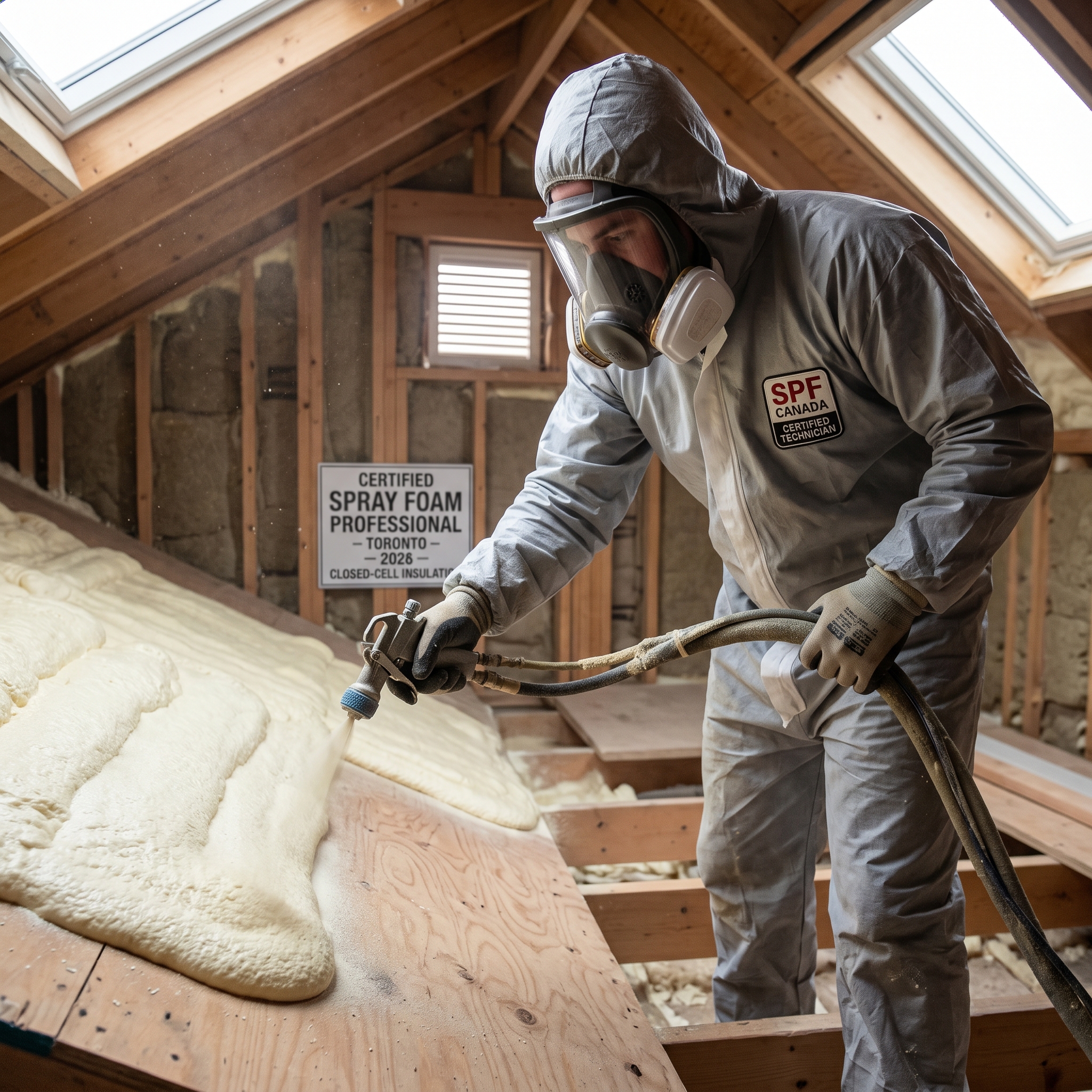
Closed Cell Spray Foam Canada Toronto 2026: Complete Guide
Closed cell spray foam insulation in Canada costs between $2.50 and $5.00 per square foot CAD installed, making it one of the most cost-effective and
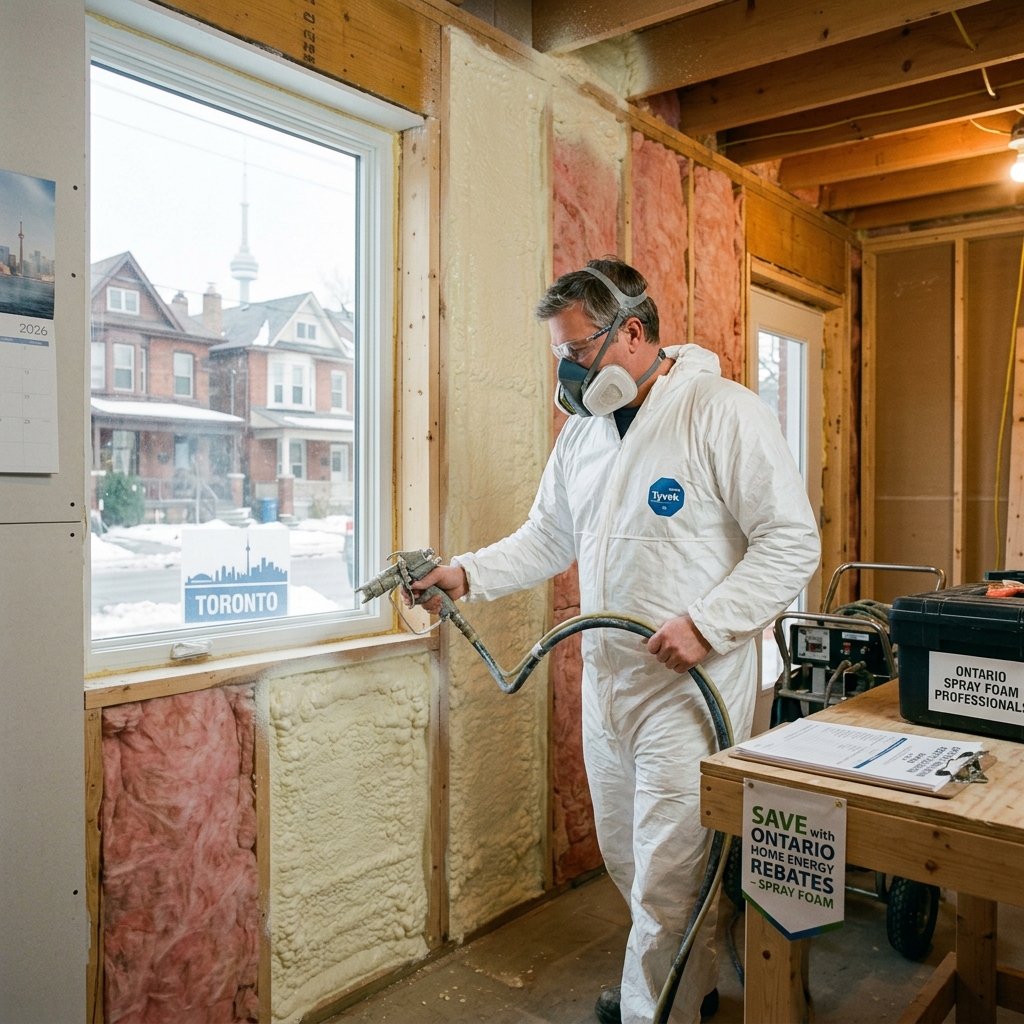
Insulation Rebate Ontario Toronto 2026: Complete Guide
Ontario homeowners who install spray foam insulation can qualify for rebates ranging from $1,600 to $10,600 CAD through federal and provincial programs — and
Spray Foam Insulation Cost Toronto 2026: Exact Pricing for Your Home
Spray foam insulation in Toronto costs $1.50–$3.50 per square foot CAD for open-cell foam and $2.50–$5.00 per square foot CAD for closed-cell foam, fully
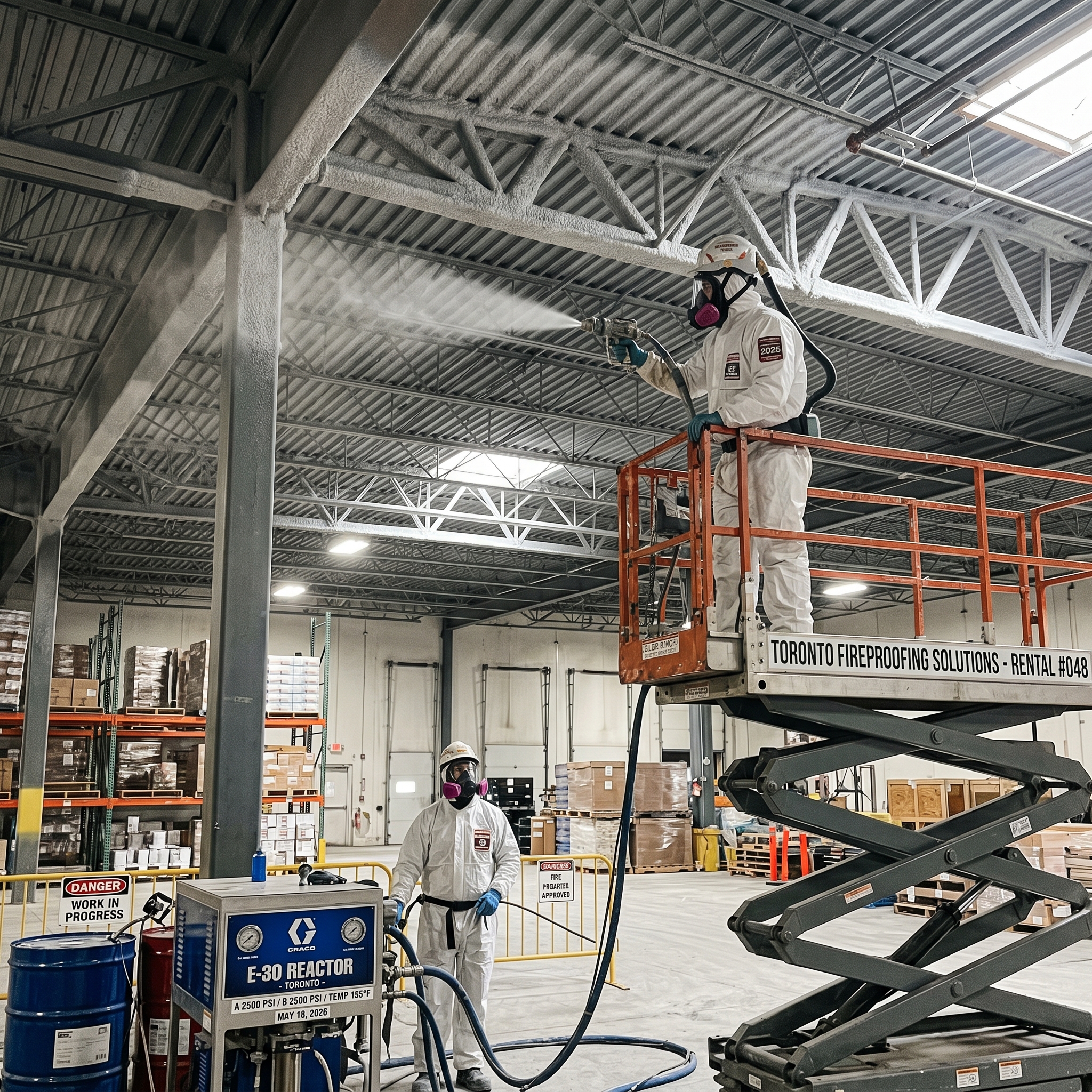
Commercial Spray Foam Fireproofing Services — Toronto & GTA 2026
Commercial spray foam fireproofing in Toronto costs $3.50–$8.00 per square foot installed in 2026, depending on required fire-resistance rating,
Spray Foam Insulation Rebate Ontario 2026: How to Get Up to $10,000 Back on Your Upgrade
Spray foam insulation rebates in Ontario for 2026 can put up to $10,000 CAD back in your pocket when you upgrade from fiberglass or cellulose to