Protecting Your Home with Fireproofing Spray: A Must-Try Solution
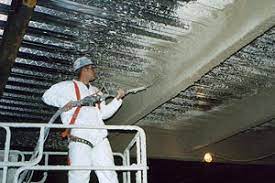
Protecting Your Home with Fireproofing Spray: A Complete Toronto Homeowner’s Guide for 2026
Fire safety is one of the most critical — and most overlooked — aspects of home protection in the Greater Toronto Area. Every year, house fires cause millions of dollars in damage across neighbourhoods like Scarborough, North York, Etobicoke, Vaughan, and Mississauga. In 2026, homeowners who take proactive steps to fireproof their properties are not only protecting their families, they’re also protecting their real estate investment. One of the most effective, cost-efficient solutions available today is intumescent fireproofing spray — a technology that Spray Foam Kings has been installing throughout the GTA for over 15 years.
This guide walks you through everything you need to know about fireproofing spray: what it is, how it works, what it costs in CAD, where it’s required by Ontario Building Code, and why Spray Foam Kings is the right team to install it in your home or commercial building.
What Is Fireproofing Spray?
Fireproofing spray — also called intumescent coating or spray-applied fire-resistive material (SFRM) — is a substance applied directly to structural elements like steel beams, wooden joists, concrete, and drywall assemblies to slow or prevent the spread of fire. When exposed to heat, intumescent coatings expand dramatically (up to 50 times their original thickness), forming an insulating char layer that protects the underlying structure and buys critical evacuation time.
There are two primary categories used in residential and light commercial construction:
1. Intumescent Paint-Style Coatings — applied with a sprayer, they look like paint when dry but activate under extreme heat. Ideal for exposed steel beams, rim joists, and structural wood in basements or mechanical rooms.
2. Cementitious / Mineral Fibre Spray — a thicker, plaster-like application used on large steel structures such as parking garages and commercial buildings. Common in new construction across Brampton, Markham, and downtown Toronto.
Both product families are tested to CAN/ULC standards and meet Ontario Building Code (OBC) fire resistance ratings for residential and commercial applications.
Why Toronto Homeowners Need Fireproofing in 2026
The GTA’s housing stock includes hundreds of thousands of older homes — many built in the 1950s through 1990s — with balloon-frame or platform-frame wood construction. These homes burn faster than modern builds because the wall cavities act like chimneys, drawing fire upward with alarming speed. Adding fireproofing spray to your basement ceiling, rim joists, and mechanical room can slow fire spread dramatically, giving your family extra minutes to escape and firefighters a better chance of saving your structure.
Ontario’s 2026 updates to the National Building Code also place greater emphasis on passive fire protection in mixed-use and multi-unit residential buildings. Homeowners doing renovations now have an opportunity to bring their properties up to modern fire safety standards — often at a fraction of the cost of post-fire repairs.
In neighbourhoods like Scarborough and Etobicoke where semi-detached and row housing is common, a fire that spreads to adjacent units can be catastrophic. Fireproofing spray on shared wall assemblies is one of the most responsible investments you can make as a homeowner or landlord.
Where Is Fireproofing Spray Applied?
In residential settings, the most common application areas are:
Basement ceiling joists and rim joists — The zone between your first floor and basement is often where fire starts (furnaces, electrical panels, dryers) and spreads. Spray-applied intumescent coatings on exposed joists can dramatically slow propagation.
Attached garage ceilings — Ontario Building Code requires a fire separation between an attached garage and living space. Fireproofing spray on the garage ceiling and wall assemblies meets or exceeds this requirement in most jurisdictions including Toronto, Mississauga, and Vaughan.
Mechanical rooms — Furnaces, water heaters, and electrical panels create ignition risk. Applying fireproofing spray to surrounding structural elements adds a critical safety layer.
Exposed steel beams — Open-concept renovations often expose steel I-beams. Unprotected steel fails rapidly in fire conditions. Intumescent coating restores fire resistance ratings to bare steel structures.
Attic hatch and stairwell assemblies — Vertical shafts are fire highways. Sealing and coating these areas is especially important in multi-storey homes in North York and Markham.
Fireproofing Spray Cost in Toronto — 2026 CAD Pricing
Pricing for fireproofing spray in the GTA depends on the area to be treated, the product used, and the accessibility of the space. Below is a general guide based on typical residential projects completed by Spray Foam Kings in 2026:
| Application Area | Typical Size | CAD Cost Range |
|---|---|---|
| Basement ceiling joists | 600–1,200 sq ft | $1,800 – $4,500 |
| Attached garage ceiling | 200–500 sq ft | $800 – $2,200 |
| Rim joist fireproofing | Linear perimeter | $600 – $1,500 |
| Steel beam coating | Per beam | $300 – $900 |
| Mechanical room | 100–300 sq ft | $700 – $2,000 |
| Full basement + garage package | Whole home | $3,500 – $8,500 |
These prices include labour, materials, and a post-application inspection. Spray Foam Kings provides written quotes with no obligation, and financing options are available for larger projects in 2026.
Ontario Building Code Requirements for Fire Protection
The Ontario Building Code (OBC) specifies fire resistance ratings (FRR) for various building assemblies. These ratings are expressed in hours — for example, a 1-hour FRR means the assembly must withstand a standard fire test for 60 minutes without structural failure or flame passage.
Key OBC requirements relevant to Toronto homeowners include:
Attached garages must have a minimum 30-minute fire separation from the dwelling unit. This can be achieved through a combination of Type X drywall and intumescent spray on the garage-side ceiling joists. In many older Etobicoke and Scarborough homes, the existing drywall is insufficient, making fireproofing spray the fastest and most cost-effective upgrade path.
Basement-to-floor assemblies in multi-unit residential buildings require 45- to 60-minute FRR depending on building height. For homeowners converting basements to legal secondary suites (a common project in Brampton and Mississauga in 2026), fireproofing the ceiling assembly is mandatory for permit approval.
The Spray Foam Kings team is fully familiar with Toronto and regional municipal requirements and will provide documentation for your building permit file.
Why Choose Spray Foam Kings for Fireproofing in the GTA?
Spray Foam Kings is one of the GTA’s most trusted insulation and fireproofing contractors, with a track record built over 15+ years of residential and commercial projects across Toronto, Vaughan, Markham, Scarborough, North York, Etobicoke, Mississauga, and Brampton.
Our credentials include:
✔ SPFA Certified (Spray Polyurethane Foam Alliance) — ensuring our technicians meet the highest industry standards for application and safety
✔ WSIB Covered — protecting you from liability on the job site
✔ $5 Million Liability Insurance — full coverage on every project
✔ Ontario Building Code Compliant — all work meets or exceeds OBC fire resistance requirements
✔ 15+ Years Serving the GTA — we’ve seen every type of home and every type of fire risk
We use only ULC-listed products from leading manufacturers, and our application equipment is professionally maintained to ensure consistent, code-compliant results every time. When you hire Spray Foam Kings, you’re not hiring a generalist — you’re hiring specialists who do this work every single day across the GTA.
The Spray Foam Kings Process
Our fireproofing process is straightforward, minimally disruptive, and typically completed in a single day for most residential projects:
Step 1 — Free Assessment: One of our certified technicians visits your home, inspects the areas of concern, and identifies the appropriate product and application method. We check for existing fire separations, assess OBC compliance gaps, and provide a detailed written quote.
Step 2 — Preparation: We protect your floors, walls, and belongings with heavy drop sheets. We set up ventilation to manage any odour during application. All surfaces are cleaned of dust and debris to ensure proper adhesion.
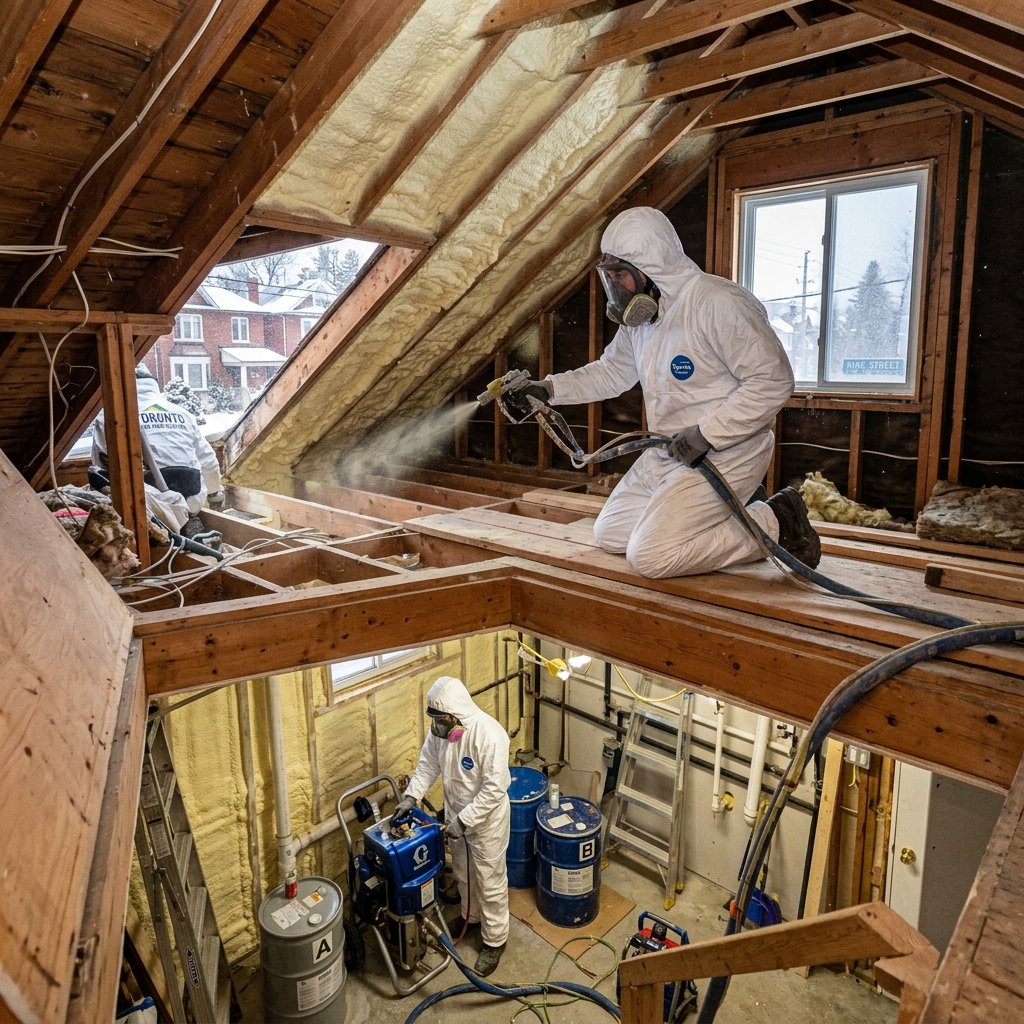
Step 3 — Application: Our technicians apply the intumescent coating or spray to the specified areas using professional spray equipment. Application typically takes 2–6 hours depending on project scope. Most coatings are dry to the touch within 4 hours.
Step 4 — Inspection and Documentation: We conduct a post-application inspection and provide you with product data sheets, fire resistance certification documentation, and our own inspection report — everything you need for your building permit file or insurance purposes.
Frequently Asked Questions About Fireproofing Spray
Is fireproofing spray the same as spray foam insulation?
No — they serve different purposes. Spray foam insulation (SPF) is designed to air-seal and thermally insulate. Intumescent fireproofing spray is formulated specifically to resist heat and prevent structural failure during a fire. Some projects use both — spray foam for thermal performance and fireproofing spray for fire resistance on structural elements. Spray Foam Kings installs both products and can advise on the right combination for your home.
Does fireproofing spray smell? Is it safe for my family?
Most intumescent coatings have minimal odour when dry. During application, the area should be vacated and ventilated. Water-based intumescent products are the lowest-VOC option. All products we use are approved for residential applications and carry relevant Canadian safety certifications. We’ll advise you on re-entry timing, which is typically 4–8 hours after application.
Will fireproofing spray affect my home’s appearance?
In unfinished areas like basements, mechanical rooms, and attics, the spray is typically left exposed and is barely noticeable — it looks similar to a textured coating. For visible areas like exposed steel beams in open-concept living spaces, we use intumescent paint products that can be top-coated with regular paint to match your décor.
How long does fireproofing spray last?
When properly applied to a clean, dry surface, intumescent coatings in interior applications (basements, garages, mechanical rooms) will last 20–30 years with no maintenance required. They are not affected by normal humidity fluctuations or temperature cycling typical of Toronto homes. If the coating is physically damaged, it can be patched or recoated.
Does fireproofing spray qualify for any insurance discounts in Ontario?
Some Ontario home insurers offer premium reductions for documented fire mitigation upgrades. Contact your insurer with the product data sheets and our inspection report — many homeowners in North York and Mississauga have reported reduced premiums after completing fireproofing projects. We recommend checking with your broker in 2026, as insurer policies continue to evolve.
Can I DIY fireproofing spray?
Consumer-grade intumescent paints are available at hardware stores, but they are not equivalent to professionally applied, ULC-listed systems. For any application that needs to meet OBC fire resistance ratings — especially for permit purposes — professional application with certified products is required. Improper application can result in insufficient film thickness, poor adhesion, and failure to achieve the stated fire resistance rating.
Serving Your Neighbourhood: GTA Fireproofing Coverage
Spray Foam Kings provides fireproofing spray services throughout the Greater Toronto Area including: Scarborough, North York, Etobicoke, Downtown Toronto, East York, Vaughan, Richmond Hill, Markham, Stouffville, Brampton, Mississauga, Oakville, Ajax, Pickering, and Whitby. We typically serve residential and light commercial projects within a 60 km radius of Toronto.
No matter where you are in the GTA, our team can be at your door for a free assessment within days. We understand the local building codes, permit requirements, and housing stock in each of these communities — so you get advice that’s specific to your home and your municipality, not generic contractor boilerplate.
Get Your Free Fireproofing Assessment Today
Fire safety doesn’t have to be complicated or expensive. A single day’s investment in professional fireproofing spray can add decades of protection to your home’s structural elements and give your family critical extra time in a worst-case scenario. In 2026, with the GTA’s housing market as competitive as ever, a well-documented fire safety upgrade also adds real dollar value to your property.
Call Spray Foam Kings today at 647-641-6881 for a free, no-obligation fireproofing assessment. Our certified technicians serve all of Toronto and the surrounding GTA, and we’ll provide a detailed written quote within 24 hours of your assessment. Don’t wait for a close call — protect your home now.
Related posts
Closed Cell Spray Foam Canada Toronto 2026: Complete Guide
Closed cell spray foam insulation in Canada costs between $2.50 and $5.00 per square foot CAD installed, making it one of the most cost-effective and
Insulation Rebate Ontario Toronto 2026: Complete Guide
Ontario homeowners who install spray foam insulation can qualify for rebates ranging from $1,600 to $10,600 CAD through federal and provincial programs — and
Spray Foam Insulation Cost Toronto 2026: Exact Pricing for Your Home
Spray foam insulation in Toronto costs $1.50–$3.50 per square foot CAD for open-cell foam and $2.50–$5.00 per square foot CAD for closed-cell foam, fully
Commercial Spray Foam Fireproofing Services — Toronto & GTA 2026
Commercial spray foam fireproofing in Toronto costs $3.50–$8.00 per square foot installed in 2026, depending on required fire-resistance rating,
Spray Foam Insulation Rebate Ontario 2026: How to Get Up to $10,000 Back on Your Upgrade
Spray foam insulation rebates in Ontario for 2026 can put up to $10,000 CAD back in your pocket when you upgrade from fiberglass or cellulose to