Is Spray Foam Insulation the Key to Lowering Your Energy Bills?
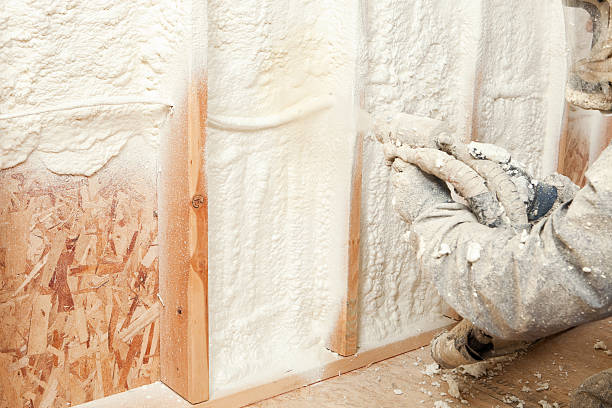
Is Spray Foam Insulation the Key to Lowering Your Energy Bills in Toronto? (2026 Guide)
Energy costs in Toronto and the Greater Toronto Area have climbed steadily over the past several years. In 2026, the average GTA household spends $2,800–$4,500 annually on heating and cooling — a figure that would shock homeowners from just a decade ago. With Enbridge gas distribution rates, Toronto Hydro delivery charges, and carbon pricing all contributing to rising utility costs, finding meaningful ways to reduce energy consumption has never been more financially urgent.
Spray foam insulation is consistently ranked among the highest-ROI home upgrades available to Toronto homeowners — outperforming new windows, smart thermostats, and even heat pump upgrades in some cases. This guide explains exactly how spray foam cuts energy bills, where to apply it, what it costs in CAD, and why Spray Foam Kings is the GTA’s most trusted installer.
Why Most Toronto Homes Waste Energy Through Poor Insulation
The average pre-1990 Toronto home was built to energy standards that are dramatically below today’s requirements. An Ontario home built in 1975 might have R-12 in the attic, no rim joist insulation, fibreglass batts in the basement walls, and single-pane or early double-pane windows throughout. The Ontario Building Code in 2026 requires new homes to achieve an EnerGuide rating of 83 or higher — most pre-1990 homes in Scarborough, North York, and Etobicoke score in the 40s and 50s.
The fundamental problem isn’t just R-value — it’s air leakage. A Natural Resources Canada study found that air infiltration accounts for 25–40% of a home’s total heat loss. Every gap around a pot light, plumbing penetration, electrical outlet, window frame, or basement rim joist is a direct path for your conditioned air to escape and cold exterior air to enter. Traditional fibreglass and mineral wool batts do not address air leakage at all — they only slow conduction through solid materials.
Spray polyurethane foam (SPF) is the only insulation product that simultaneously insulates and air-seals. It expands to fill every crack and gap on contact, creating a continuous thermal and air barrier that no other product can match.
Where Spray Foam Delivers the Greatest Energy Savings
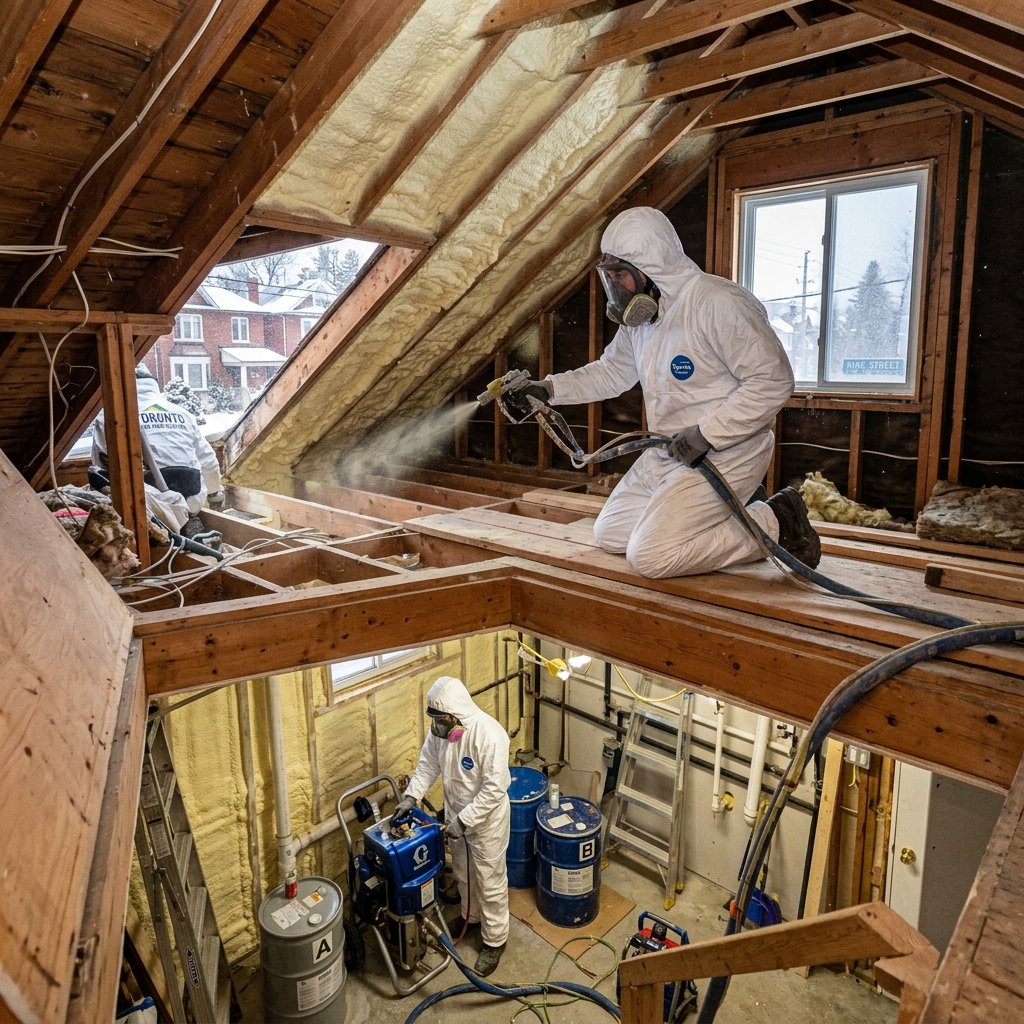
Attic (Highest Impact Zone): 25–40% of your home’s heat escapes through the roof assembly. Spray foam applied to the attic floor or roofline — depending on your HVAC configuration — typically delivers $500–$1,500 in annual energy savings for a typical Toronto detached home.
Basement Rim Joists (Quick Win): The rim joist is the perimeter framing at the top of your foundation walls. It’s one of the most air-leaky areas in any Toronto home — exposed to exterior temperatures, riddled with gaps, and almost never properly insulated in pre-2000 construction. Two inches of closed-cell spray foam on the rim joist can reduce air infiltration by 30–50% at a cost of $800–$1,800 CAD — one of the best ROI improvements available.
Basement Walls: An uninsulated or poorly insulated basement loses significant heat through the concrete foundation. Spray foam on basement walls creates a warm, dry, usable space and eliminates the condensation that leads to mould growth. Annual energy savings of $300–$800 are typical for full basement wall spray foam in the GTA.
Crawl Spaces: Homes in parts of Scarborough, Etobicoke, and Mississauga have crawl spaces that are often uninsulated or poorly insulated. A cold, drafty crawl space makes every room above it uncomfortable and drives up heating costs. Spray foam on crawl space walls and rim joists creates a conditioned crawl space that dramatically improves comfort and energy performance.
Walls (New Construction and Gut Renovations): When walls are open during a renovation, spray foam in the stud cavities provides dramatically better air sealing than batts alone. The difference is most noticeable in older Brampton and Vaughan homes with drafty exterior walls.
2026 CAD Energy Savings Calculator: Toronto Homes
| Application Zone | Typical Install Cost (CAD) | Annual Savings (CAD) | Payback Period |
|---|---|---|---|
| Attic floor (full) | $4,500 – $8,000 | $700 – $1,500 | 4–7 years |
| Rim joists only | $800 – $1,800 | $250 – $500 | 3–5 years |
| Basement walls | $3,500 – $7,000 | $400 – $900 | 5–9 years |
| Crawl space walls + rim | $2,500 – $5,000 | $350 – $750 | 4–8 years |
| Full home package | $12,000 – $22,000 | $1,800 – $3,500 | 5–8 years |
These estimates are based on 2026 GTA utility rates, average Toronto home sizes (1,200–2,000 sq ft), and typical pre-1990 construction baseline. Individual results vary based on existing insulation, home geometry, and utility usage patterns.
Ontario and Federal Rebates That Improve Your ROI in 2026
The Canada Greener Homes initiative offers up to $5,600 in rebates for qualifying home insulation upgrades, including spray foam applications that improve EnerGuide ratings. An EnerGuide energy assessment is required both before and after the upgrade to quantify the improvement and unlock rebates.
Additionally, some Ontario utilities and municipalities offer supplementary rebates for documented energy efficiency improvements. Spray Foam Kings can connect you with registered energy advisors in your area and help structure your project to maximize available incentives — reducing your net out-of-pocket cost and shortening the payback period significantly in 2026.
Why Spray Foam Kings for Your Energy Upgrade
Spray Foam Kings has been helping GTA homeowners reduce energy bills for 15+ years. Our SPFA-certified technicians understand not just application technique, but the building science behind air sealing — which zones to prioritize, which products to specify, and how to design a project that maximizes energy savings for your specific home.
We carry $5 million in liability insurance and full WSIB coverage. Every project comes with a written quote, product data sheets, and a post-installation report that can be submitted to Canada Greener Homes or your utility for rebate processing. We serve all of Toronto, Scarborough, North York, Etobicoke, Mississauga, Brampton, Vaughan, and Markham.
Frequently Asked Questions
How much can spray foam actually reduce my energy bills in Toronto?
For a typical pre-1990 Toronto detached home that upgrades attic, rim joists, and basement walls, total annual savings of $1,200–$2,500 CAD are achievable based on 2026 utility rates. Homes that were particularly poorly insulated or air-leaky often see even higher savings. A free energy assessment from Spray Foam Kings will give you a realistic estimate for your specific home.
Is spray foam better than new windows for reducing energy bills?
In most cases, yes — dollar for dollar. Replacing windows typically delivers energy savings of $150–$400 per year for a full-house window replacement costing $15,000–$30,000 CAD. Spray foam in the attic and basement delivers $1,000–$2,000+ per year at a fraction of the cost. Windows are worthwhile eventually, but insulation should come first.
Will spray foam make my home too airtight?
A properly designed spray foam project includes a ventilation strategy — typically an HRV (heat recovery ventilator) or ERV (energy recovery ventilator) — to provide fresh air exchange without the energy penalty of uncontrolled infiltration. Spray Foam Kings will assess your current ventilation situation and recommend upgrades if needed as part of your project scope.
How long does spray foam insulation last?
Spray foam, once cured, is a permanent installation. It does not settle, sag, absorb moisture, or degrade in normal residential conditions. The energy savings it delivers continue for the life of the building — typically 30+ years with no maintenance required.
Can I get spray foam done in winter in Toronto?
Yes. Spray Foam Kings operates year-round throughout the GTA. Spray foam requires substrate temperatures above 10°C for proper curing — in cold weather, we use heated enclosures and equipment to maintain proper conditions. Winter is actually an excellent time to insulate, as you’ll immediately begin capturing energy savings during the peak heating season.
Book Your Free Energy Assessment Today
If you’re tired of energy bills that seem to climb every year regardless of how carefully you manage your thermostat, spray foam insulation is likely the single highest-impact upgrade you can make to your Toronto home. In 2026, with utility costs at record levels, the financial case for spray foam has never been stronger — and the payback period has never been shorter.
Call Spray Foam Kings today at 647-641-6881 for a free home energy assessment. We’ll identify your home’s biggest energy loss zones, recommend the most cost-effective spray foam solution, and provide a detailed written quote. Most projects are completed in a single day with no disruption to your family.
Related posts
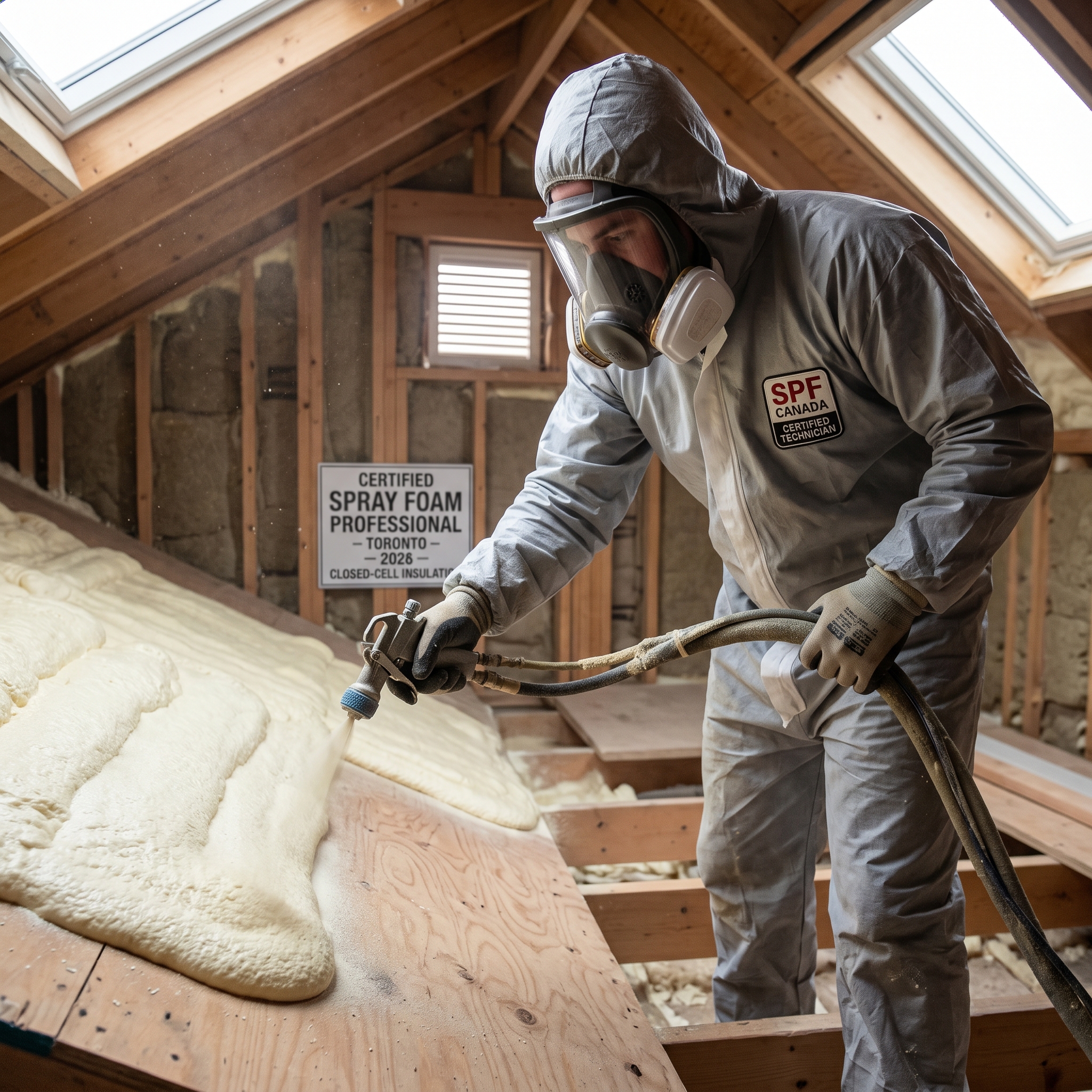
Closed Cell Spray Foam Canada Toronto 2026: Complete Guide
Closed cell spray foam insulation in Canada costs between $2.50 and $5.00 per square foot CAD installed, making it one of the most cost-effective and
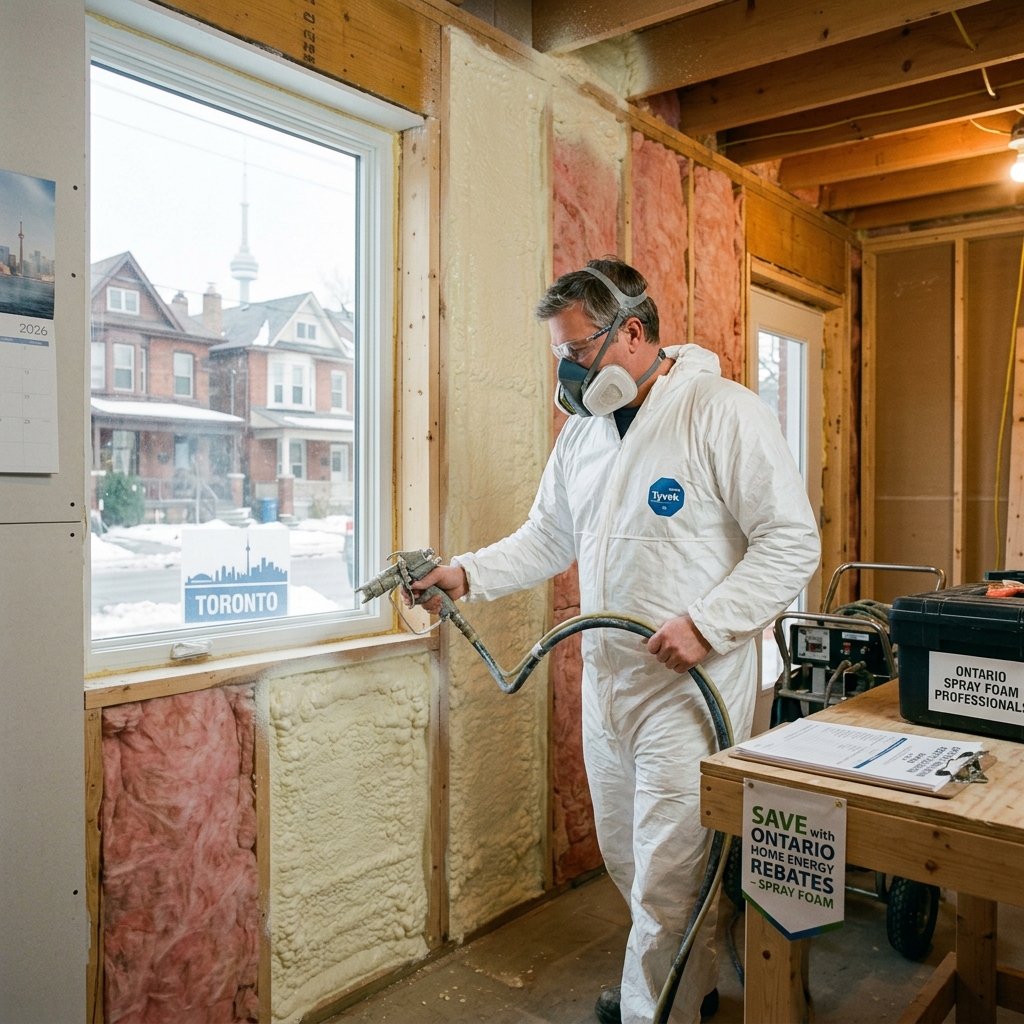
Insulation Rebate Ontario Toronto 2026: Complete Guide
Ontario homeowners who install spray foam insulation can qualify for rebates ranging from $1,600 to $10,600 CAD through federal and provincial programs — and
Spray Foam Insulation Cost Toronto 2026: Exact Pricing for Your Home
Spray foam insulation in Toronto costs $1.50–$3.50 per square foot CAD for open-cell foam and $2.50–$5.00 per square foot CAD for closed-cell foam, fully
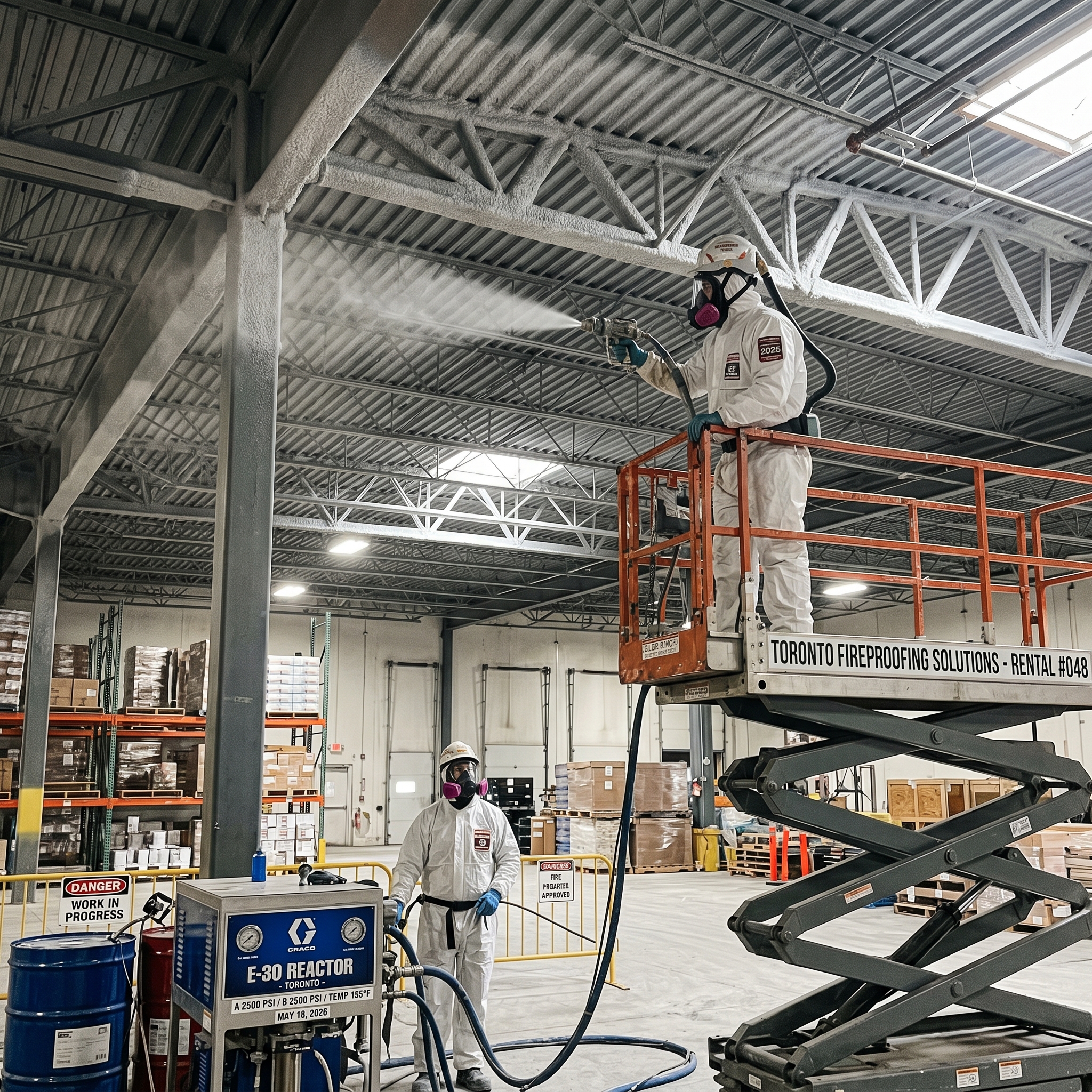
Commercial Spray Foam Fireproofing Services — Toronto & GTA 2026
Commercial spray foam fireproofing in Toronto costs $3.50–$8.00 per square foot installed in 2026, depending on required fire-resistance rating,
Spray Foam Insulation Rebate Ontario 2026: How to Get Up to $10,000 Back on Your Upgrade
Spray foam insulation rebates in Ontario for 2026 can put up to $10,000 CAD back in your pocket when you upgrade from fiberglass or cellulose to