How to Insulate Basement Walls in Ontario?
How to Insulate Basement Walls in Ontario: A Complete Toronto Homeowner’s Guide for 2026
Basement wall insulation is one of the most impactful upgrades you can make to a home in Ontario — delivering energy savings, improved comfort, moisture control, and added living space value. But doing it correctly in Ontario’s climate requires understanding the specific building science involved: how moisture moves through below-grade walls, what Ontario Building Code requires for vapour control, and which insulation products actually perform in a Toronto basement versus which ones just look good on paper.
This guide walks you through the complete process of insulating basement walls in Ontario — from assessment to product selection to installation — with a focus on spray foam as the highest-performing approach. It includes 2026 CAD cost estimates, OBC compliance notes, and specific guidance for the GTA’s housing stock.
Step 1: Understand What You’re Working With
Before any insulation work begins, assess your basement’s current condition:
Foundation type: Most Toronto homes have either poured concrete walls or concrete block (CMU) walls. Poured concrete is less permeable but still allows moisture vapour transmission. Block walls are more permeable and more prone to moisture infiltration through mortar joints. Each type requires a slightly different insulation approach.
Moisture status: Before insulating, confirm there is no active water infiltration. Look for staining, efflorescence (white salt deposits on concrete), or standing water. Active leaks must be addressed before insulation — trapping moisture behind insulation leads to mould and structural damage. In Toronto’s older housing stock (Scarborough, Etobicoke, North York), failed or absent exterior waterproofing is common and may need attention before interior insulation is applied.
Existing insulation: Many Toronto basements have fibreglass batts installed against the foundation walls — sometimes without any vapour barrier, or with a vapour barrier on the wrong side. This is a significant moisture risk. Old fibreglass batts against cold concrete walls typically harbour mould, and should be inspected and often removed before new insulation is installed.
Rim joist condition: The rim joist — perimeter framing at the top of the foundation — is almost always the most air-leaky zone in the basement. Assess whether it’s insulated, and whether insulation is properly in contact with the concrete below and the framing above.
Step 2: Know Ontario Building Code Requirements for 2026
Ontario’s Building Code (OBC) and the SB-12 supplementary standard establish minimum performance requirements for basement wall insulation in new construction and major renovations throughout the GTA:
Minimum effective R-value for below-grade walls: OBC Climate Zone 5 (Toronto and most of the GTA) requires a minimum effective R-15 for below-grade walls in new construction and major renovations. This must be achieved with a continuous insulation approach to avoid thermal bridging through wood framing.
Vapour barrier requirement: Below-grade wall assemblies require vapour control on the warm-side of insulation. Closed-cell spray foam (perm rating below 1.0) qualifies as its own vapour barrier. Fibreglass batts, mineral wool, and open-cell foam require a separate 6-mil polyethylene vapour retarder on the warm side.
Fire protection: Spray foam must be covered with a thermal barrier (12.7mm Type X drywall or equivalent) in any area accessible to occupants. This applies in finished basements, secondary suites, and any basement area where people can enter. Unfinished mechanical rooms may qualify for alternative ignition barriers in some jurisdictions — confirm with your local building department.
Step 3: Choose the Right Insulation Product
For Ontario basement walls, there are three practical approaches:
Option A: Closed-Cell Spray Foam (Recommended)
Applied directly to the concrete foundation wall, closed-cell spray foam provides:
R-6 to R-7 per inch — 2 inches = R-12 to R-14; 3 inches = R-18 to R-21. Built-in vapour barrier (perm rating below 1.0 at 2″ or more). Complete air sealing of the concrete surface. Moisture resistance — does not absorb or wick water. Structural bond to the foundation — adds rigidity. No separate vapour barrier required. Best overall performance for below-grade Ontario applications.
Option B: Rigid Foam Board (XPS or EPS)
A cost-effective alternative that provides continuous insulation when installed correctly. Requires careful seaming and taping to achieve air sealing, which is difficult around irregular concrete surfaces, columns, and penetrations. XPS (extruded polystyrene, pink or blue board) provides R-5 per inch; EPS (expanded polystyrene) provides R-3.8 per inch. Still requires a separate vapour barrier for most product combinations. Common in new construction where walls are smooth and uniform; less ideal for retrofit in irregular older basements.
Option C: Hybrid (Spray Foam + Batt)
A thin layer of closed-cell spray foam (1–2 inches, providing the vapour barrier and air seal) is applied to the concrete, followed by wood stud framing and fibreglass or mineral wool batts in the cavities. This maximizes R-value per dollar while ensuring code-compliant vapour control. Common in new construction and gut renovations where cost optimization is important.
For most retrofit basement projects in the GTA, Spray Foam Kings recommends Option A (full closed-cell spray foam) for its combination of performance, simplicity, and long-term durability — particularly in older homes where concrete surfaces are irregular and moisture management is a priority.
Step 4: The Installation Process
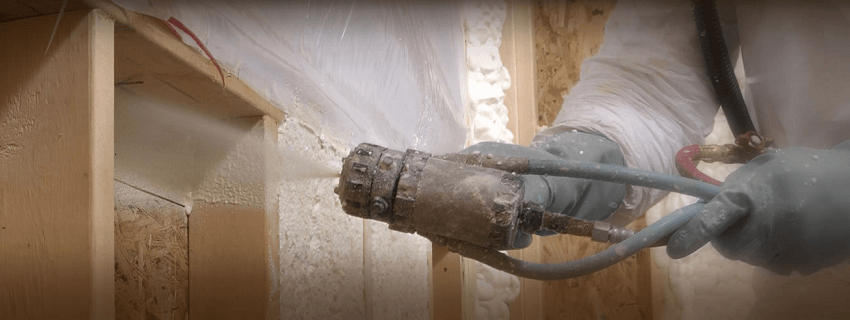
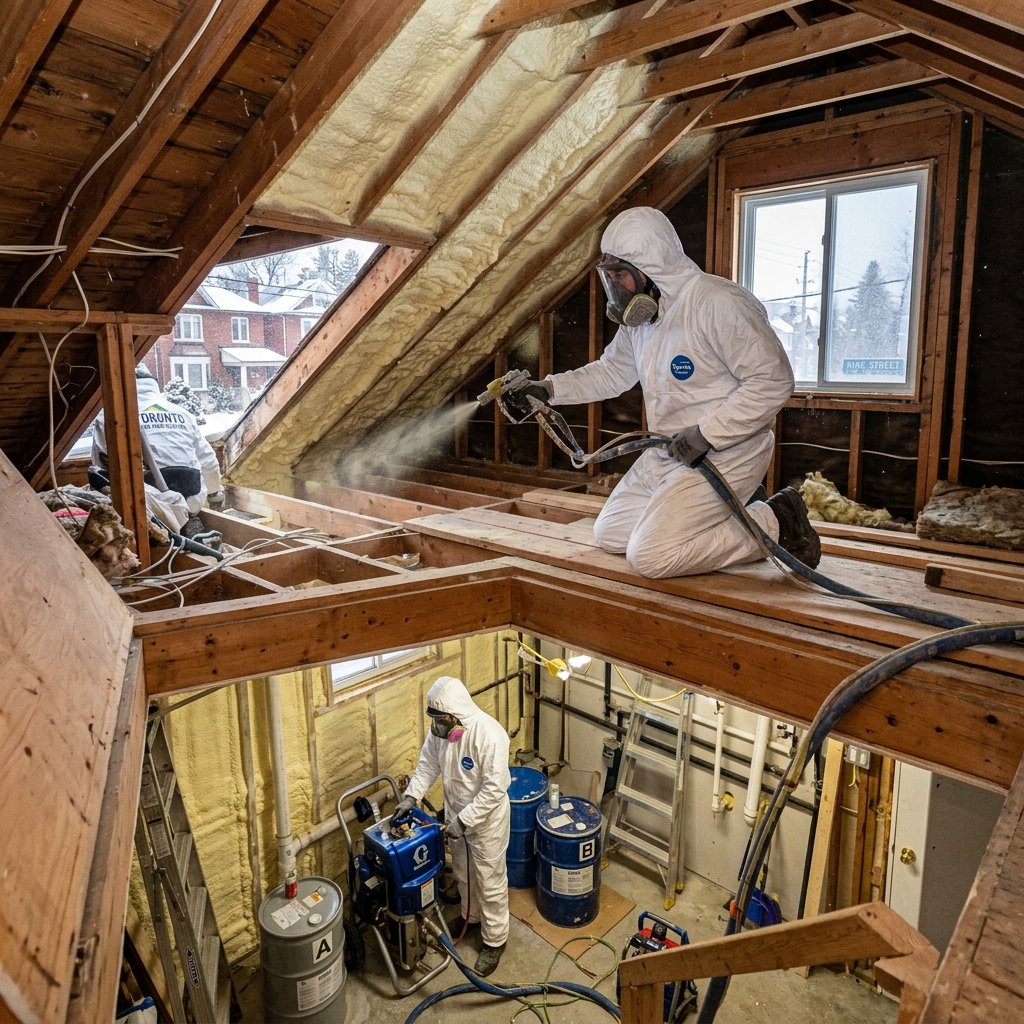
Here is what a professional spray foam basement wall installation by Spray Foam Kings looks like:
Day before: Clear the basement perimeter — move storage, furniture, and equipment away from walls. Cover items that can’t be moved with drop sheets. The area to be sprayed should be clear of obstructions to at least 3 feet from the wall.
Day of installation: Our technicians arrive with full professional equipment — proportioning machine, heated hoses, spray guns, PPE including respirators and full protective suits. The basement is ventilated with fresh air supply fans. All surfaces adjacent to the spray area are protected.
Application: Closed-cell spray foam is applied to the concrete foundation wall from the footing to the top plate. The rim joist zone (top of foundation, perimeter framing) is sealed and insulated simultaneously. Application typically takes 3–6 hours for a standard Toronto basement depending on perimeter length and ceiling height.
Cure time: Closed-cell foam is tack-free in 1–5 minutes and fully cured within 24 hours. Re-entry to the space is possible within 2–4 hours after application with adequate ventilation.
Post-installation: We provide product data sheets, thickness measurement records, and our inspection report. If a building permit is involved, we provide documentation suitable for your permit file.
2026 CAD Cost Guide: Basement Wall Insulation in Ontario
| Product & Scope | Thickness / R-Value | CAD Cost (typical semi-detached) |
|---|---|---|
| Closed-cell spray foam (walls only) | 2″ / R-12–14 | $3,500 – $6,500 |
| Closed-cell spray foam (walls only) | 3″ / R-18–21 | $5,000 – $9,000 |
| Rim joist (closed-cell, 2″) | 2″ / R-12 | $800 – $1,800 |
| Walls + rim joist package | 2–3″ complete | $4,500 – $10,000 |
| Hybrid (1.5″ SPF + batts) | R-10 SPF + R-12 batts | $3,000 – $7,000 |
Frequently Asked Questions
Do I need to remove old fibreglass batts before insulating my basement walls?
In most cases, yes. Old fibreglass batts installed against cold concrete foundation walls in Toronto’s climate almost always have moisture damage and often mould. They should be inspected and, if compromised, removed and disposed of before new insulation is applied. Spray foam applied over moist, mould-affected substrate can trap the moisture and worsen the condition.
Can I insulate my basement walls if there is minor seepage?
Minor condensation is usually acceptable; active water infiltration or seepage is not. If you have cracks in your foundation with water entry during rain events, these should be injected (epoxy or polyurethane injection) and the drainage situation addressed before interior insulation is applied. Spray Foam Kings will flag any active moisture concerns during the assessment.
How does closed-cell spray foam compare to rigid foam board for Ontario basements?
Closed-cell spray foam provides higher R-value per inch (R-6.5 vs R-5 for XPS), better air sealing (bonds to irregular concrete surfaces seamlessly), and a superior built-in vapour barrier (lower perm rating). For retrofit projects in older GTA homes with irregular concrete surfaces, spray foam consistently outperforms rigid board in real-world performance. Rigid board is cost-competitive in new construction where surfaces are smooth and framing is straight.
Does basement wall insulation qualify for Canada Greener Homes rebates?
Yes — basement wall and rim joist insulation are eligible upgrades under the Canada Greener Homes initiative. Up to $5,600 in rebates are available in 2026 for qualifying projects with documented EnerGuide improvement. Spray Foam Kings can provide the documentation needed to support your rebate application.
How long will spray foam last on my basement walls?
Closed-cell spray foam is a permanent installation — 30+ years under normal basement conditions with no maintenance required. It does not settle, absorb moisture, or support mould growth when properly applied.
Start Your Ontario Basement Insulation Project Today
Proper basement wall insulation is one of the best investments you can make in your Ontario home — delivering energy savings, moisture control, comfort, and code compliance in one well-executed project. In 2026, with OBC standards raising the bar and energy costs making under-insulated homes increasingly expensive to operate, the motivation has never been stronger.
Call Spray Foam Kings at 647-641-6881 for your free basement wall insulation assessment. We serve homeowners throughout Toronto, Scarborough, North York, Etobicoke, Mississauga, Brampton, Vaughan, and Markham — and we’ll provide a detailed written quote within 24 hours of our site visit.
Related posts
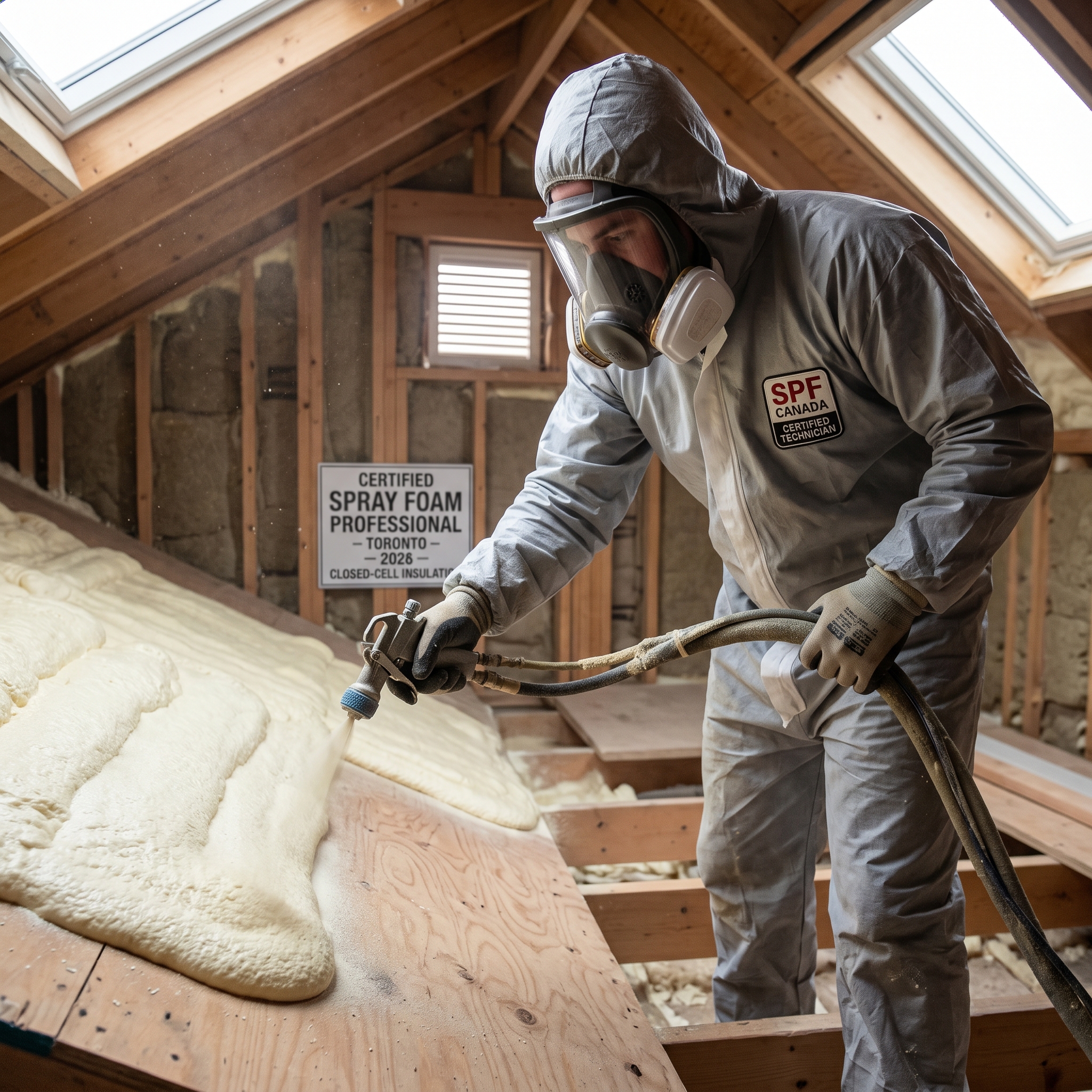
Closed Cell Spray Foam Canada Toronto 2026: Complete Guide
Closed cell spray foam insulation in Canada costs between $2.50 and $5.00 per square foot CAD installed, making it one of the most cost-effective and
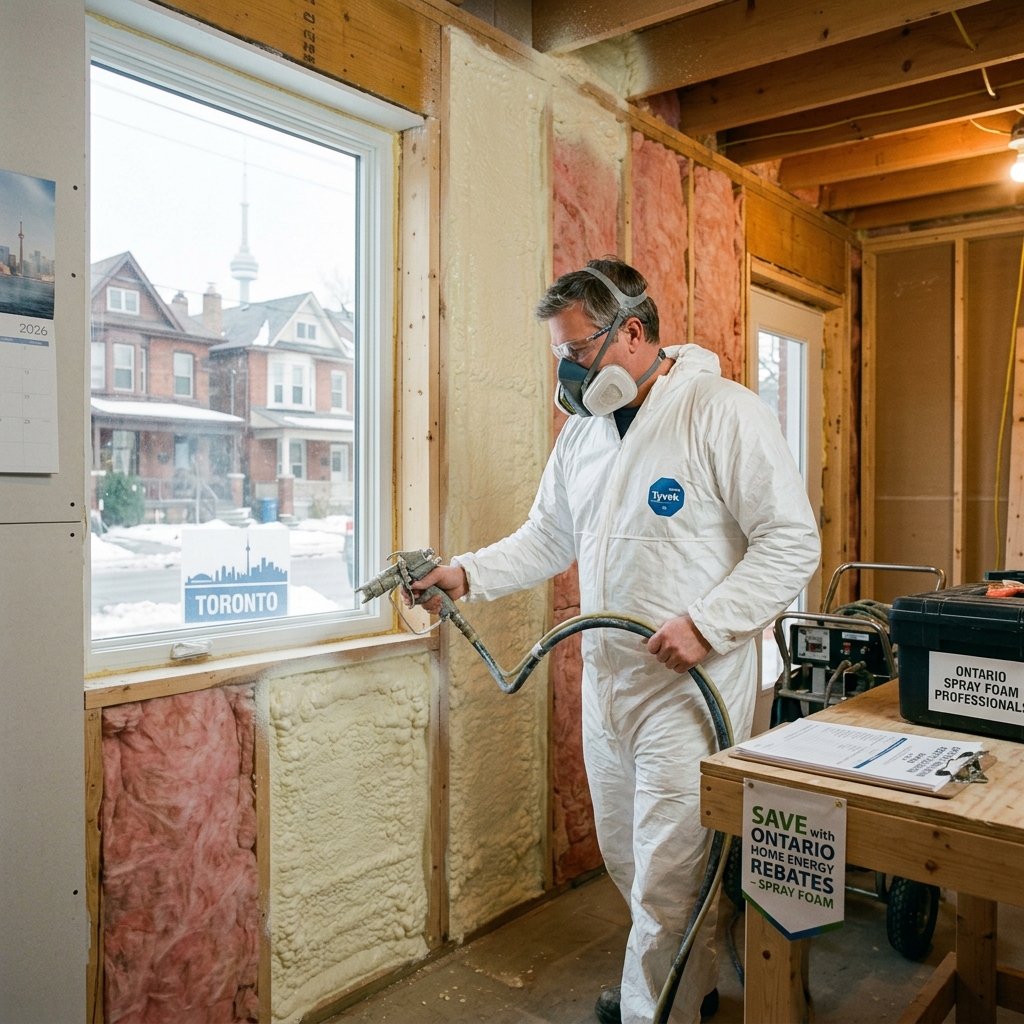
Insulation Rebate Ontario Toronto 2026: Complete Guide
Ontario homeowners who install spray foam insulation can qualify for rebates ranging from $1,600 to $10,600 CAD through federal and provincial programs — and
Spray Foam Insulation Cost Toronto 2026: Exact Pricing for Your Home
Spray foam insulation in Toronto costs $1.50–$3.50 per square foot CAD for open-cell foam and $2.50–$5.00 per square foot CAD for closed-cell foam, fully
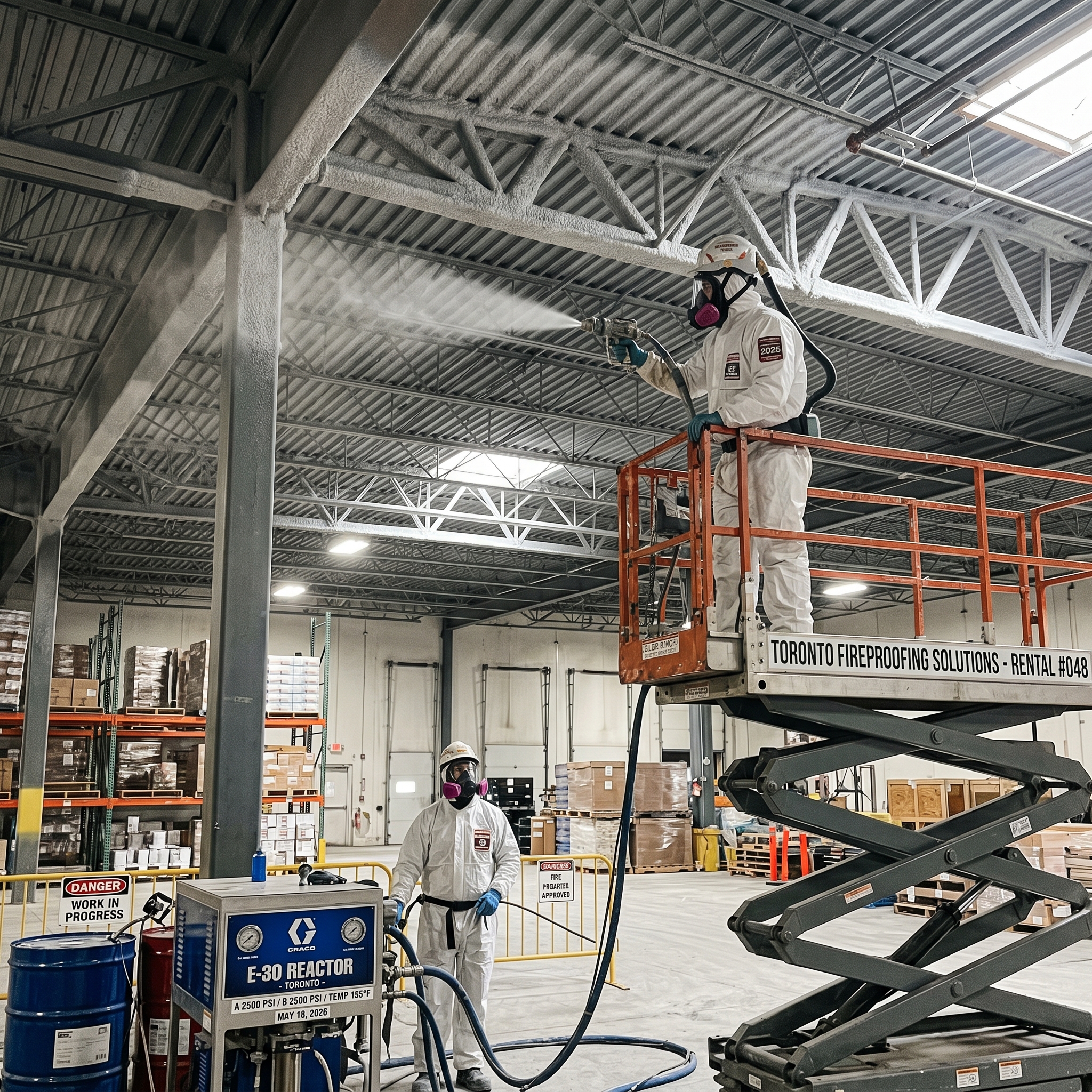
Commercial Spray Foam Fireproofing Services — Toronto & GTA 2026
Commercial spray foam fireproofing in Toronto costs $3.50–$8.00 per square foot installed in 2026, depending on required fire-resistance rating,
Spray Foam Insulation Rebate Ontario 2026: How to Get Up to $10,000 Back on Your Upgrade
Spray foam insulation rebates in Ontario for 2026 can put up to $10,000 CAD back in your pocket when you upgrade from fiberglass or cellulose to