HOW TO FIND YOUR ATTIC NEEDS MORE INSULATION
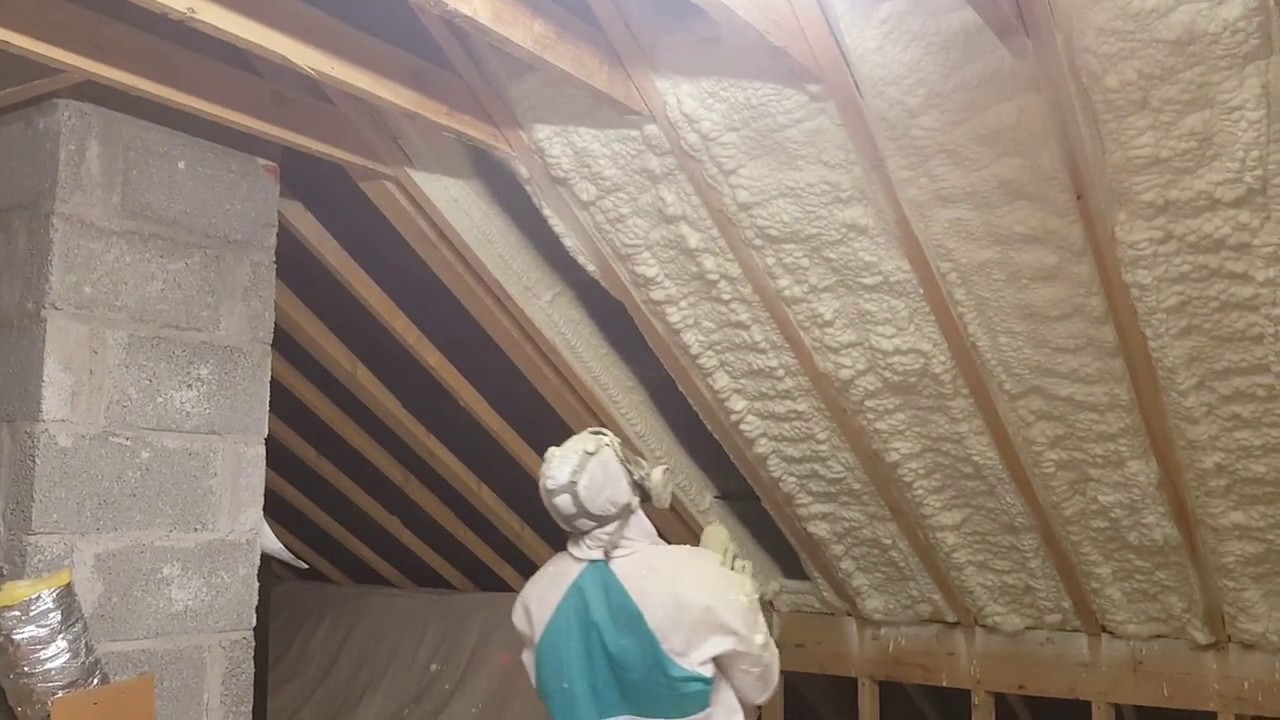
How to Tell If Your Attic Needs More Insulation: A Toronto Homeowner’s Guide for 2026
Most Toronto homeowners have no idea what’s happening above their ceiling. Your attic is out of sight, hard to access, and easy to ignore — until your energy bills spike, ice dams form on your eaves, or your second floor becomes unbearably hot in summer. By the time these problems are obvious, your attic insulation has likely been under-performing for years, costing you hundreds of dollars annually in wasted energy.
The good news: there are clear, identifiable signs that your attic needs more insulation — and many of them are visible without even going up there. This guide walks you through the warning signs, what they mean, and what to do about them if you’re a homeowner in Scarborough, North York, Etobicoke, Vaughan, Mississauga, Brampton, or Markham.
Sign 1: Your Heating and Cooling Bills Keep Climbing
If your gas or hydro bills have increased significantly over the past few years — beyond what utility rate increases alone would explain — your attic may be the culprit. Heat rises. In a poorly insulated home, your furnace works overtime in winter to replace the heat escaping through the ceiling, and your air conditioner fights a losing battle against the heat radiating down from an overheated attic in summer.
A well-insulated Toronto home should see consistent energy bills year over year (adjusted for weather and utility rate changes). If yours are trending upward, an attic assessment is one of the first things to check. Based on 2026 Enbridge and Toronto Hydro rates, a typical GTA home with inadequate attic insulation wastes $600–$1,800 per year in energy costs — money that could be recovering the cost of proper insulation within a few years.
Sign 2: Uneven Temperatures Between Floors
Do you find yourself cranking the heat in the living room while your second-floor bedrooms feel like a different climate? Or is the master bedroom above the garage always cold in winter, even with the heat running? These temperature differentials are classic signs of insulation gaps — often in the attic, sometimes in the floor above the garage (which functions as a second “attic” for the rooms above it).
In a properly insulated home, temperatures should be fairly consistent across all rooms on all floors. Significant variations indicate that heat is bypassing the insulation layer through air infiltration paths or that insulation is absent or missing in certain zones. This is particularly common in North York and Scarborough homes that have been renovated multiple times, with each renovation creating new penetrations through the thermal envelope.
Sign 3: Ice Dams on Your Roof in Winter
Ice dams are the most visible and costly sign of inadequate attic insulation in Toronto’s climate. They form when heat escapes from your living space through the attic floor, warms the roof deck, melts snow at the center of the roof, and sends water flowing down to the cold eaves — where it refreezes into a dam.
The backed-up water then gets under your shingles and leaks into your home. Ice dam damage — to shingles, roof decking, insulation, ceilings, and walls — costs Toronto homeowners thousands of dollars in repairs every winter. If you’ve had ice dams more than once, your attic insulation is almost certainly inadequate for Toronto’s climate.
The Ontario Building Code in 2026 requires minimum effective R-60 for attic assemblies in new construction in the GTA. Many older homes have R-12 to R-20. That gap is your ice dam problem.
Sign 4: You Can See Your Attic Joists
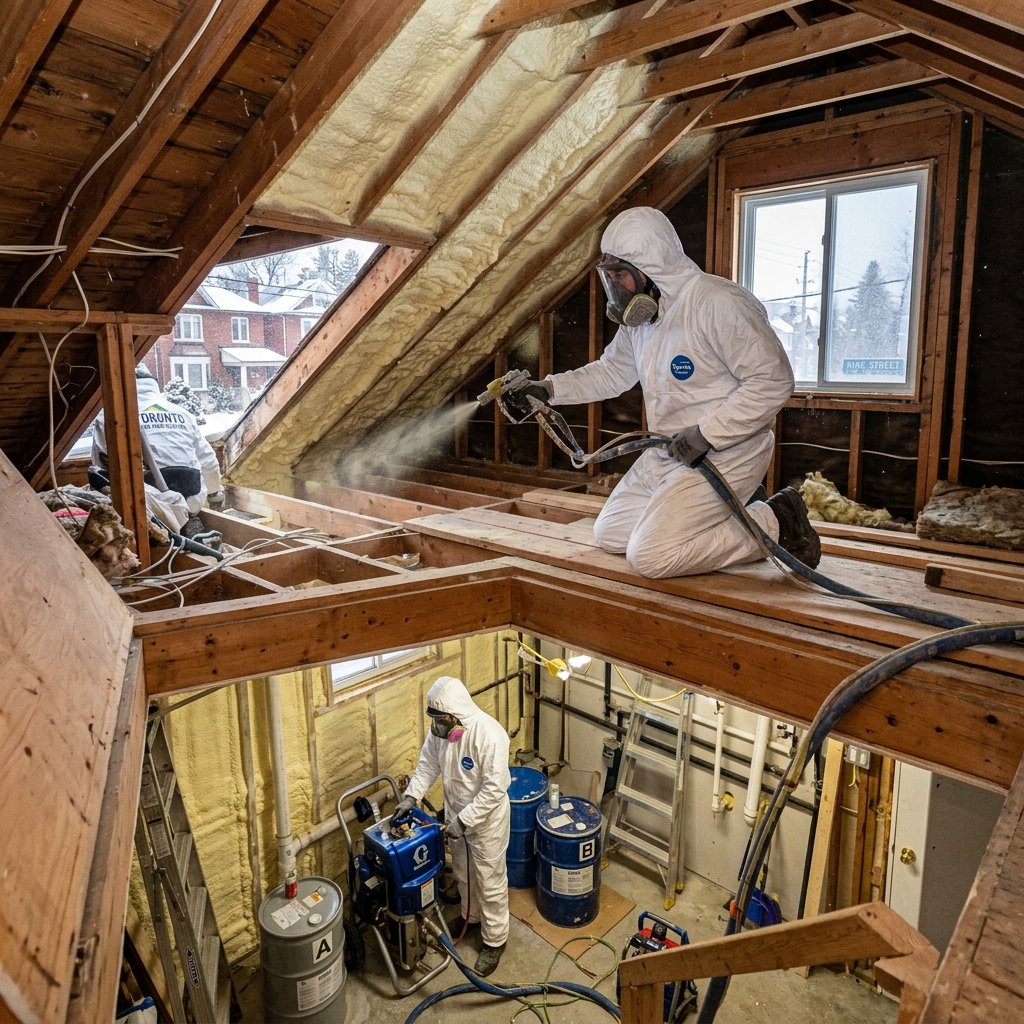
If you go up into your attic and you can see the tops of the floor joists clearly above the existing insulation, your attic is under-insulated. A proper attic in Toronto should have insulation installed above the joists — typically 12–16 inches of blown-in cellulose or fibreglass to reach R-50 to R-60, or 4–6 inches of spray foam for equivalent performance with better air sealing.
If you’re not sure how to assess what you have, Spray Foam Kings offers free attic assessments across the GTA. Our technician will measure existing insulation depth and R-value, identify air leakage paths, and give you a clear picture of where you stand relative to current Ontario standards.
Sign 5: Drafts and Cold Spots Near Ceiling-Level Areas
Stand under a pot light in your kitchen or bathroom ceiling. Do you feel cool air coming down, even with the furnace running? That’s attic air infiltrating through the light fixture — a direct thermal bypass around your insulation. Every pot light, exhaust fan, plumbing stack, and electrical wire in your ceiling is a potential air leakage point if not properly sealed.
This is one of the key reasons spray foam outperforms blown-in insulation for attic upgrades. Spray foam physically seals every penetration as it’s applied — pot lights, wire penetrations, pipe stacks — while blown-in fibreglass simply surrounds them, leaving airflow paths intact.
Sign 6: Your Attic Is Very Hot in Summer
Many Toronto homeowners notice that their upper floor is uncomfortably hot in July and August even with the AC running. A well-insulated attic with proper air sealing keeps the radiant heat gain from the roof assembly from penetrating into the living space below. If your attic hits 50–60°C on a hot summer day and your ceiling feels warm to the touch, you need more insulation — and likely better air sealing as well.
Spray foam’s superior R-per-inch performance means you can achieve meaningful thermal resistance even in tight rafter cavities where there isn’t room for the thickness of blown-in required to match the same R-value.
Sign 7: Pest Infiltration or Moisture Problems in the Attic
Old, settled blown-in fibreglass provides virtually no resistance to pest infiltration. Mice, squirrels, and raccoons find it an excellent nesting material. If you’ve had pest issues in your attic, there’s a high probability your insulation has been disturbed, displaced, or contaminated.
Spray foam, once cured, creates a solid barrier that pests cannot easily penetrate or nest in. After pest remediation and disinfection, spray foam is often the ideal replacement insulation for Toronto attics that have been disturbed by wildlife — a common issue in Scarborough, Etobicoke, and North York neighbourhoods with mature tree cover.
How to Check Your Attic Insulation: A DIY Assessment
If you’re comfortable going into your attic safely, here’s a quick self-assessment:
1. Measure insulation depth: Use a ruler to measure how deep the insulation goes above the joists. Rough conversion: 1 inch of fibreglass batts ≈ R-3.5; 1 inch of blown-in fibreglass ≈ R-2.5; 1 inch of cellulose ≈ R-3.5; 1 inch of closed-cell spray foam ≈ R-6.5. Target: R-50 to R-60 for Toronto.
2. Check for air sealing at penetrations: Look at where plumbing stacks, electrical wires, and exhaust fans penetrate the attic floor. Is there spray foam, caulk, or weatherstripping around them, or just insulation that’s been pushed aside? Unsealed penetrations are major energy losers.
3. Look for moisture staining: Dark staining on roof sheathing or rafters indicates moisture infiltration — either from air leakage (warm interior air condensing on cold surfaces) or roof leakage. Either issue should be addressed before adding insulation.
4. Check ventilation: Is there adequate airflow from soffit vents to the ridge? Blocked or insufficient ventilation combined with inadequate insulation is a recipe for ice dams and moisture problems.
What Does Attic Insulation Upgrade Cost in Toronto? (2026 CAD)
| Upgrade Type | Typical Attic Size | CAD Cost Range |
|---|---|---|
| Air seal + top-up blown-in | 800–1,200 sq ft | $1,800 – $3,500 |
| Spray foam air seal + blown-in top-up | 800–1,200 sq ft | $3,000 – $5,500 |
| Full spray foam attic floor (closed-cell) | 800–1,200 sq ft | $4,500 – $8,000 |
| Spray foam roofline (hot attic) | 800–1,200 sq ft | $6,500 – $12,000 |
| Pest remediation + spray foam replacement | Variable | $3,500 – $9,000 |
Frequently Asked Questions About Attic Insulation Needs
How do I know if my attic insulation has settled or degraded?
Fibreglass batts and blown-in fibreglass both settle and lose R-value over time. Cellulose settles less but can compact under moisture. Signs of degradation include visible settling (insulation level much lower than the joists), discolouration, moisture staining, and physical clumping. An in-person assessment by a certified insulation contractor is the most reliable way to evaluate existing insulation condition.
How much insulation does an Ontario home need in 2026?
The Ontario Building Code SB-12 standard requires a minimum of R-60 effective for attic assemblies in new construction in the GTA’s climate zone. For retrofit projects, programs like Canada Greener Homes use R-50 as the minimum target for rebate eligibility. Most homes built before 1990 in Toronto have R-12 to R-28 — well below current standards.
Can I just add more blown-in on top of what I have?
Adding blown-in on top of existing insulation can increase R-value, but it doesn’t address the fundamental problem of air leakage. If your existing attic floor has unsealed penetrations, blowing more insulation on top is like putting a thicker blanket over a screen window. Spray foam air sealing of penetrations, followed by blown-in top-up, is the best practice approach — and what we recommend for most retrofit projects in the GTA.
Will better attic insulation lower my home insurance?
Some insurers offer discounts for documented energy upgrades, including attic insulation improvements that reduce ice dam risk. Check with your broker — in 2026, several Ontario insurers have updated their home upgrade incentive programs. Reduced ice dam risk specifically can be a meaningful factor in northern GTA communities like Vaughan and Markham.
How quickly can Spray Foam Kings schedule an attic assessment?
We typically book free assessments within 3–5 business days across all GTA areas. During peak season (late fall and winter), booking earlier is recommended. After the assessment, most residential projects can be scheduled within 1–2 weeks.
Don’t Wait for the Next Ice Storm — Call Today
If you’ve recognized any of these warning signs in your home, don’t wait. Every winter with inadequate attic insulation costs you money and comfort — and increases your risk of ice dam damage. In 2026, with utility costs higher than ever across the GTA, the payback on proper attic insulation is faster than it’s ever been.
Call Spray Foam Kings at 647-641-6881 for a free attic assessment. We serve all of Toronto, Scarborough, North York, Etobicoke, Mississauga, Brampton, Vaughan, Markham, and surrounding communities. Our certified technicians will give you an honest assessment and a written quote — no pressure, no obligation.
Related posts
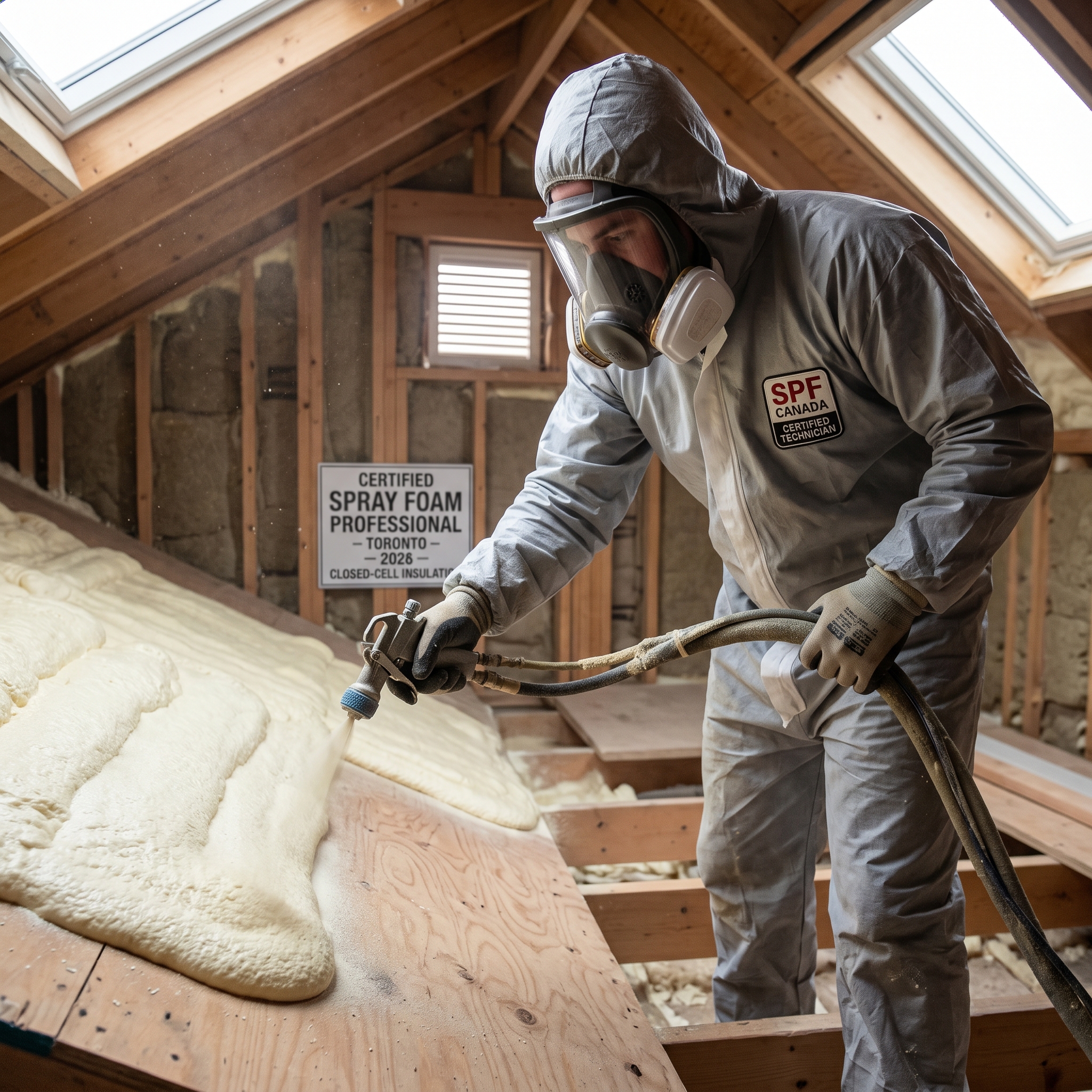
Closed Cell Spray Foam Canada Toronto 2026: Complete Guide
Closed cell spray foam insulation in Canada costs between $2.50 and $5.00 per square foot CAD installed, making it one of the most cost-effective and
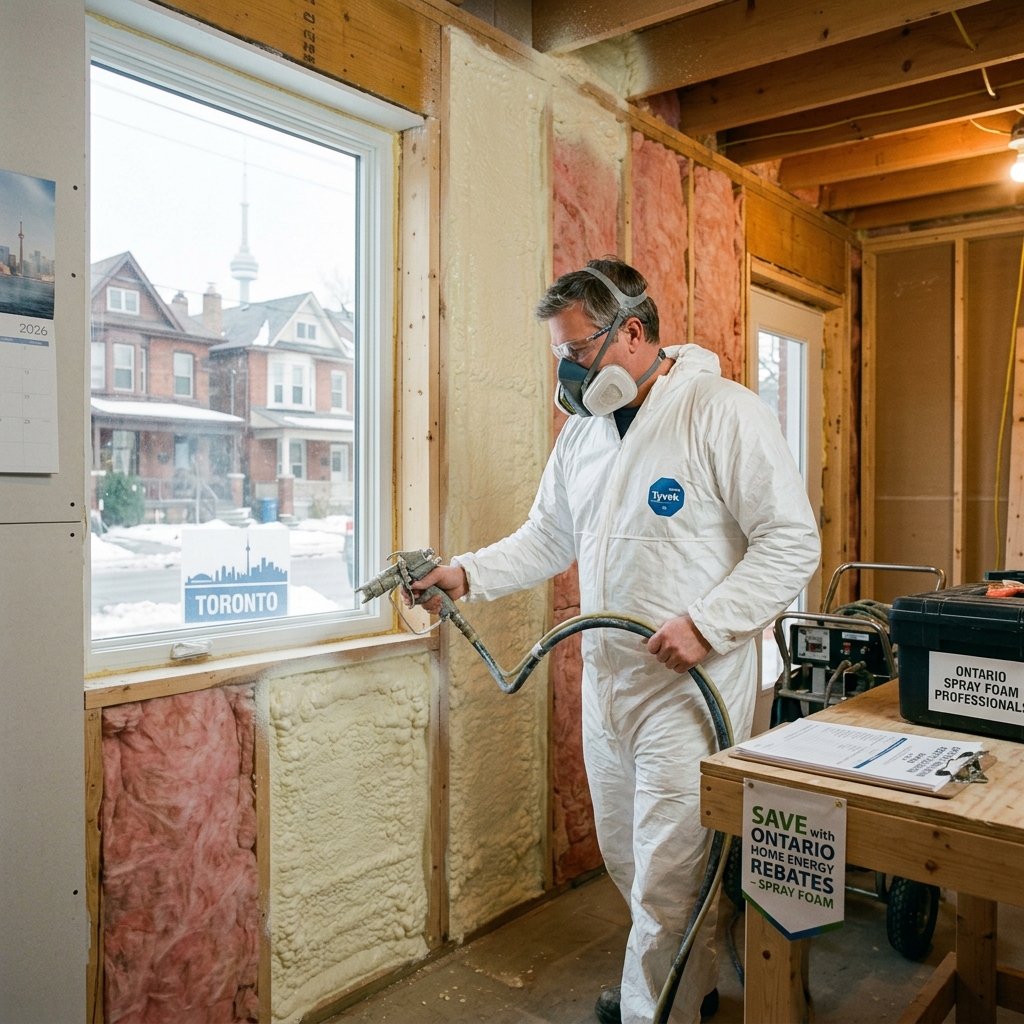
Insulation Rebate Ontario Toronto 2026: Complete Guide
Ontario homeowners who install spray foam insulation can qualify for rebates ranging from $1,600 to $10,600 CAD through federal and provincial programs — and
Spray Foam Insulation Cost Toronto 2026: Exact Pricing for Your Home
Spray foam insulation in Toronto costs $1.50–$3.50 per square foot CAD for open-cell foam and $2.50–$5.00 per square foot CAD for closed-cell foam, fully
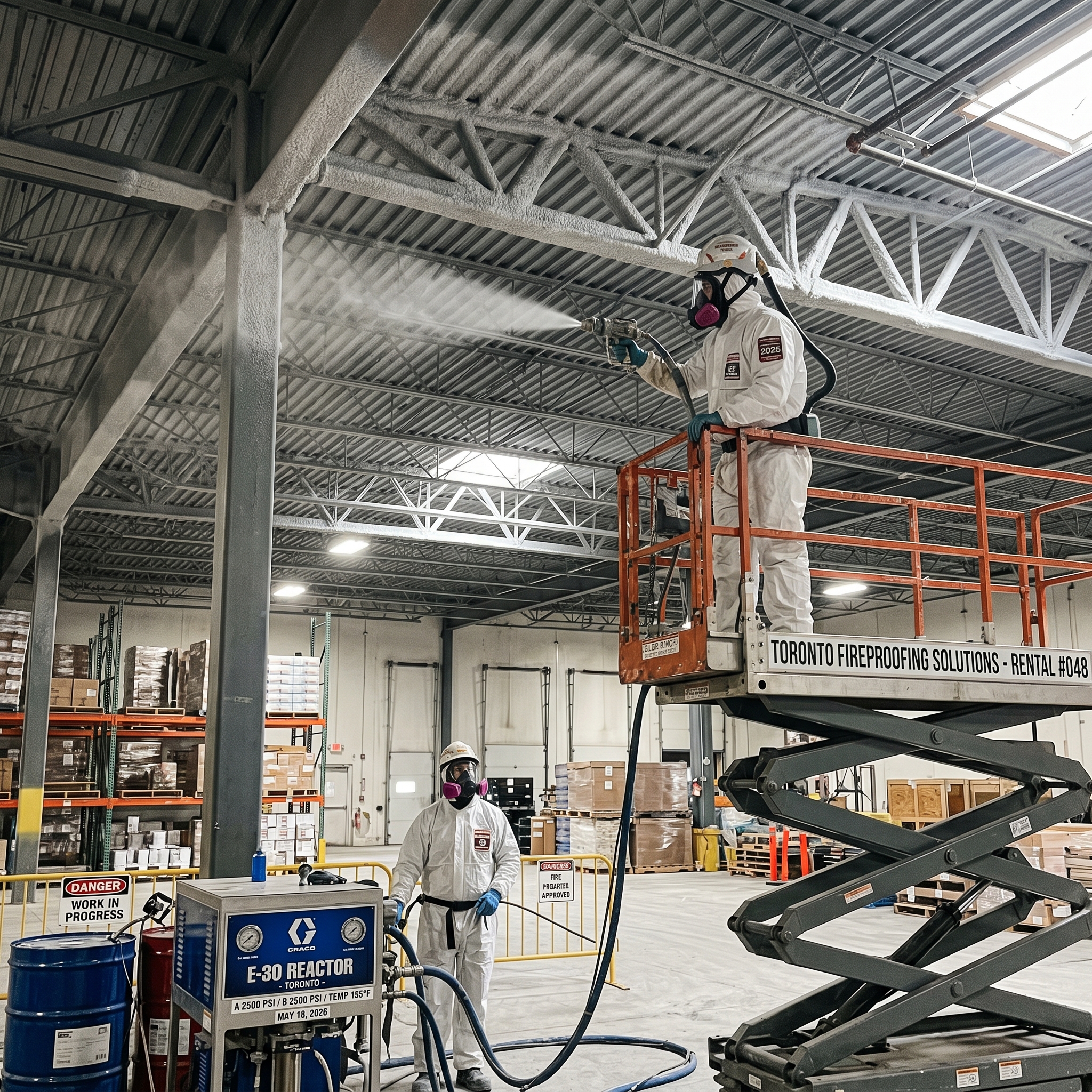
Commercial Spray Foam Fireproofing Services — Toronto & GTA 2026
Commercial spray foam fireproofing in Toronto costs $3.50–$8.00 per square foot installed in 2026, depending on required fire-resistance rating,
Spray Foam Insulation Rebate Ontario 2026: How to Get Up to $10,000 Back on Your Upgrade
Spray foam insulation rebates in Ontario for 2026 can put up to $10,000 CAD back in your pocket when you upgrade from fiberglass or cellulose to