Blown In vs Spray Foam Insulation Cost Comparison: London Ontario Complete Guide
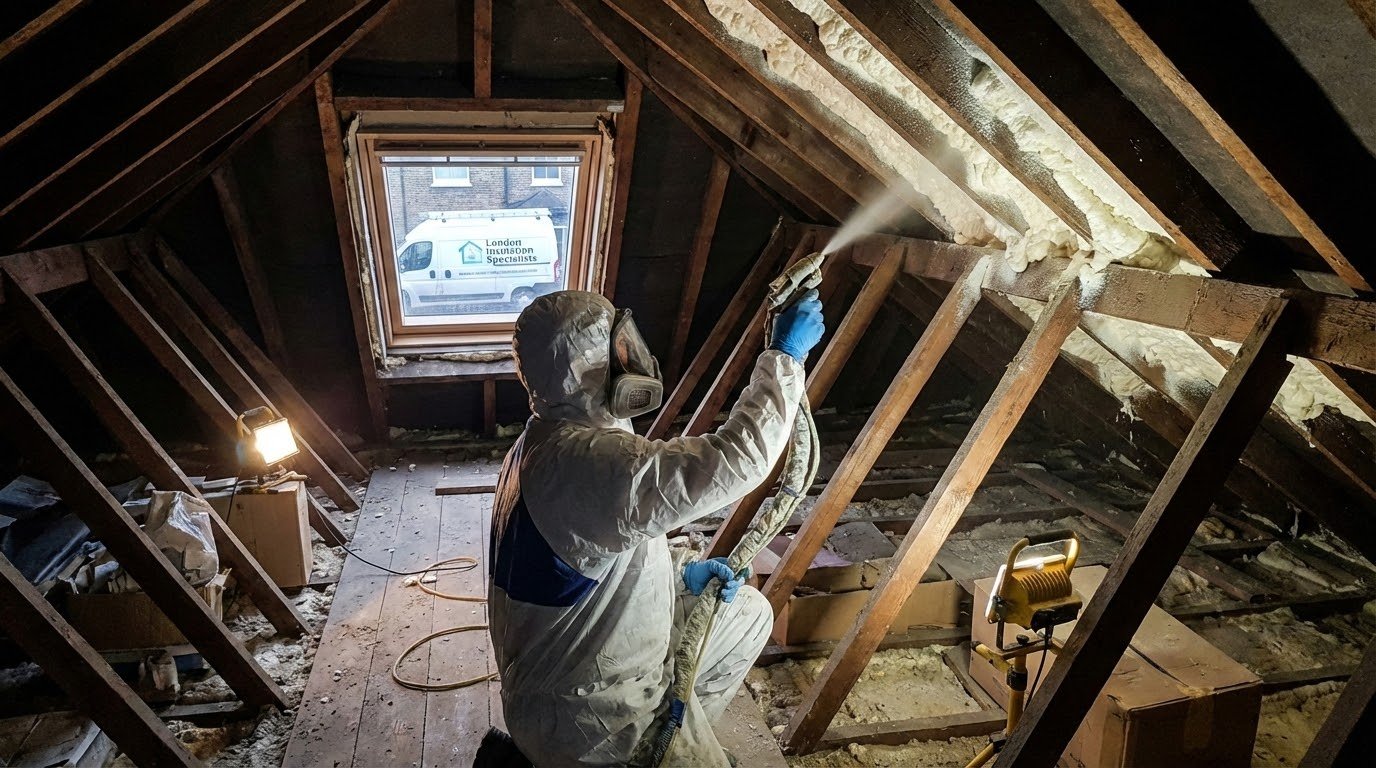
Blown-in insulation costs $2.50-$4.00 per square foot in London, Ontario, while spray foam ranges from $3.50-$6.50 per square foot. However, spray foam delivers R-6 to R-7 per inch compared to blown-in’s R-3.5 to R-4.2, making it 40-60% more effective per inch. Over a 20-year lifespan, spray foam’s superior air sealing and thermal performance typically saves London homeowners $800-$1,500 annually on energy costs, offsetting the higher upfront investment.
How Much Does Blown In Insulation Cost Compared to Spray Foam in Ontario?
The initial cost difference between these insulation types is significant but tells only part of the story. In London and across Ontario, blown-in cellulose or fiberglass costs $2,500-$4,000 for a typical 1,000 square foot attic. The same area with spray foam insulation ranges from $3,500-$6,500.
Blown-in insulation pricing breaks down as follows: material costs $1.50-$2.00 per square foot, with installation adding another $1.00-$2.00. Spray foam material costs $2.00-$3.50 per square foot, with professional installation adding $1.50-$3.00. The higher spray foam costs reflect the specialized equipment, training, and chemical mixing required for proper application.
However, Ontario’s harsh winters make this cost comparison incomplete without considering performance. Spray foam costs include superior air sealing that blown-in cannot match, reducing heating bills by 15-30% annually in London’s climate.
Which Insulation Type Performs Better in Canadian Winters?
Spray foam significantly outperforms blown-in insulation in Ontario’s climate conditions. Closed-cell spray foam achieves R-6 to R-7 per inch, while blown-in cellulose provides R-3.5 to R-3.8 per inch and fiberglass blown-in offers R-2.2 to R-4.2 per inch. This means spray foam delivers the same insulation value in half the thickness.
More critically, spray foam creates a continuous air barrier with zero air leakage, while blown-in insulation allows significant air movement. In London’s winter conditions, air leaks account for 25-40% of heat loss in homes with traditional insulation. Spray foam eliminates air leaks completely, creating an airtight building envelope.
Moisture control represents another crucial difference. Blown-in insulation can absorb moisture, reducing its R-value by up to 50% when wet. Spray foam, particularly closed-cell, acts as a vapor barrier and won’t absorb moisture, maintaining consistent thermal performance regardless of humidity levels common in Ontario basements and attics.
How Long Do These Insulation Types Last and What’s the ROI?
Longevity dramatically affects the true cost comparison between these insulation methods. Spray foam insulation lasts 80-100 years without degradation, while blown-in insulation typically requires replacement or supplementation every 15-20 years due to settling, moisture damage, and pest intrusion.
Energy savings provide the clearest ROI picture. London homeowners with spray foam report 20-50% reductions in heating costs, translating to $800-$1,500 annual savings on a typical $3,000 energy bill. Blown-in insulation typically reduces heating costs by 10-25%, saving $300-$750 annually. Over 10 years, spray foam saves $8,000-$15,000 versus $3,000-$7,500 for blown-in.
Property value increase also factors into ROI calculations. Spray foam increases home value by $2,500-$4,000 on average in Ontario markets, while blown-in insulation adds $1,000-$2,000 to property values.
What Are the Installation Requirements and Timeframes?
Installation complexity and timeframes differ substantially between these insulation methods. Blown-in insulation installation takes 4-8 hours for a typical Ontario home, requiring basic equipment and minimal preparation. The process involves drilling small holes and blowing loose material into cavities.
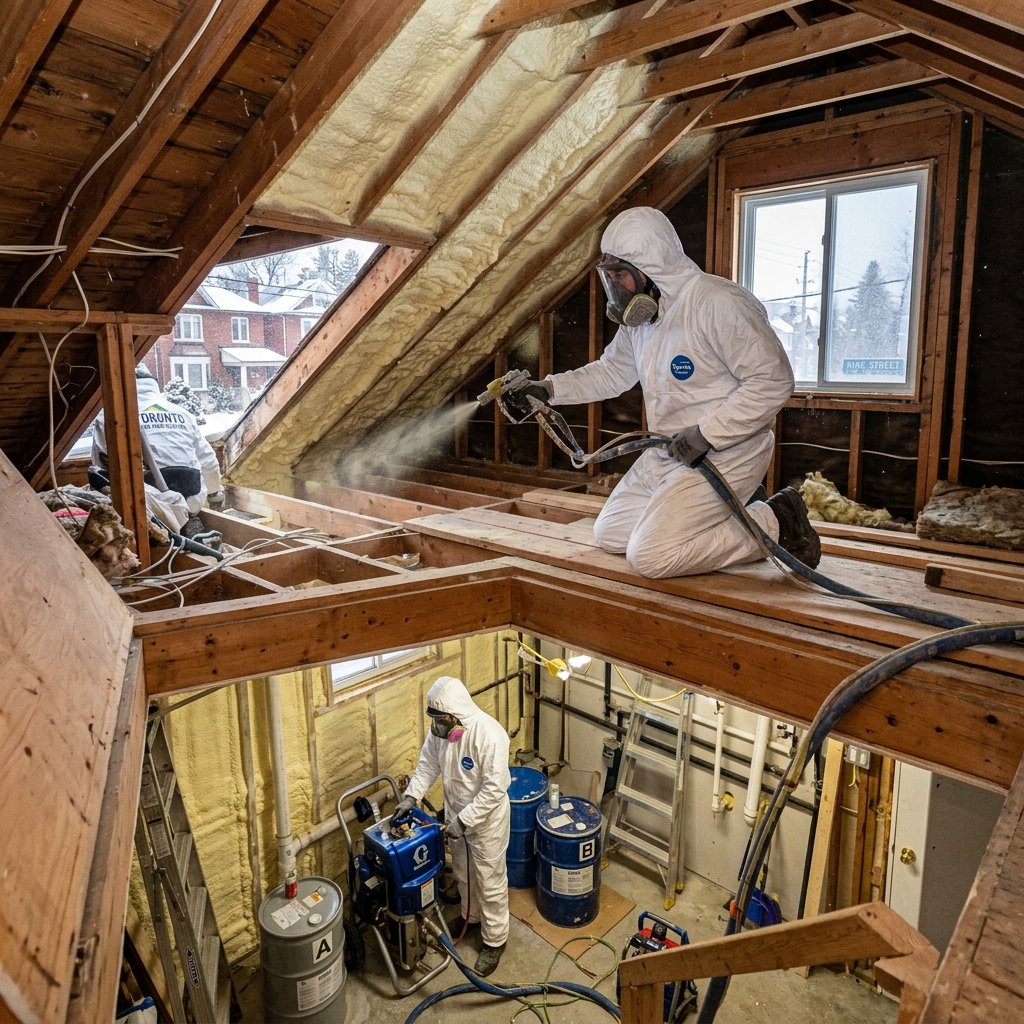
Spray foam installation requires 1-3 days depending on project scope, with extensive preparation including surface cleaning, masking, and ventilation setup. Professional installation demands specialized equipment, proper mixing ratios, and controlled environmental conditions. Temperature must be above 10°C for proper curing, making winter installations more challenging in London’s climate.
However, DIY spray foam attempts frequently result in expensive failures requiring professional remediation. Blown-in insulation offers more DIY flexibility, though professional installation ensures proper density and coverage. Both insulation types require vapor barrier considerations under Ontario Building Code requirements.
Which Insulation Should London Homeowners Choose?
The optimal choice depends on budget, performance priorities, and long-term ownership plans. Spray foam makes financial sense for homeowners planning to stay 7+ years, those prioritizing maximum energy efficiency, or properties with existing air leakage issues. The higher upfront investment pays off through superior performance and longevity.
Blown-in insulation suits homeowners with tight budgets, short-term ownership plans, or properties requiring basic thermal improvement. It provides good value for moderate climate control needs without the premium cost of spray foam.
For London’s climate specifically, spray foam’s air sealing capabilities provide exceptional value during Ontario’s -20°C to -30°C winter temperatures. The investment typically pays for itself within 5-7 years through energy savings alone. Connect with Spray Foam Kings on Facebook to see real customer results and testimonials from London area installations.
Frequently Asked Questions
Is spray foam worth the extra cost compared to blown-in insulation?
Yes, spray foam typically pays for itself within 5-7 years through energy savings in Ontario’s climate. The 40-60% better thermal performance and complete air sealing justify the 30-60% higher upfront cost for most homeowners planning to stay long-term.
How much can I save annually with spray foam versus blown-in insulation?
London homeowners save an additional $500-$750 annually with spray foam compared to blown-in insulation. Spray foam reduces heating costs by 20-50% while blown-in typically achieves 10-25% reductions on the same property.
Which insulation works better in Ontario basements?
Spray foam significantly outperforms blown-in insulation in basements due to moisture resistance and air sealing properties. Blown-in insulation can lose 50% of its R-value when exposed to basement humidity, while spray foam maintains full performance regardless of moisture levels.
Can I install either insulation type myself to save money?
Blown-in insulation offers some DIY potential for experienced homeowners, though professional installation ensures optimal performance. Spray foam requires professional installation due to chemical mixing, specialized equipment, and safety requirements. DIY spray foam attempts frequently require costly professional remediation.
Contact Spray Foam Kings for a free quote — serving London and all of Ontario. Our certified technicians provide detailed cost comparisons and performance analysis to help you choose the optimal insulation solution for your property’s specific needs.
Related posts
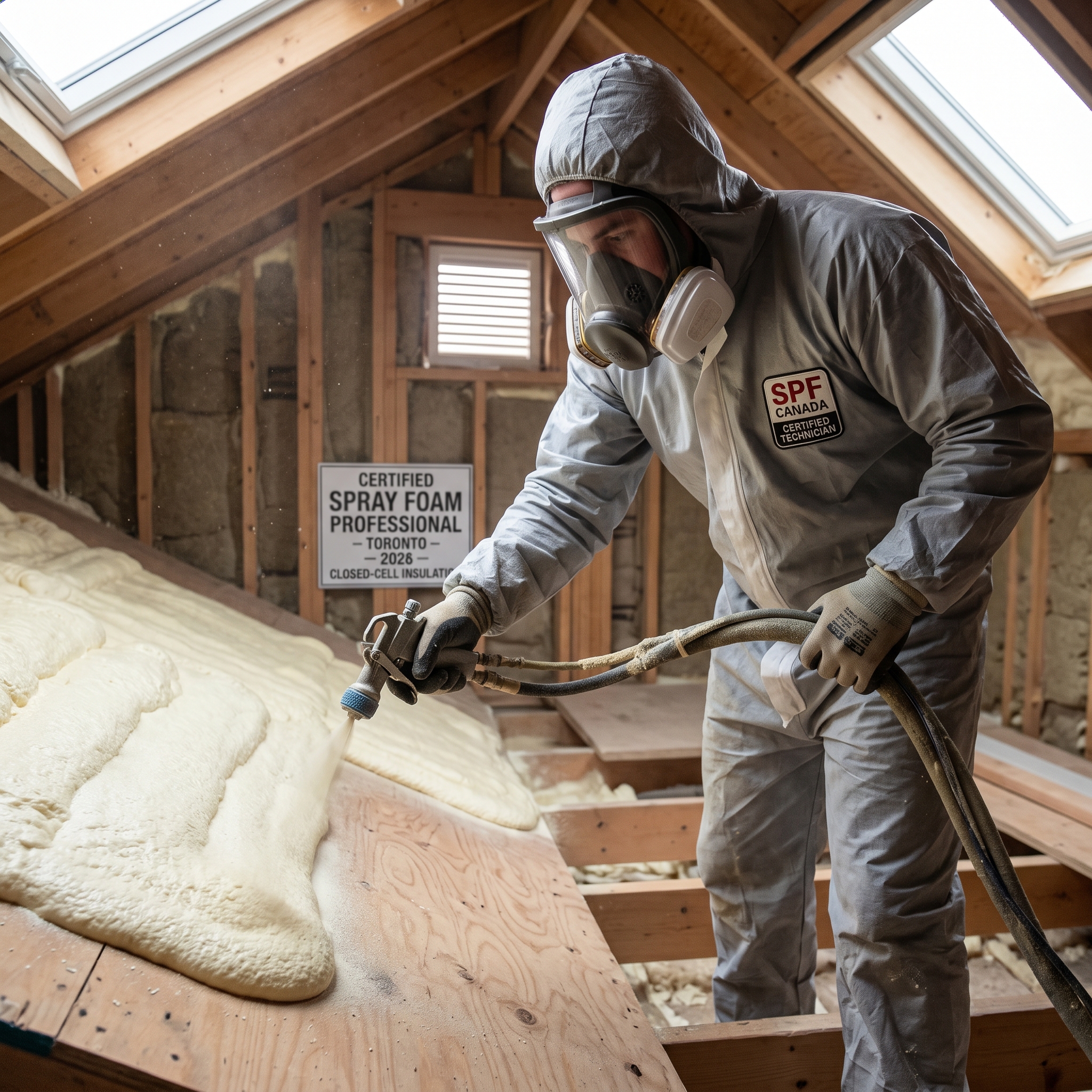
Closed Cell Spray Foam Canada Toronto 2026: Complete Guide
Closed cell spray foam insulation in Canada costs between $2.50 and $5.00 per square foot CAD installed, making it one of the most cost-effective and
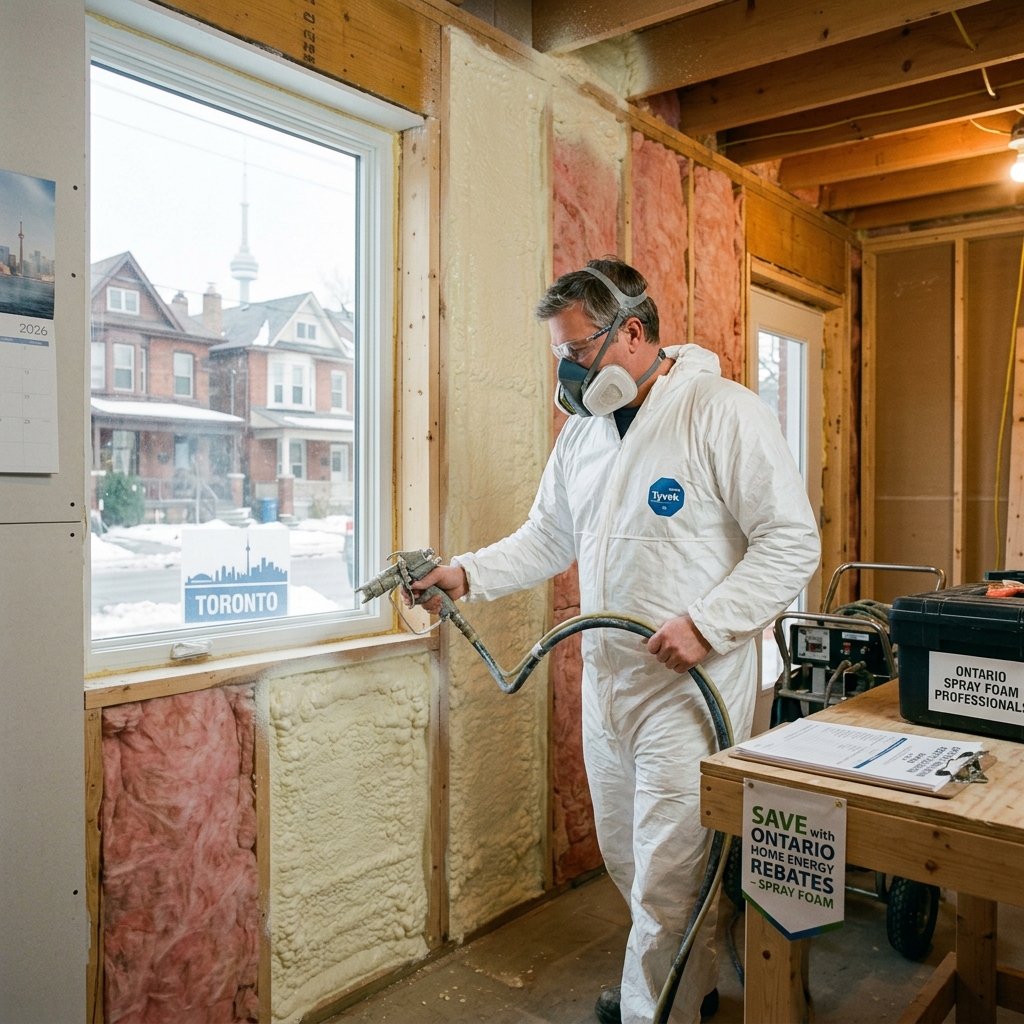
Insulation Rebate Ontario Toronto 2026: Complete Guide
Ontario homeowners who install spray foam insulation can qualify for rebates ranging from $1,600 to $10,600 CAD through federal and provincial programs — and
Spray Foam Insulation Cost Toronto 2026: Exact Pricing for Your Home
Spray foam insulation in Toronto costs $1.50–$3.50 per square foot CAD for open-cell foam and $2.50–$5.00 per square foot CAD for closed-cell foam, fully
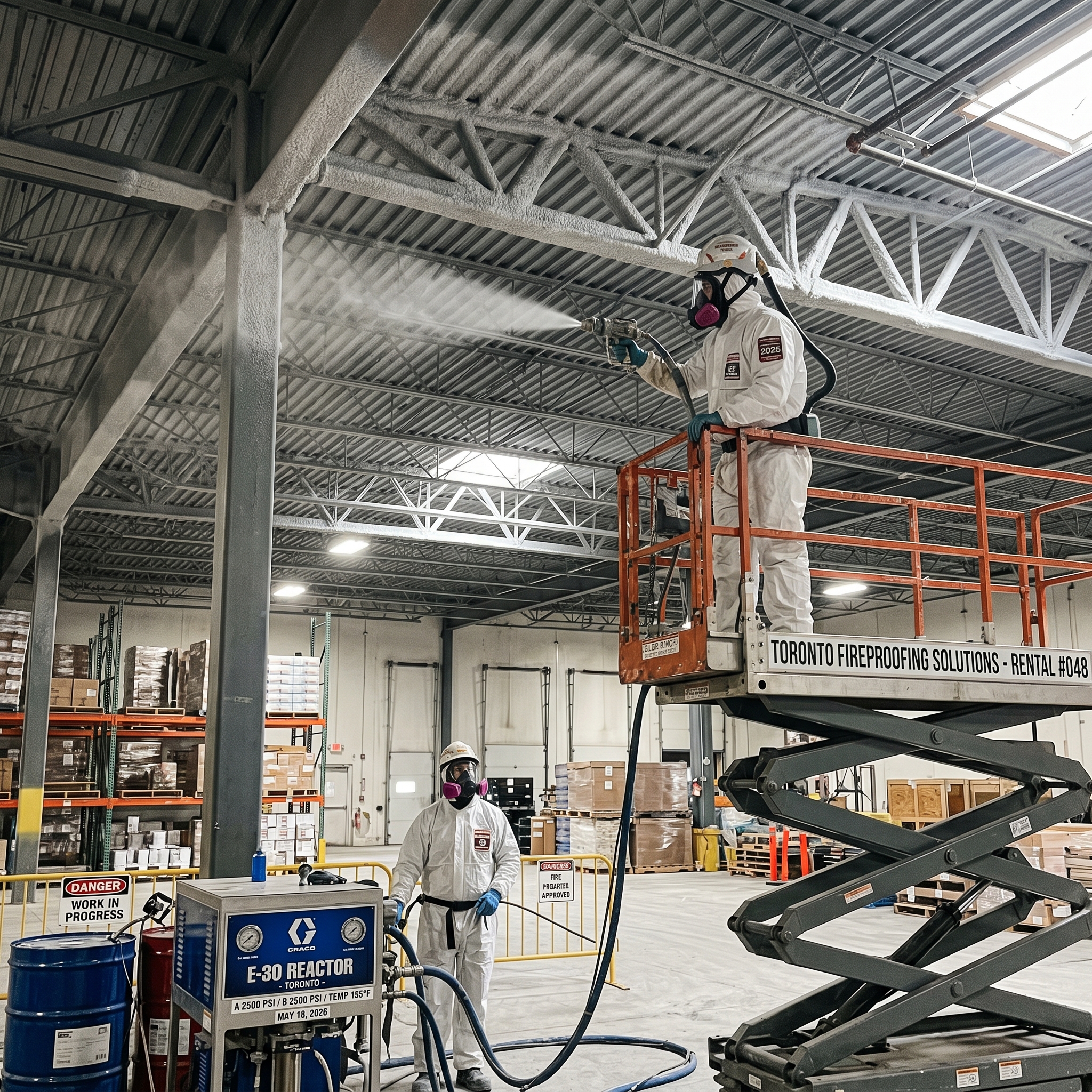
Commercial Spray Foam Fireproofing Services — Toronto & GTA 2026
Commercial spray foam fireproofing in Toronto costs $3.50–$8.00 per square foot installed in 2026, depending on required fire-resistance rating,
Spray Foam Insulation Rebate Ontario 2026: How to Get Up to $10,000 Back on Your Upgrade
Spray foam insulation rebates in Ontario for 2026 can put up to $10,000 CAD back in your pocket when you upgrade from fiberglass or cellulose to