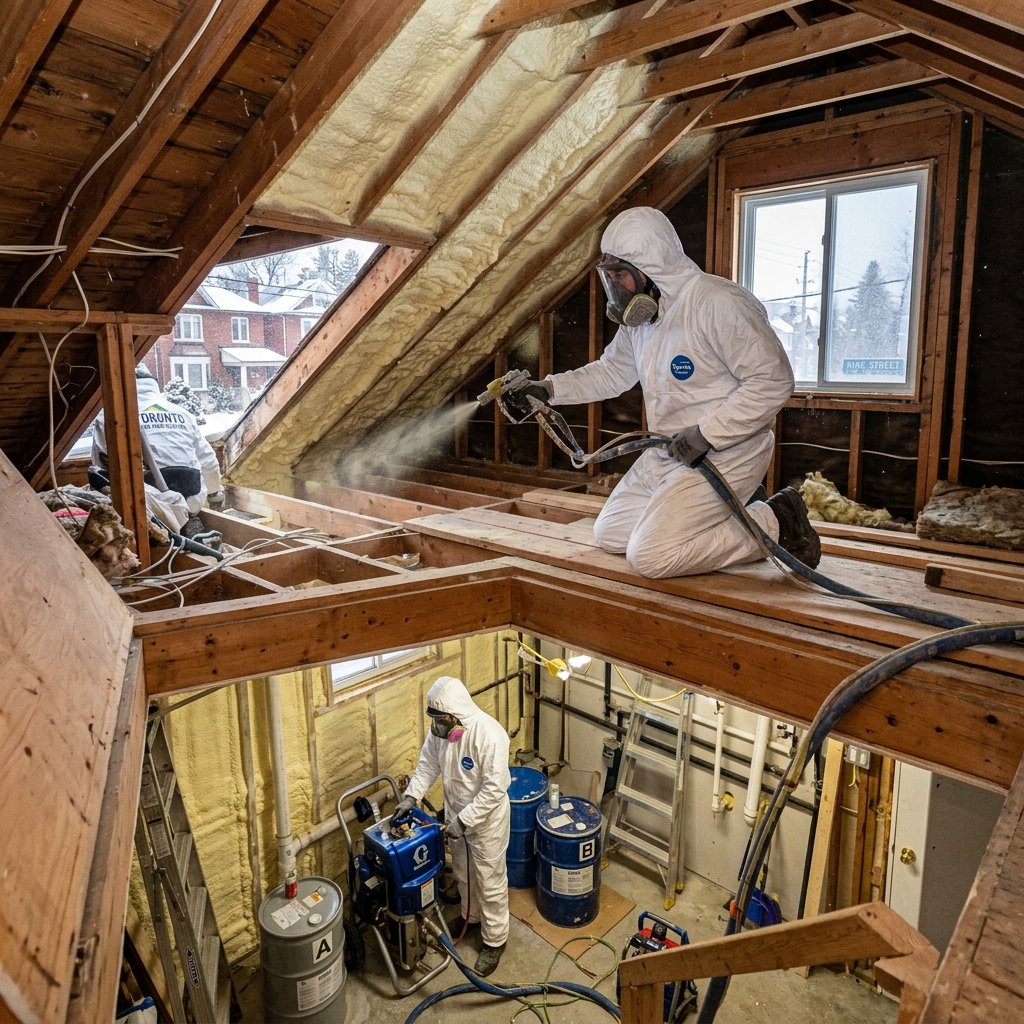
Blown in spray insulation
Blown-In vs Spray Foam Insulation: Which Is Right for Your Toronto Home in 2026?
When Toronto homeowners start researching insulation upgrades, they inevitably end up comparing blown-in insulation and spray foam. Both are widely used across the GTA — but they serve different purposes, have very different performance characteristics, and work best in different areas of a home. Making the right choice can mean the difference between a high-performing, comfortable home and a costly upgrade that underdelivers.
This guide gives you a complete, honest comparison of blown-in vs. spray foam insulation — covering thermal performance, air sealing, moisture control, cost in CAD, and where each product belongs in your Toronto home. Spray Foam Kings has installed both across thousands of GTA homes over 15+ years, and we’ll help you understand which approach — or which combination — is right for your specific situation.
What Is Blown-In Insulation?
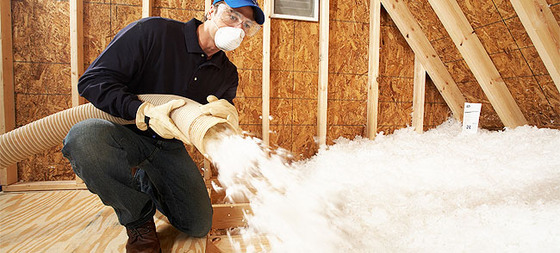
Blown-in insulation (also called loose-fill insulation) is installed by blowing small particles of insulating material through a hose into attic spaces or, in some cases, wall cavities. The most common products used in the GTA are:
Blown-in fibreglass: Small glass fibre particles, typically white or pink. R-value of approximately R-2.2 to R-2.5 per inch. Inexpensive, widely available, easy to add to existing attic floors. Settles over time, losing R-value. Not an air barrier — air moves freely through the material.
Cellulose (blown-in): Made from recycled paper treated with borate for fire and pest resistance. R-value of approximately R-3.5 per inch — better than fibreglass per inch. Still not an air barrier. Settles more than fibreglass but performs better in dense-pack wall applications. More resistant to air convection than fibreglass.
Blown-in insulation is cost-effective for adding R-value to attic floors — where achieving large thickness is relatively easy and cost-efficient. It’s significantly less effective in applications requiring air sealing or vapour control.
What Is Spray Foam Insulation?
Spray polyurethane foam (SPF) is a two-component liquid system that reacts and expands on contact with the application surface. There are two types:
Closed-cell spray foam (2 lb density): R-6 to R-7 per inch. Acts as an air barrier AND vapour barrier (perm rating below 1.0 at 2″ or more). Adds structural rigidity. Completely moisture resistant. Bonds permanently to most substrates. Best performance for basement walls, rim joists, metal roofs, crawl spaces, and applications where space is limited or moisture control is critical.
Open-cell spray foam (0.5 lb density): R-3.5 to R-4 per inch. Acts as an air barrier but NOT a vapour barrier (requires separate vapour control in Ontario’s climate). Soft and flexible. Lower density, lower cost than closed-cell. Good for interior wall cavities and some roofline applications where vapour management is provided separately.
Head-to-Head Comparison: Blown-In vs Spray Foam
| Factor | Blown-In (Fibreglass/Cellulose) | Closed-Cell Spray Foam |
|---|---|---|
| R-value per inch | R-2.2 to R-3.5 | R-6 to R-7 |
| Air sealing | None | Excellent |
| Vapour barrier | No (separate required) | Yes (built-in at 2″+) |
| Moisture resistance | Poor (absorbs moisture) | Excellent (impermeable) |
| Settling over time | Yes (R-value degrades) | No (permanent) |
| Cost per sq ft | $0.50 – $1.50 CAD | $3.50 – $5.50 CAD |
| Best applications | Attic floor top-up | Basement walls, rim joists, roofline, crawl spaces, metal roofs |
Where Each Product Belongs in Your Toronto Home
Attic floor (vented attic): The best approach for most Toronto homes is a hybrid — spray foam to air-seal all penetrations (pot lights, plumbing stacks, electrical, exhaust fans) at the attic floor level, followed by blown-in cellulose or fibreglass on top to achieve the target R-value (R-50 to R-60). The spray foam handles air sealing; the blown-in handles bulk R-value cost-effectively. This hybrid approach is consistently the best value for attic floor upgrades in Scarborough, Etobicoke, and North York.
Attic roofline (unvented hot attic): Spray foam only — specifically closed-cell, applied to the underside of the roof deck and the rafter faces. Blown-in cannot be used for roofline unvented attic applications due to OBC requirements for air-impermeable insulation in unvented assemblies.
Basement walls: Closed-cell spray foam strongly preferred. Blown-in is not applicable for vertical wall surfaces. Rigid board is an alternative, but spray foam’s performance and ease of application on irregular concrete surfaces makes it the best choice for most Toronto basement retrofits.
Rim joists: Closed-cell spray foam only — blown-in cannot be applied to vertical rim joist surfaces and provides no air sealing. Rim joists are one of the highest-priority air sealing zones in any Toronto home.
Crawl space walls: Closed-cell spray foam — for the same reasons as basement walls.
Wall cavities (new construction or gut renovation): Either open-cell spray foam or fibreglass batts are appropriate for exterior wall stud cavities, depending on the vapour control strategy. Closed-cell on the sheathing side followed by batts in the cavity is a high-performance approach for cold-climate Ontario construction.
2026 CAD Cost Comparison: Blown-In vs Spray Foam for Toronto Attic
| Approach | Scope (1,000 sq ft attic) | CAD Cost |
|---|---|---|
| Blown-in only (top-up to R-50) | No air sealing | $1,500 – $3,000 |
| Hybrid (spray foam air seal + blown-in) | Full air seal + R-50+ | $3,000 – $5,500 |
| Full spray foam roofline (hot attic) | Unvented, R-30+ | $6,500 – $12,000 |
The hybrid approach (spray foam air seal + blown-in top-up) delivers the best performance-to-cost ratio for most Toronto attic upgrades — and is what Spray Foam Kings recommends for most residential retrofit projects in the GTA.
Frequently Asked Questions
Is blown-in insulation worth it if I already have some in my Toronto attic?
Adding blown-in on top of existing insulation increases R-value but does nothing for air sealing — which often accounts for more heat loss than insufficient R-value alone. If your attic has penetrations (pot lights, exhaust fans, plumbing stacks) that are not properly sealed, adding more blown-in on top won’t solve your energy loss problem. The right approach is to air-seal penetrations with spray foam first, then add blown-in on top — maximizing both air sealing and thermal performance.
Can blown-in insulation get wet and cause mould?
Fibreglass blown-in doesn’t support mould growth directly, but it does absorb and retain moisture — reducing its R-value and potentially allowing mould on adjacent wood surfaces. Cellulose blown-in is more mould-resistant due to its borate treatment, but can still absorb significant moisture if wetted. In areas prone to moisture — basements, crawl spaces, or attics with ventilation issues — spray foam’s moisture impermeability gives it a decisive performance advantage.
Which insulation is better for soundproofing between floors?
Open-cell spray foam in floor cavities provides excellent sound attenuation — better than fibreglass batts and significantly better than blown-in. Closed-cell foam, while highly effective as an air barrier, is denser and actually transmits sound somewhat more efficiently than open-cell in wall and floor cavity applications. For soundproofing priorities (basement suite, home theatre), open-cell spray foam is typically the preferred choice.
Does spray foam insulation qualify for more rebates than blown-in in 2026?
Both products can qualify for Canada Greener Homes rebates when properly installed and documented as part of a qualifying EnerGuide-assessed upgrade. The rebate is based on EnerGuide rating improvement, not the specific product used. However, spray foam’s superior air sealing typically delivers a larger EnerGuide rating improvement than blown-in alone — potentially increasing your rebate amount. Ask about an EnerGuide assessment when booking your Spray Foam Kings consultation.
How do I decide between blown-in and spray foam for my Toronto home?
A Spray Foam Kings assessment will answer this definitively for your specific home. General guidance: for attic floors, a hybrid approach (spray foam air seal + blown-in) is usually best value. For basement walls, rim joists, crawl spaces, rooflines, and metal roofs, closed-cell spray foam is almost always the right choice. We’ll assess your specific situation and recommend the product and approach that delivers the best performance for your budget.
Get a Free Assessment and Comparison Quote
Choosing between blown-in and spray foam — or the optimal combination of both — is a decision that should be based on your home’s specific configuration, your performance goals, and your budget. Spray Foam Kings will assess your home, explain the options clearly, and provide written quotes for each approach so you can make an informed decision.
Call 647-641-6881 today to book your free assessment. We serve Toronto, Scarborough, North York, Etobicoke, Mississauga, Brampton, Vaughan, Markham, and all of the GTA — and we’ll have your written quote ready within 24 hours of our site visit. In 2026, make an informed insulation decision and start capturing the savings immediately.
Related posts
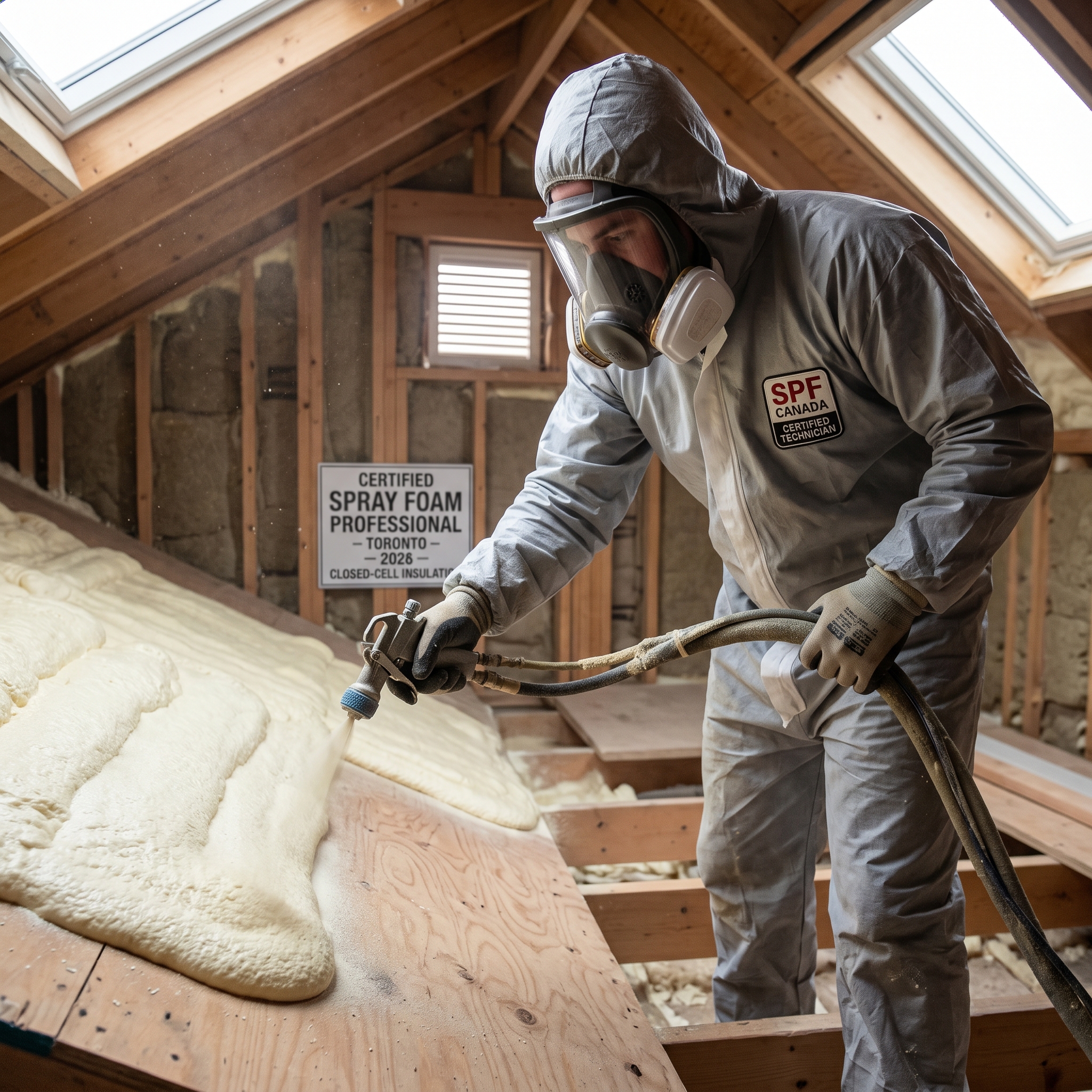
Closed Cell Spray Foam Canada Toronto 2026: Complete Guide
Closed cell spray foam insulation in Canada costs between $2.50 and $5.00 per square foot CAD installed, making it one of the most cost-effective and
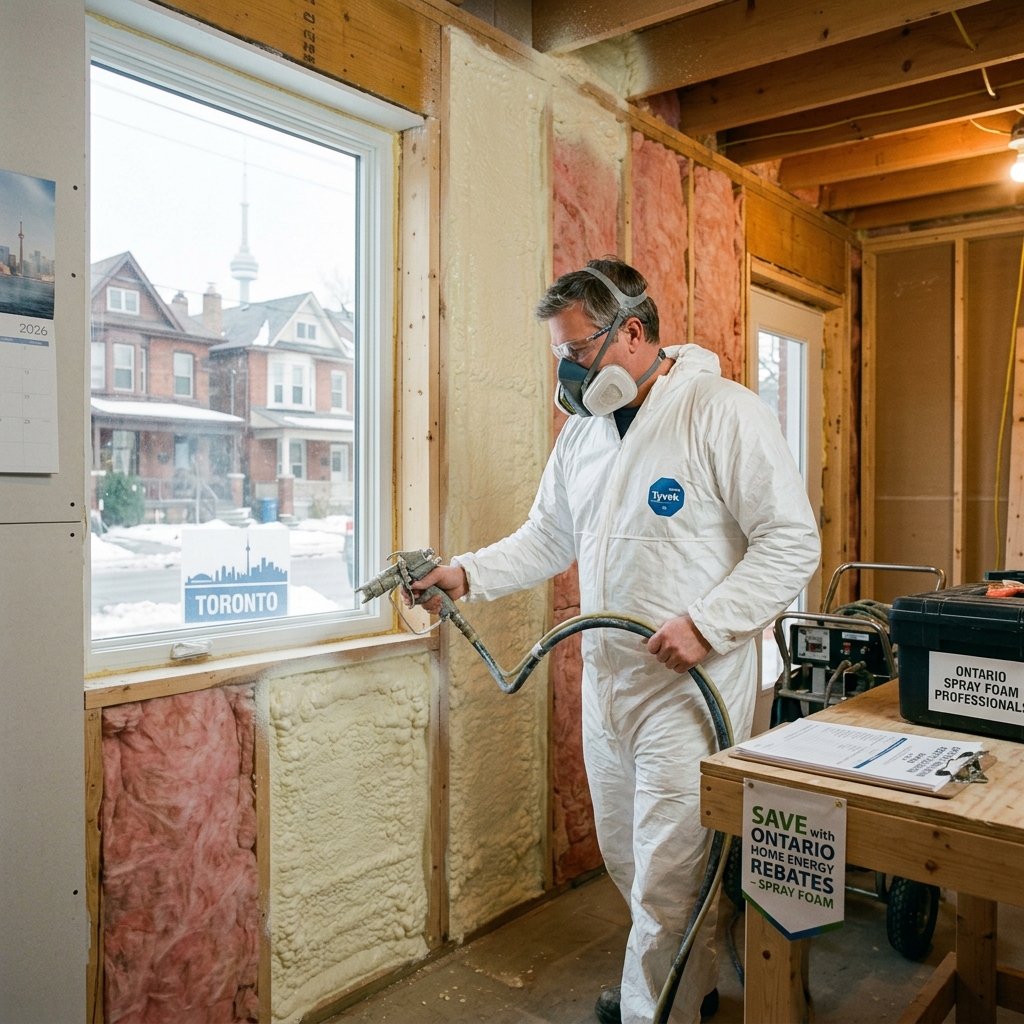
Insulation Rebate Ontario Toronto 2026: Complete Guide
Ontario homeowners who install spray foam insulation can qualify for rebates ranging from $1,600 to $10,600 CAD through federal and provincial programs — and
Spray Foam Insulation Cost Toronto 2026: Exact Pricing for Your Home
Spray foam insulation in Toronto costs $1.50–$3.50 per square foot CAD for open-cell foam and $2.50–$5.00 per square foot CAD for closed-cell foam, fully
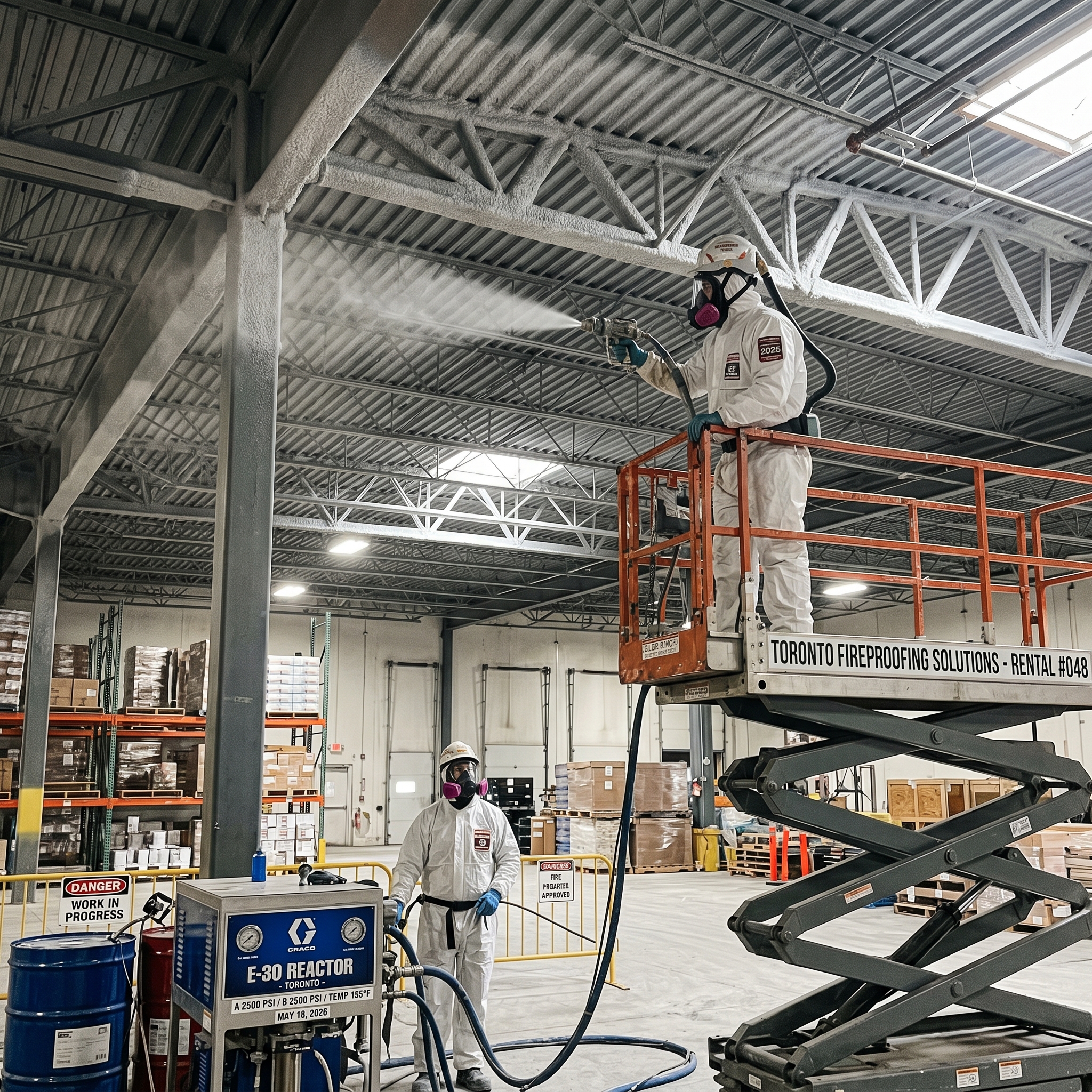
Commercial Spray Foam Fireproofing Services — Toronto & GTA 2026
Commercial spray foam fireproofing in Toronto costs $3.50–$8.00 per square foot installed in 2026, depending on required fire-resistance rating,
Spray Foam Insulation Rebate Ontario 2026: How to Get Up to $10,000 Back on Your Upgrade
Spray foam insulation rebates in Ontario for 2026 can put up to $10,000 CAD back in your pocket when you upgrade from fiberglass or cellulose to