5 Signs That Your House is Under-Insulated
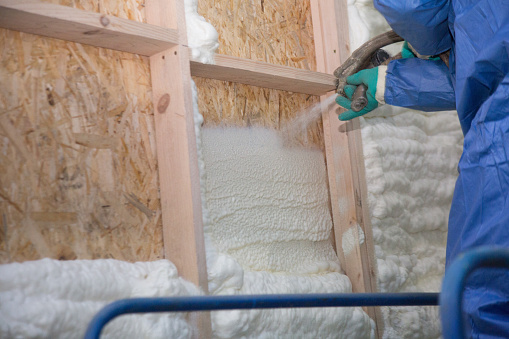
5 Signs Your House Is Under-Insulated: A Toronto Homeowner’s Guide for 2026
Under-insulation is one of the most common and costly problems in Toronto’s housing stock — and one of the most invisible. Unlike a leaking roof or a broken window, inadequate insulation leaves no obvious trace until you look at your energy bills, feel the cold radiating from your walls in January, or discover ice dams forming on your eaves after every snowfall. The good news is that the signs of under-insulation are clear and identifiable — once you know what to look for.
This guide covers the five most reliable indicators that your Toronto home is under-insulated, what each sign means, and what to do about it with specific guidance from Spray Foam Kings — the GTA’s most experienced spray foam insulation contractor serving Scarborough, North York, Etobicoke, Mississauga, Brampton, Vaughan, and Markham.
Sign 1: High and Volatile Energy Bills
Your energy bills are the most reliable financial indicator of your home’s thermal performance. A well-insulated Toronto home should have consistent, predictable heating costs — adjusted for outdoor temperature variation and utility rate changes. If your bills spike dramatically in cold months, if they’re consistently higher than comparable homes in your neighbourhood, or if they’ve been trending upward faster than utility rate increases alone would explain, under-insulation is likely a contributing factor.
In 2026, the average GTA household spends $2,800–$4,500 annually on energy for heating and cooling. Homes with inadequate insulation — particularly pre-1990 construction in Scarborough, Etobicoke, and North York — often spend $1,000–$2,500 more than they would with properly insulated attics, basement walls, and rim joists. That’s a direct, unnecessary cost that spray foam insulation can reduce or eliminate.
What to do: Contact Spray Foam Kings for a free home energy assessment. Our technicians will identify the primary heat loss zones in your specific home and provide a written estimate of potential energy savings. Call 647-641-6881.
Sign 2: Ice Dams on Your Roof
Ice dams are both a symptom and a cause of problems — a symptom of under-insulated attics, and a cause of expensive water damage when backed-up meltwater infiltrates under shingles and into the home. They’re endemic in Toronto’s older neighbourhoods, appearing on rooftops throughout Scarborough, North York, and Etobicoke after every significant snowfall.
Ice dams form through a specific mechanism: heat escaping from your living space through the attic floor warms the roof deck, melting snow at the centre of the roof. The meltwater flows down to the cold eave overhang — which receives no heat from below — and refreezes, creating the dam. The backed-up water then seeps under shingles, into the roof deck, and eventually through the ceiling into your home.
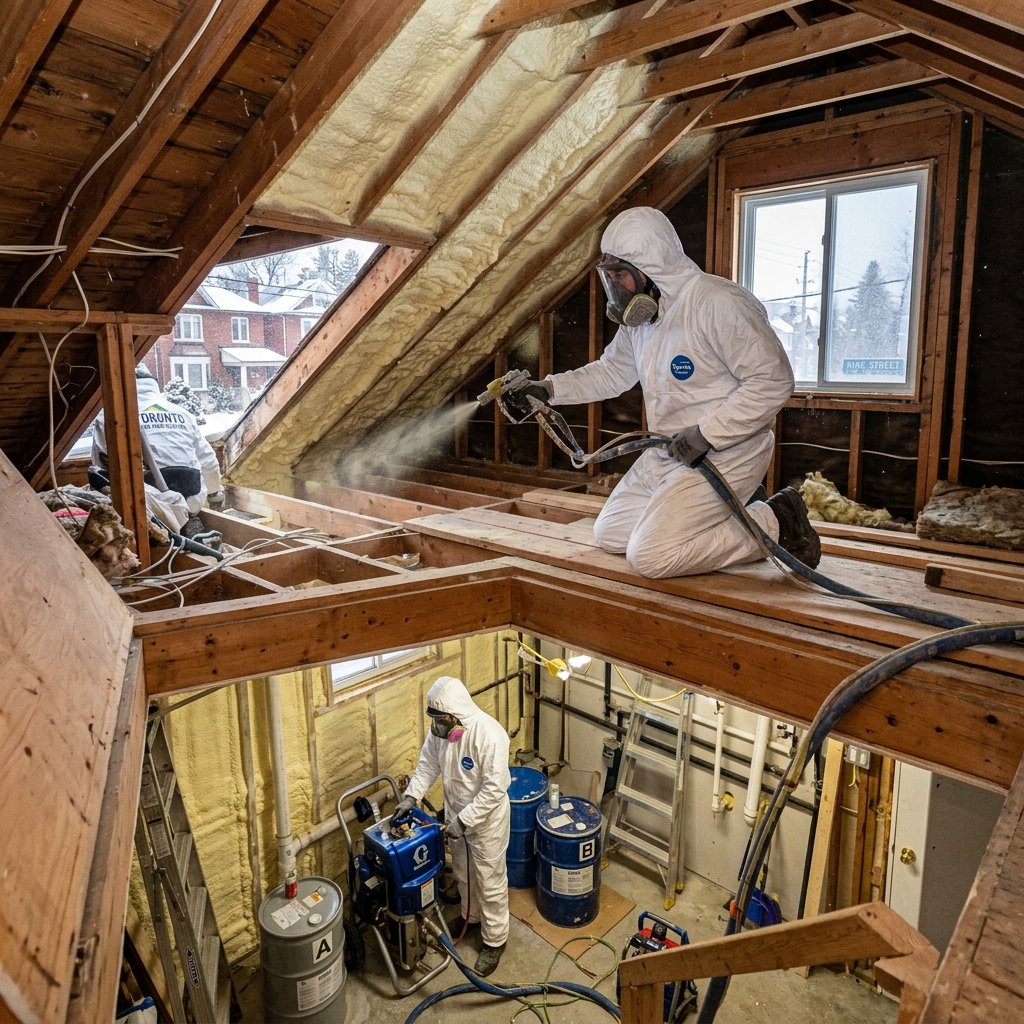
The only long-term solution to ice dams is addressing their root cause: heat escaping through the attic floor. Roofline spray foam application — applying closed-cell foam to the underside of the roof deck, converting to an unvented hot attic — eliminates ice dams permanently by keeping the entire roof deck at a uniform outdoor temperature.
What to do: If you’ve had ice dams more than once, your attic insulation is definitively insufficient for Toronto’s climate. A roofline spray foam project eliminates the problem permanently. Contact Spray Foam Kings for an attic assessment — 647-641-6881.
Sign 3: Temperature Variations Between Rooms and Floors
A well-insulated home should feel relatively consistent in temperature from room to room on the same floor, and between floors. If your second floor is noticeably colder than your main floor in winter, or if certain rooms are always significantly colder or warmer than others, you have thermal performance issues — likely involving insulation gaps in the attic, walls, or floor assemblies.
Common patterns in GTA homes and what they indicate:
Second floor bedrooms significantly colder than main floor → Under-insulated attic floor. Heat rises and escapes through the ceiling; the second floor loses heat faster than the furnace can replace it.
Main floor room above garage is always cold → Missing or inadequate insulation in the floor/ceiling assembly above the garage, or in the shared wall between the garage and house.
Basement always cold, rooms above cold at floor level → Uninsulated or poorly insulated basement walls and/or rim joists. Cold basement air and surfaces chill the floor assembly from below.
Drafts at floor level, particularly in corners → Air infiltration through rim joists or wall base connections. A classic sign of missing or compressed insulation in the rim joist zone.
What to do: These patterns point to specific insulation deficiencies that a free Spray Foam Kings assessment can identify and address precisely.
Sign 4: Condensation on Windows and Cold Walls
Persistent condensation on the interior surface of windows — particularly during cold weather — indicates that interior surfaces are reaching dew point, which occurs when warm, moist interior air contacts very cold surfaces. While windows are typically the coldest interior surface in a home, condensation that appears on interior wall surfaces or in corners indicates a more serious insulation or air sealing deficiency.
Condensation inside walls — less visible but more damaging — occurs when warm, humid interior air infiltrates into the wall cavity through gaps and contacts the cold exterior sheathing. Over time, this drives mould growth on the framing and insulation, structural degradation of the wood, and reduced insulation performance. This is particularly common in older Etobicoke and Scarborough homes with fibreglass batts in the exterior walls and no continuous air barrier.
Spray foam in wall cavities — whether in new construction or during a gut renovation — eliminates this moisture-laden infiltration by creating a continuous air barrier that prevents interior air from reaching the cold sheathing.
What to do: If you’re seeing condensation on interior wall surfaces or in corners, or if you have recurring mould issues in exterior wall zones, contact Spray Foam Kings for an assessment. This is a building science problem with a clear solution.
Sign 5: A Musty Smell from the Basement or Crawl Space
A persistent musty odour in your basement — or wafting up from your crawl space — is almost always a sign of active mould growth. And in Toronto’s older housing stock, mould in basements and crawl spaces is almost always connected to inadequate insulation and moisture control.
The mechanism is straightforward: uninsulated or poorly insulated foundation walls and rim joists create cold surfaces in the basement. Warm, humid air — whether from interior sources or from outdoor summer air entering through vented crawl spaces — contacts these cold surfaces, deposits moisture, and fuels mould growth on wood framing, drywall, and stored belongings.
Spray foam on basement walls, rim joists, and crawl space walls raises the surface temperature above dew point, eliminating the condensation source. The foam itself does not support mould growth. Combined with a ground vapour barrier in crawl spaces and sealed vents, spray foam creates a dry, clean environment that mould cannot colonize.
Note: if active mould is already present, it must be remediated before insulation is applied. Spray Foam Kings will identify active mould during the assessment and can recommend qualified mould remediation contractors if needed.
What to do: A musty basement or crawl space is a health issue that compounds over time. Contact Spray Foam Kings at 647-641-6881 for a free assessment — we’ll identify the moisture source and design an encapsulation solution that eliminates it.
2026 CAD Cost Guide: Fixing Under-Insulation in Toronto
| Problem Identified | Solution | CAD Cost Range |
|---|---|---|
| High energy bills (attic) | Spray foam air seal + blown-in top-up | $3,000 – $5,500 |
| Ice dams (roofline) | Closed-cell roofline spray foam | $6,500 – $12,000 |
| Cold floors / room above garage | Garage ceiling spray foam | $1,500 – $4,000 |
| Drafts, rim joist infiltration | Rim joist closed-cell spray foam | $800 – $1,800 |
| Musty basement/crawl space | Full encapsulation (walls + vapour barrier) | $3,500 – $10,000 |
Frequently Asked Questions
How do I know which zone of my home is the biggest energy problem?
The most accurate way is an EnerGuide energy assessment by a certified energy advisor, which identifies the relative contribution of each building component to your home’s overall energy loss. A Spray Foam Kings assessment will give you a practical, experience-based evaluation of your home’s primary loss zones, which is often sufficient to prioritize your investment for maximum impact.
Can I fix under-insulation in stages or do I need to do it all at once?
Stages work well. The most common sequence for GTA homes is: (1) attic air seal and top-up — highest impact per dollar, (2) rim joists — quick win with high ROI, (3) basement walls — significant comfort and moisture improvement, (4) garage and crawl spaces — comfort and protection upgrades. Each stage stands alone as a complete improvement. Spray Foam Kings can design a phased plan that fits your timeline and budget.
How quickly will I see savings after spray foam insulation?
Energy savings are captured immediately from the first billing cycle after installation. Most Toronto homeowners see a meaningful reduction in the first month’s gas or hydro bill after a major insulation upgrade. Annual savings for a full attic + basement project typically run $1,200–$2,500 CAD based on 2026 GTA utility rates.
Does under-insulation affect my home’s resale value?
Increasingly yes — particularly in 2026, where energy performance is a growing factor in Toronto’s real estate market. Buyers with EnerGuide ratings in hand or knowledge of insulation upgrades command better terms. Poor insulation is increasingly cited in home inspection reports as a deferred maintenance item that buyers factor into their offers.
Is there a quick DIY test to see if my attic is under-insulated?
Yes — open your attic hatch and look down. If you can see the tops of the floor joists above the existing insulation, you’re under-insulated. Target depth for R-50 with blown-in cellulose is approximately 14 inches; for R-60, approximately 17 inches. If your insulation is below joist-top level (typically 10 inches in pre-1990 Toronto homes), you’re well below current Ontario standards.
Don’t Let Under-Insulation Cost You Another Season
If you recognized your home in any of these five signs, you have actionable information — and a clear path forward. Spray Foam Kings has helped thousands of Toronto, Scarborough, North York, Etobicoke, Mississauga, Brampton, Vaughan, and Markham homeowners address exactly these problems over 15+ years. Our SPFA-certified technicians, $5M liability insurance, WSIB coverage, and written project documentation ensure that every project is done right.
Call 647-641-6881 today for a free home assessment. We’ll diagnose your specific under-insulation issues, recommend the most cost-effective solution, and provide a written quote within 24 hours. In 2026, there’s no reason to pay more than you need to for heat and comfort.
Related posts
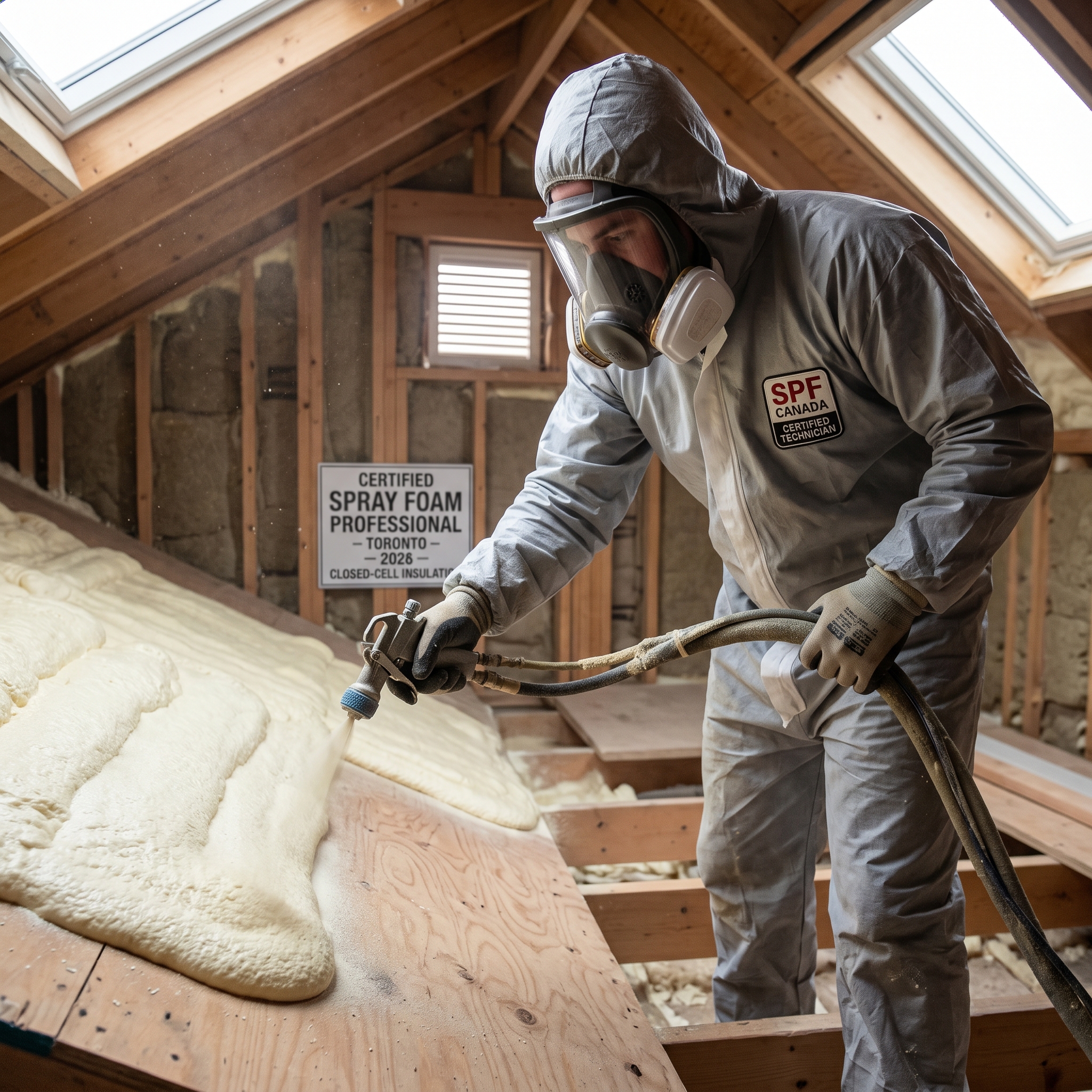
Closed Cell Spray Foam Canada Toronto 2026: Complete Guide
Closed cell spray foam insulation in Canada costs between $2.50 and $5.00 per square foot CAD installed, making it one of the most cost-effective and
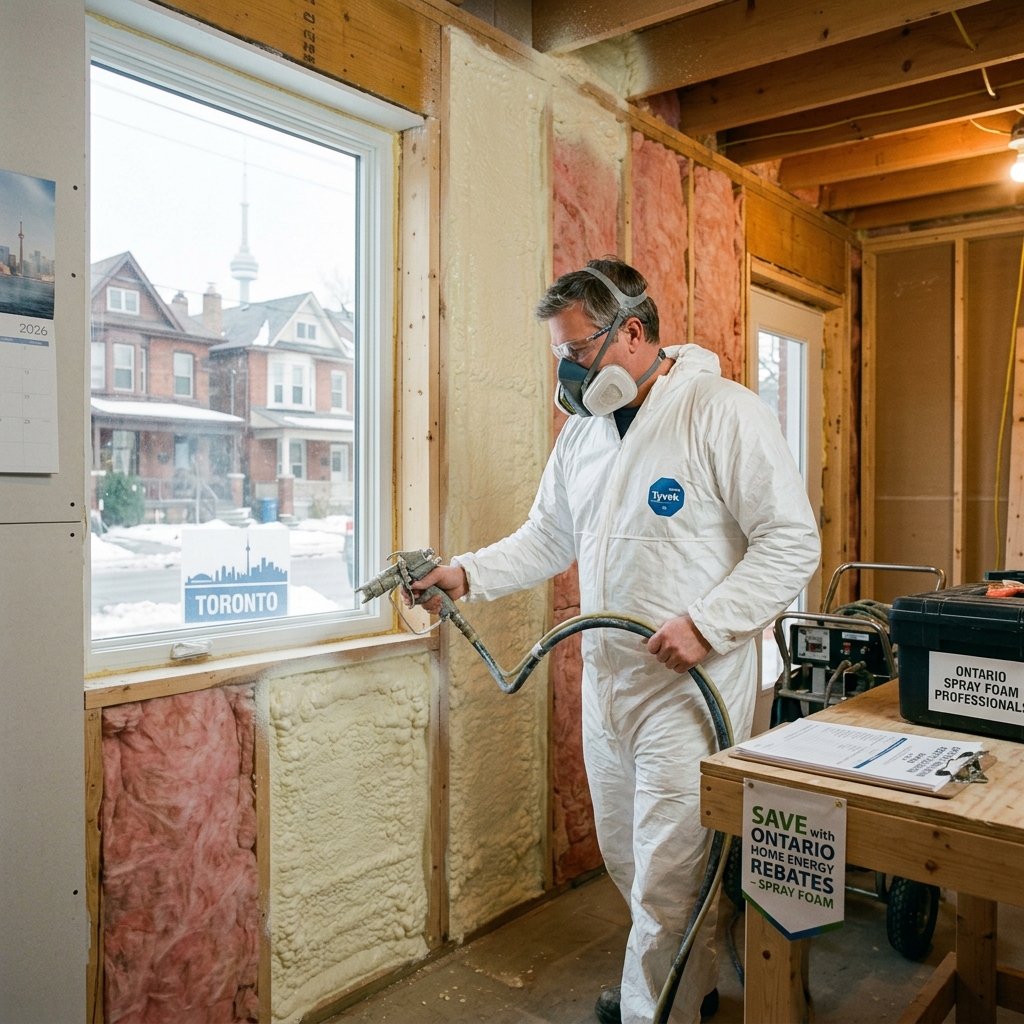
Insulation Rebate Ontario Toronto 2026: Complete Guide
Ontario homeowners who install spray foam insulation can qualify for rebates ranging from $1,600 to $10,600 CAD through federal and provincial programs — and
Spray Foam Insulation Cost Toronto 2026: Exact Pricing for Your Home
Spray foam insulation in Toronto costs $1.50–$3.50 per square foot CAD for open-cell foam and $2.50–$5.00 per square foot CAD for closed-cell foam, fully
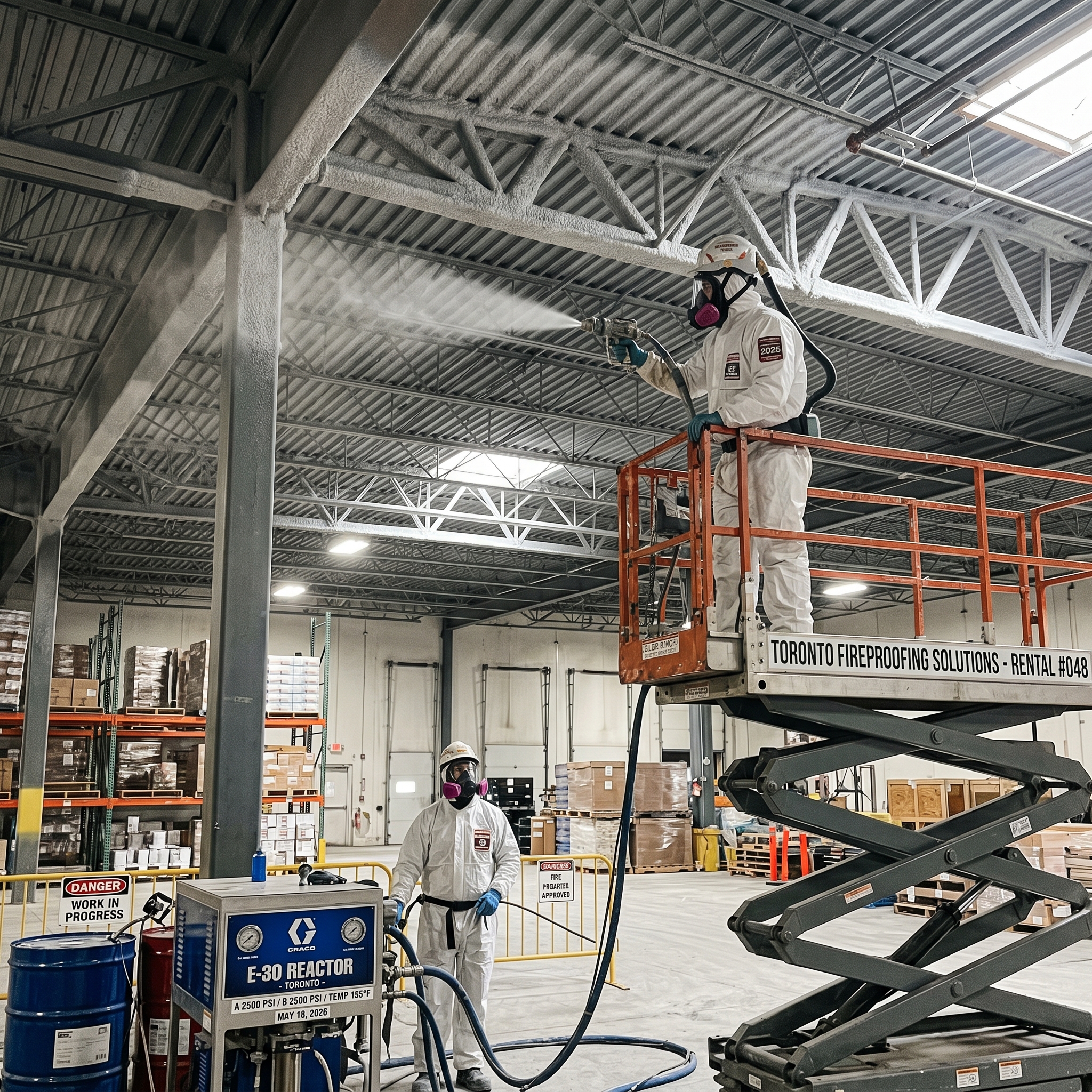
Commercial Spray Foam Fireproofing Services — Toronto & GTA 2026
Commercial spray foam fireproofing in Toronto costs $3.50–$8.00 per square foot installed in 2026, depending on required fire-resistance rating,
Spray Foam Insulation Rebate Ontario 2026: How to Get Up to $10,000 Back on Your Upgrade
Spray foam insulation rebates in Ontario for 2026 can put up to $10,000 CAD back in your pocket when you upgrade from fiberglass or cellulose to